
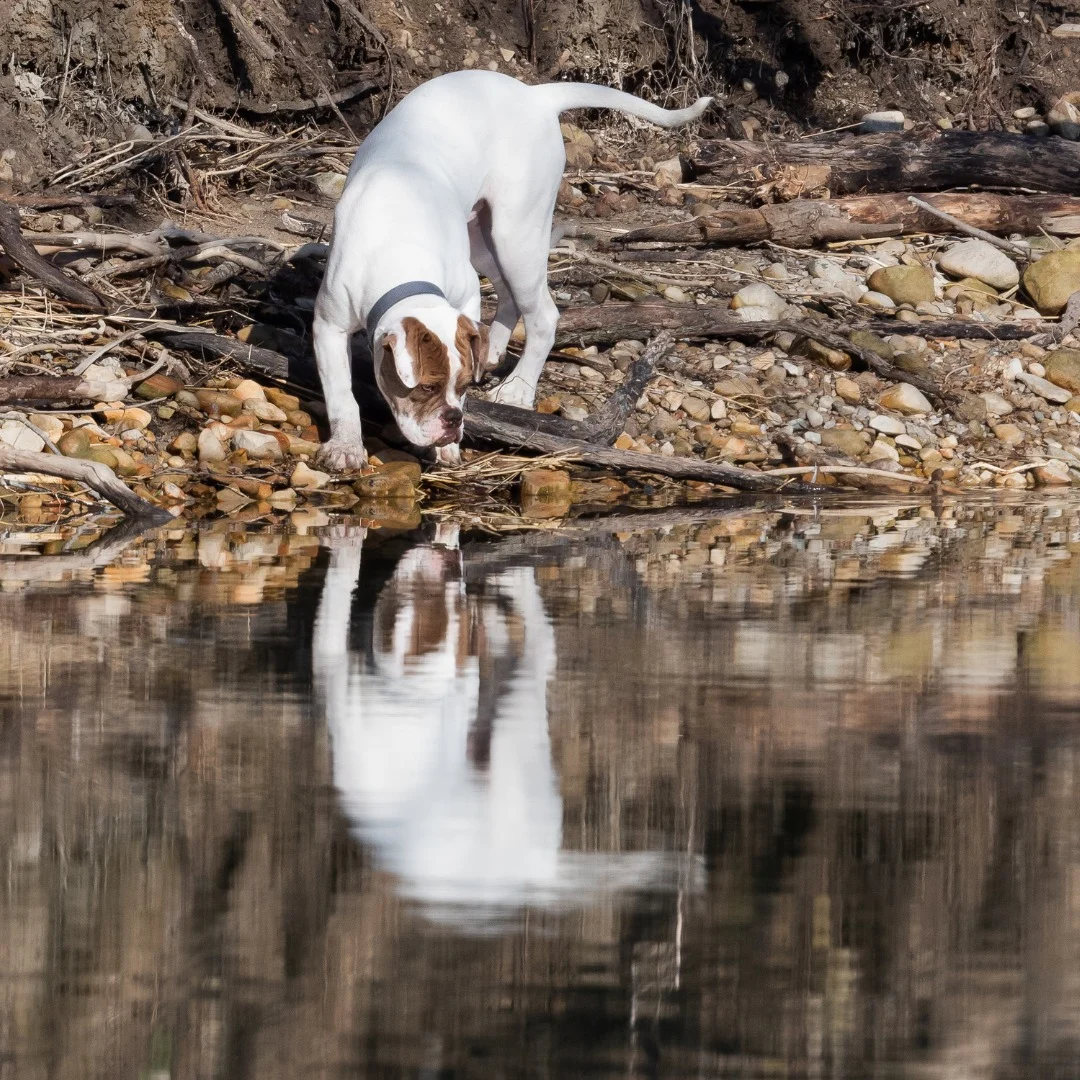
We have all been curious about the inner workings of the minds of our dogs at one point or the other. Are they aware of their unique individuality or is it just their meals that occupy their reverie? Scientists have delved deeper into dog consciousness and devised several tests to ascertain their level of self-awareness.
The mirror test
The most widely used self-recognition test in animals is the mirror test (also known as the mark test) in which an animal is placed in front of a mirror with an apparent mark on their person. Self-aware animals notice the mark and try to remove it. How do dogs fare in the mirror test? Well, the results are mixed.
Not only do dogs not associate selfhood to their reflection, but they also tend to believe they are staring at another dog in the mirror. This may be because dogs aren’t particularly vision-oriented creatures. They do much better on body-awareness tests, though.
The body-awareness task
As part of the body-awareness task, a ball is attached to a mat and dogs are required to take the ball to their owners while seated on the mat. Sometime during the experiment, dogs realise that their own body is acting as an obstacle towards completion of the task and get off the mat in order to take the ball to their people.
Urine scent
Most fascinatingly, dogs attach self-hood to the scent of their own urine. When a dog urinates, it leaves behind a unique scent that contains information about the dog’s gender, age, health, and reproductive status. Dogs are able to recognize this scent as their own and use it to mark their territory and communicate with other dogs. Other dogs can pick up on these scent markers and use them to determine the identity of the dog that left the urine.
So, it’s safe to conclude that dogs are aware of their bodies, ascribe selfhood through the scent of their urine and are in fact quite conscious of themselves separate from their environment.