Chronic Canine CareLifelong Dog SupportVOSD Sanctuary
The VOSD Model: Infrastructure for Chronic Canine Care at Scale
Discover the VOSD Model, a purpose-built, 7-acre residential campus delivering continuous medical care, rehabilitation, and lifelong support for India’s most vulnerable and medically complex dogs.
The Physical System Behind Lifetime Canine Care: The VOSD Sanctuary is a 7-acre purpose-built campus designed to provide structured, lifelong care to India’s most medically complex and vulnerable dogs.
Operational capacity: ~2,000 dogs
Present population: 1800+ dogs
Planned expansion capacity: +1,000 dogs
Fully residential campus: All caregiving, medical, and operational staff live onsite
This is critical; the Sanctuary is not shift-based. It is continuity-based.
The campus is built around three governing principles:
Segmentation by medical need
Environmental stability for long-term residents
Continuous supervision through residential staffing
Dogs are not housed generically. They are allocated based on clinical cohort, behaviour, mobility, and long-term prognosis.
I. Dogs Living Areas
A. Open Living Areas
The most socially stable and medically healthy long-term residents live in structured open paddocks.
Large enclosed areas
Social compatibility grouping
Continuous supervision
Environmental enrichment
Natural ground, sunlight, airflow
These are not temporary play yards — they are permanent living ecosystems for stable dogs.
B. Segmented Cohort Enclosures
Across the campus, there are 250+ enclosures designed for cohort-based care.
Enclosure sizes range from:
105 sq ft (single-dog intensive care or behaviour isolation)
300–600 sq ft (small medical groups)
Up to 1,200 sq ft (10–15 dogs in compatible cohorts)
Segregation is clinical, not cosmetic:
Neurological cohort
Blind cohort
Renal cohort
GI / Hepatic cohort
CHF cohort
Orthopaedic & mobility cohort
Behavioural rehabilitation cohort
Geriatric / hospice cohort
Each enclosure category has customised bedding, flooring, access ramps, and caregiver proximity.
C. Behavioural Care Segregation
Dogs undergoing trauma rehabilitation or behavioural management are housed separately.
Controlled sensory environment
Limited social interaction protocols
Structured desensitisation programs
Handler-only access in certain cases
This reduces stress contagion across the wider population and enables targeted rehabilitation.
II. Clinical Areas
The VOSD Referral Hospital operates within the Sanctuary campus — eliminating transport stress for chronic residents.
A. Segmented Medical Wards
The hospital contains:
6 active treatment stations
1 fully equipped operating theatre
48 treatment kennels (inpatient beds)
These kennels function as:
ICU beds
Post-operative recovery units
Chronic fluid therapy stations
Active treatment isolation beds
B. ICU Block (48 Kennels)
Designed for:
Renal crisis stabilisation
Congestive heart failure monitoring
Severe GI cases
Post-surgical recovery
Sepsis and trauma stabilisation
Each ICU kennel allows:
IV line placement
Oxygen support
Continuous monitoring
Restricted disturbance
C. Isolation Wards (10 Kennels)
Strictly segregated units for:
Infectious disease containment
Parvovirus, distemper, and unknown fevers
Biosecurity-sensitive admissions
Separate airflow, dedicated equipment, and controlled access are maintained.
D. Quarantine Wards (24 Kennels)
Every incoming dog undergoes quarantine before integration into permanent cohorts.
Purpose:
Disease observation
Initial lab work
Vaccination updates
Behavioural assessment
Decompression from transport stress
This acts as a biosecurity firewall protecting 2,000+ residents.
III. Rehabilitation Infrastructure
A. Hydrotherapy Pool (1 Active Unit)
Used for:
Paralysis & muscle retention
Post-surgical mobility recovery
Arthritis management
Weight management
Joint dysplasia rehabilitation
This is not enrichment. It is therapy.
B. Special Needs Mobility Areas (3 Zones)
Dedicated zones for:
Wheelchair training
Harness-assisted walking
Controlled gait rehabilitation
Physiotherapy exercises
These areas have ramped access, soft ground surfaces, and caregiver supervision infrastructure.
IV. Chronic & End-of-Life Care Design
A. Hospice Quiet Zones
These are low-stimulation, calm environments designed for:
Advanced cancer cases
Multi-organ failure
Severe geriatric decline
Palliative oxygen support
Features include noise control, reduced traffic, soft bedding, and caregiver continuity.
B. Temperature-Controlled Enclosures
Critical for:
Renal cases sensitive to dehydration
Geriatric dogs
Post-surgical recovery
Heat-sensitive cardiac cases
Climate control ensures physiologic stability in India’s extreme weather cycles.
V. Residential Staffing Architecture
The entire campus is residential, ensuring:
Night monitoring for ICU and paralysis cases
Immediate emergency response
Bladder expression scheduling
Continuous caregiving presence
Zero shift-transition discontinuity
Few facilities globally operate on a 24×7 residential animal-care model at this scale.
VI. System-Level Significance
The VOSD Sanctuary integrates:
Long-term housing
Referral hospital
ICU care
Quarantine biosecurity
Rehabilitation science
Behavioural therapy
Hospice management
This unified infrastructure eliminates fragmentation seen in most rescue systems, where animals are transferred between shelters, hospitals, and rehabilitation centres. At VOSD, the system operates as one continuous care environment.
The VOSD Sanctuary represents a paradigm shift in chronic canine care, a fully integrated, purpose-built ecosystem where every aspect of a dog’s life, from acute medical intervention to end-of-life comfort, is carefully orchestrated under continuous supervision. By combining residential staffing, segmented clinical and living areas, advanced rehabilitation infrastructure, and specialised behavioural management, VOSD eliminates the fragmentation that compromises care in conventional systems. Here, thousands of dogs experience continuity, stability, and dignity throughout their lives, a model not just of rescue, but of lifelong, compassionate, and clinically informed care at scale.
Give Dogs the Care They Deserve
Support Lifelong Canine Care at VOSD
Your contribution helps sustain continuous medical support, rehabilitation, and compassionate housing for India’s most vulnerable dogs. Every donation makes a life-changing difference.
Executive Summary The Indian pet market is experiencing rapid growth, driven by increased pet ownership, rising disposable incomes, and greater awareness of pet health and nutrition. The market is segmented
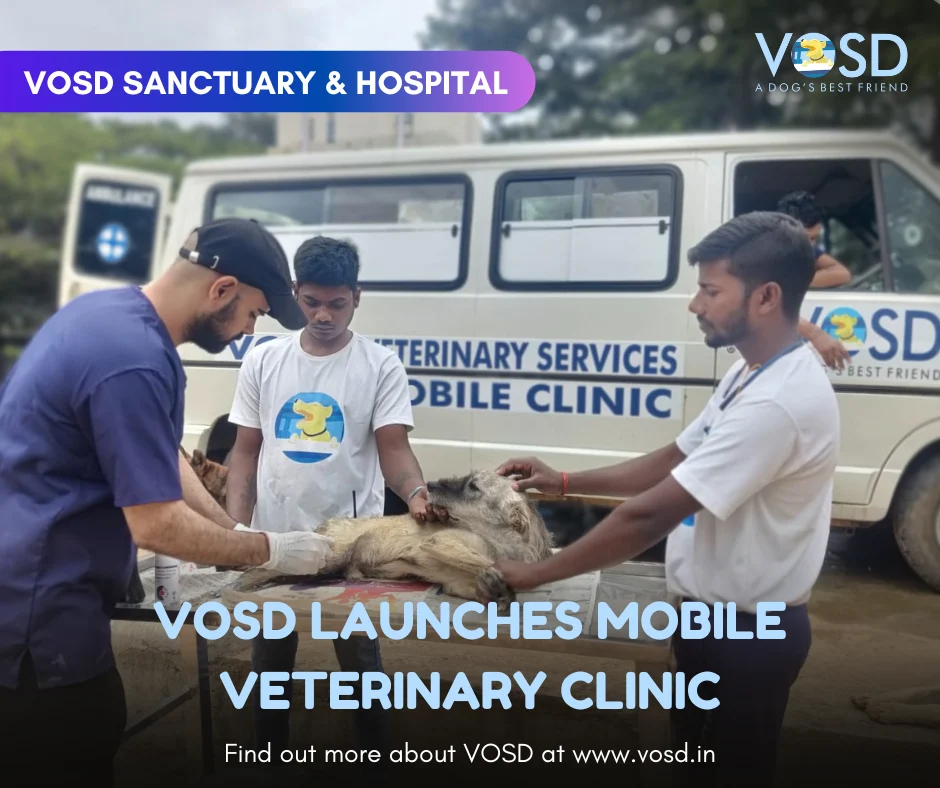
www.vosd.in For the first time in Bengaluru, VOSD is set to launch its mobile veterinary clinic. This will help revolutionise the medical care that pet & community dogs can avail.
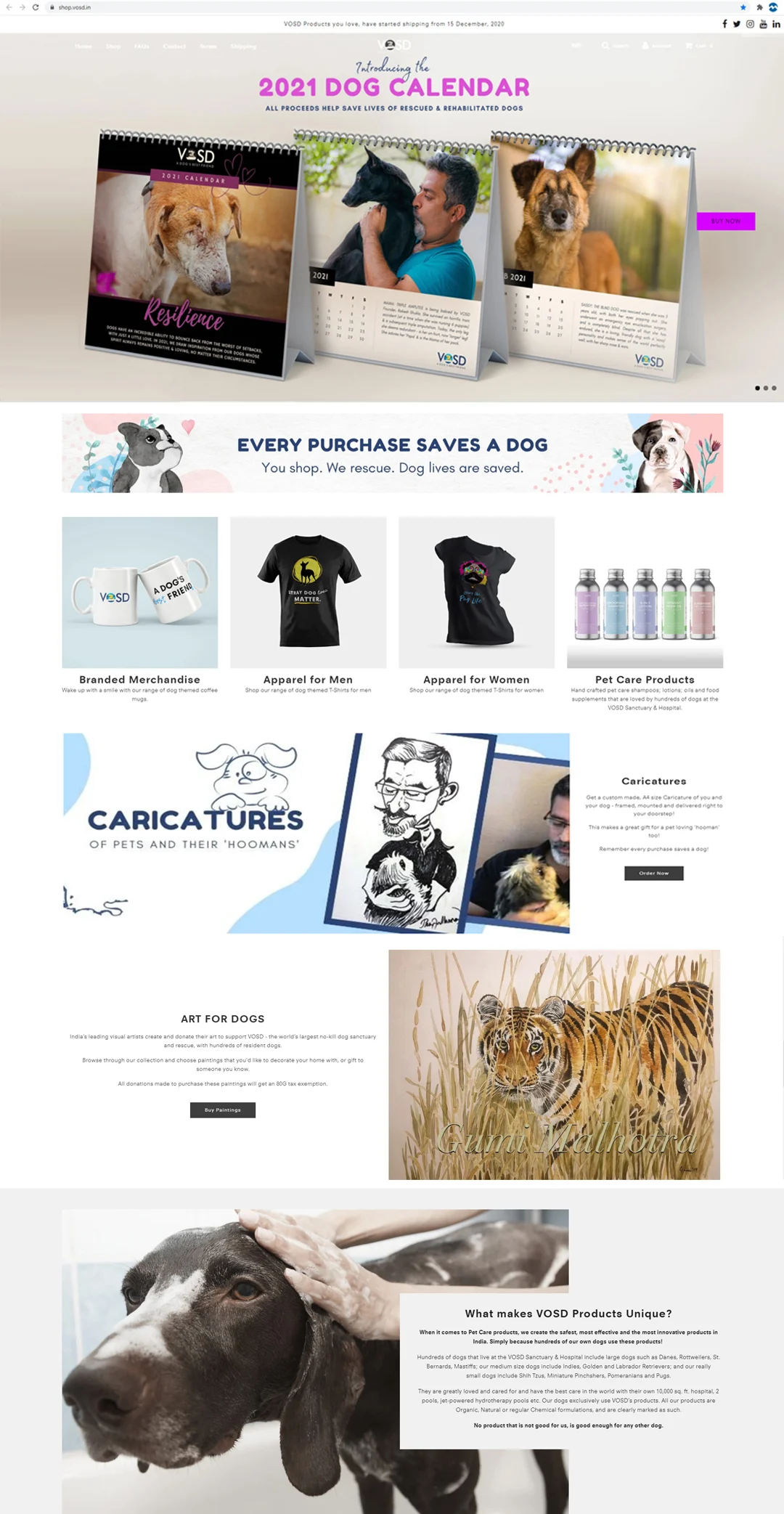
FOR IMMEDIATE RELEASE, Bangalore: VOSD announced the relaunch of India’s most loved dog care brand in Bangalore on the exclusive online shop https://shop.vosd.in. These products are carefully crafted for the
VOSD Sanctuary & Hospital is a unique place across the world for both its philosophy and scale from dogs. There are several distinct characteristics of VOSD that make us unique