Mobile Veterinary Infrastructure That Brings Care to the Dog
Not every dog can be moved quickly. Not every emergency can wait. Not every community has access to fixed-site veterinary infrastructure when it is needed most.
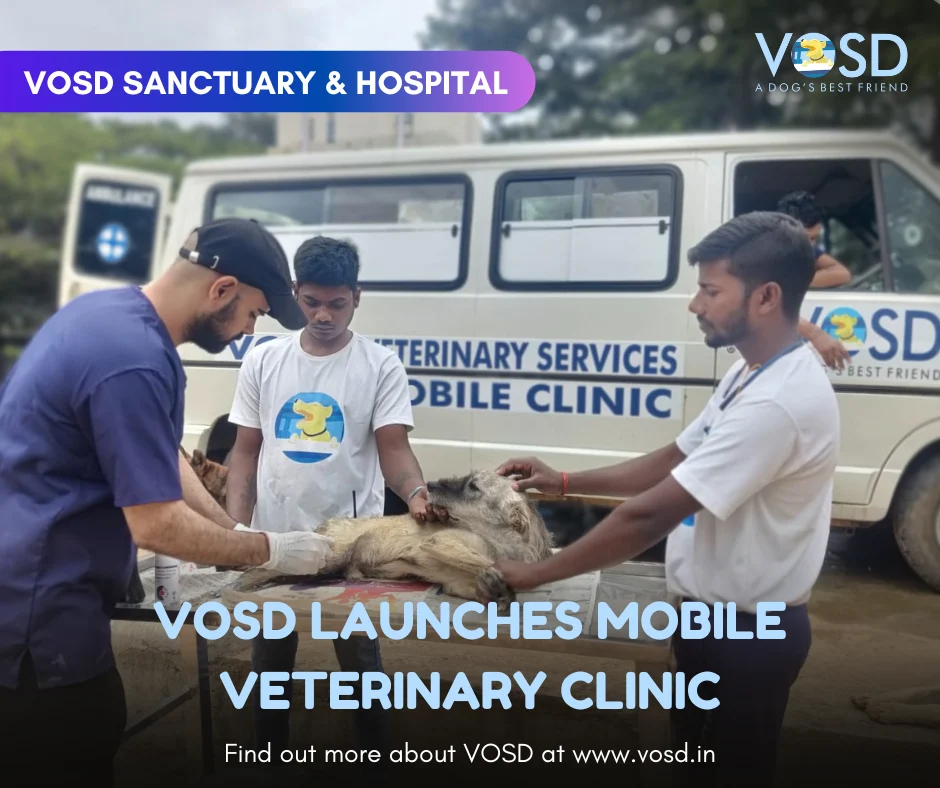
That is why VOSD On-Wheels exists. VOSD On-Wheels is the mobile clinical infrastructure arm of the VOSD ecosystem, built to extend the VOSD Level of Care beyond fixed facilities and into the field. Through VOSD Mobile OT-1 and VOSD Mobile Clinics, VOSD can take an organised medical capability, surgical support, field assessment, and structured canine care closer to the dog.
For pet owners, rescuers, feeders, NGOs, and communities, VOSD On-Wheels demonstrates a vital point: VOSD infrastructure is not limited to buildings. It moves. It reaches. It responds. This is how care becomes accessible when distance, distress, logistics, or urgency would otherwise delay help.
What is VOSD On-Wheels?
VOSD On-Wheels is the mobile veterinary and field-care infrastructure within the VOSD care architecture. It is designed to carry organised clinical capability outward through:
- VOSD Mobile OT-1
- VOSD Mobile Clinics-2
Together, these assets allow VOSD to extend care into communities, rescue settings, and operational environments where dogs may not be able to access hospital-based infrastructure quickly or easily.
This mobile infrastructure can support:
- Field-level veterinary access
- Mobile clinical examination and intervention
- Procedural and surgical outreach capability
- Support for rescue-linked treatment needs
- Continuity between the street, the field, and fixed VOSD facilities
- More organised escalation from community-level cases into deeper medical systems
VOSD On-Wheels exists because, in canine welfare and medicine, the time lost moving the dog can be the time that costs the dog the most.
Why Mobile Infrastructure Matters
A large part of the difficulty in helping dogs lies not only in diagnosis or treatment, but in access. Many dogs face delays because:
- They are in the street and hard to move
- The case is logistically difficult
- The dog is distressed, weak, or immobile
- The rescuer does not have immediate transport support
- The care needed begins before referral or admission is feasible
- The dog is in a community or geography where facility access is limited
- Multiple dogs require structured outreach rather than one-by-one transport
In these situations, the question is often not, “Can this dog be treated?” The more urgent question is, “How do we bring organised care to the dog in time?” That is the role of mobile infrastructure.
VOSD On-Wheels helps solve the access problem by making veterinary and procedural capacity more mobile, more responsive, and more closely connected to where canine distress actually occurs.
The Role of VOSD On-Wheels in the VOSD Level of Care
The VOSD Level of Care is built on the idea that care should follow the dog’s needs rather than force every dog into a single access model.
- Some dogs can be brought to a facility.
- Some dogs need remote support first.
- Some dogs need stabilisation in the field.
- Some populations need mobile access to organised procedures and care.
VOSD On-Wheels serves as the infrastructure layer for:
- Field-linked veterinary access
- Mobile assessment and first-line intervention
- Outreach medicine
- Procedural extension into communities
- Support for sterilisation or case-linked surgical activity where relevant
- Bridge care between the street and the VOSD fixed facilities
- Reducing the time gap between need identification and medical action
This makes On-Wheels one of the most practical and scalable expressions of the VOSD care system.
What Does VOSD On-Wheels Include?
VOSD Mobile OT-1
A mobile operating and procedural capability designed to extend structured surgical and intervention support into the field context, where appropriate.
VOSD Mobile Clinics-2
Two mobile clinical units are designed to bring access to examinations and treatment, and organised veterinary support, closer to dogs and communities.
These are not symbolic assets. They are operational infrastructure elements designed to reduce the distance between dogs in need and the systems that can help them.
What kinds of Situations is VOSD On-Wheels Built For?
VOSD On-Wheels is especially valuable in situations where dogs need care, but access to a fixed facility is delayed, difficult, or insufficient as a first step. This includes:
- Rescue situations where a dog cannot be easily moved immediately
- Community-linked cases where field examination is important
- Street-dog populations needing organised outreach support
- Dogs requiring first-line stabilisation before transfer
- Situations where mobile clinical presence improves decision-making
- Welfare interventions that are more efficient through field deployment
- Areas where structured veterinary access needs to be brought outward
- Cases that need to be linked from the field into IPD, referral, sanctuary, or CloudVet-guided pathways
For many such cases, mobile infrastructure does not replace hospitals. It makes hospitals reachable, useful, and timely.
Infrastructure at VOSD On-Wheels
The strength of VOSD On-Wheels lies in the fact that a system, rather than improvisation, backs mobility.
1. Mobile Reach
The most obvious strength of On-Wheels is reach. It allows VOSD to move organised care toward the dog. This matters because it:
- Reduces delay
- Improves first access
- Supports dogs who are hard to transport
- Increases operational flexibility
- Allows VOSD to respond in environments where fixed-site infrastructure is not immediately usable
Reach is not convenience. In many cases, it is the difference between intervention and non-intervention.
2. Field-Linked Clinical Capability
The mobile clinics extend veterinary capability into real-world rescue and community environments. This supports:
- Field examinations
- First-line treatment decisions
- Better triage in live contexts
- Practical assessment of the dog where it is found
- More informed decisions about whether the dog can remain, be treated, or must be moved onward
By allowing care to begin closer to the source of need, On-Wheels strengthens early-stage decision quality.
3. Procedural and Surgical Extension Through Mobile OT-1
The value of VOSD Mobile OT-1 lies in its ability to extend structured procedural infrastructure beyond the static hospital walls. This adds an important dimension to VOSD’s field capability:
- Organised intervention in the field-linked environment
- Procedural support where mobility is essential
- Operational flexibility for canine welfare programs that require structured medical infrastructure outside fixed facilities
This is particularly important because many animal-care systems fail precisely where procedure-capable infrastructure is absent outside urban hospital settings.
4. Bridge Between Community and Facility Care
On-Wheels is not merely a field service. It is a connector. It helps bridge:
- Street and community dogs to formal medical systems
- Local distress to institutional care
- Rescue action to structured clinical follow-through
- Community identification to hospital or sanctuary escalation
- CloudVet guidance for physical action on the ground
This bridge function is one of the most important capabilities of mobile infrastructure.
5. Operational Flexibility
Dogs in need do not present in identical ways. Some are individual cases. Some are neighbourhood populations. Some require urgent attention. Some need follow-through at the field level. On-Wheels supports flexibility by allowing VOSD to:
- Deploy where need exists
- Adapt to field realities
- Support both individual and programmatic canine welfare interventions
- Align mobile action with broader VOSD priorities, including street support, clinical access, sterilisation-linked action, and rescue continuity
6. Continuity Into Deeper VOSD Systems
The real strength of VOSD On-Wheels is that it does not operate as a disconnected outreach unit. It can link dogs into:
- VOSD CloudVet™ for triage logic and guidance
- VOSD IPD, Indiranagar, for supervised inpatient treatment
- VOSD Referral Hospital, Rural Bangalore, for complex escalated care
- VOSD Sanctuary for dogs requiring protected long-term intake
- VOSD StreetCare for field-linked support where community continuity remains possible
- VOSD SafeSpay™, where preventive and population-level surgical pathways become relevant
This connectedness makes mobility far more powerful than standalone outreach.
Why VOSD On-Wheels is More Than Transport
It would be a mistake to see VOSD On-Wheels merely as vehicles. Transport moves bodies. Infrastructure moves care. VOSD On-Wheels is not only about taking a dog from one place to another. It is about taking:
- Examination capability
- Clinical judgment
- Procedural readiness
- Organised response
- Escalation pathways
- Institutional credibility
into places where the dog is. That is why this should be positioned as mobile veterinary infrastructure, not simply as animal transport or outreach vans.
What Rescuers Can Expect
For rescuers, VOSD On-Wheels addresses one of the biggest operational barriers in canine welfare: access before admission. Rescuers can expect mobile infrastructure that helps:
- Reduce the delay in bringing support closer to the dog
- Improve first-line assessment
- Create a more structured bridge into VOSD medical systems
- Support difficult field situations where movement is not simple
- Strengthen outcomes for dogs that may otherwise deteriorate before reaching deeper care
In rescue, the gap between identifying a dog and safely moving that dog into care can be enormous. On-Wheels is designed to narrow that gap.
What Communities and Feeders Can Expect
For feeders, neighbourhood caregivers, and local welfare volunteers, On-Wheels represents the reassurance that formal care can move outward when needed. It matters when:
- A local street dog deteriorates
- A dog needs examination in context
- Local support is present, but clinical access is weak
- VOSD StreetCare or community observation identifies a case needing medical action
- A situation requires more than advice, but not yet a full institutional intake
This reduces helplessness at the community level and strengthens the practical meaning of VOSD’s support systems.
What Pet Owners Can Expect
For pet owners, VOSD On-Wheels reflects the fact that serious canine care is not always confined to static locations. Owners should understand On-Wheels as part of a larger VOSD care architecture that improves:
- Access
- Continuity
- Responsiveness
- Connection between distress and treatment
- Movement from the first problem to proper facility care, where required
Even when a pet dog ultimately needs IPD or referral care, mobile infrastructure strengthens the overall system by expanding how and where care can begin.
How VOSD On-Wheels Fits Into the Dog’s Lifecycle of Care
A dog may encounter On-Wheels at many different points:
- Early Distress: When the dog is first identified as needing organised attention.
- Field Assessment: When examination in the dog’s existing environment improves triage and decision-making.
- Mobile Intervention: When care must begin before the dog can be easily moved.
- Transition Into Facility Care: When the dog needs to move onward into IPD, referral, or longer-term systems.
- Community-Based Program Support: When dog populations are better served by structured mobile outreach than by isolated individual movement.
This makes On-Wheels a highly adaptable layer in the VOSD lifecycle model.
Why This Infrastructure Improves Outcomes
Outcomes improve when help reaches the dog earlier, more intelligently, and with better continuity. VOSD On-Wheels improves outcomes by:
- Reducing delays between identification and intervention
- Extending clinical reach into field environments
- Improving triage where the dog is actually found
- Supporting more structured movement into deeper care
- Increasing access in cases where the transport or facility approach is difficult
- Bringing mobile procedure-capable infrastructure closer to need
- Strengthening the connection between communities and institutional veterinary support
For many dogs, mobility is not an extra advantage. It is the reason help becomes possible at all.