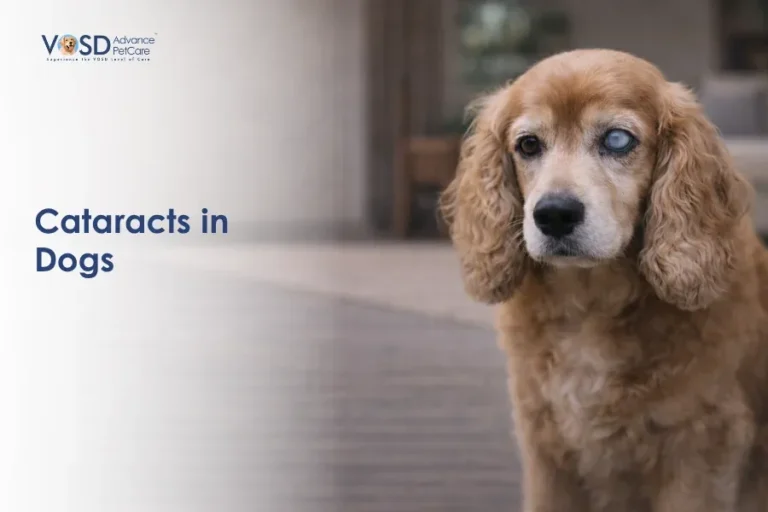
You may have noticed your dog hesitating before a familiar step, or seeming less confident in a room they have always moved through easily. Sometimes a faint cloudiness appears in one or both eyes that was not there before. These are among the early signs that cataracts in dogs may be developing, and recognising them early makes a meaningful difference to the outcome. Cataracts are one of the more common eye conditions seen in dogs, and while the word can sound alarming, the condition is well understood and manageable with the right veterinary care.
What Are Cataracts in Dogs?
A cataract is a clouding of the lens inside the eye. The lens sits behind the pupil and is normally clear, allowing light to pass through and focus on the retina. When cataracts develop, the lens becomes opaque, reducing the amount of light that reaches the retina and progressively affecting the dog’s ability to see clearly.
It is worth knowing that not all cloudiness in a dog’s eye is a cataract. A very common and entirely normal ageing change called nuclear sclerosis causes a bluish-grey haze in the lens of older dogs and does not significantly affect vision. A vet can distinguish between the two on examination. Cataracts in dogs, by contrast, do affect vision and require monitoring and in many cases active management.
Symptoms of Cataracts in Dogs
The signs of cataracts in dogs often develop gradually, which is why they can be easy to overlook in the early stages. Knowing what to watch for helps you act sooner rather than later.
- Visible cloudiness, milkiness, or a white or bluish film over one or both eyes
- Bumping into furniture, door frames, or objects that the dog previously navigated without difficulty
- Hesitation at the top or bottom of stairs, particularly in low light
- Reduced confidence in unfamiliar environments or reluctance to move around freely
- Apparent difficulty locating toys, food bowls, or familiar people at a distance
- Increased anxiety or clinginess, particularly in dim conditions
- Squinting, pawing at the eyes, or redness around the eye area
In many cases, one eye is more affected than the other initially. Dogs are remarkably good at compensating for reduced vision in one eye, which can delay recognition of the problem. If you notice any of these signs, a veterinary eye assessment is the right next step.
Causes of Cataracts in Dogs
Cataracts in dogs develop for a number of reasons, and identifying the underlying cause matters both for treatment planning and for managing the dog’s overall health.
- Diabetes mellitus: One of the most common causes of cataracts in dogs. High blood sugar levels alter the fluid balance within the lens, leading to rapid cataract formation. Dogs with diabetes can develop cataracts within months of diagnosis if blood sugar is not well controlled
- Inherited or genetic causes: Certain breeds carry a genetic predisposition to cataracts, including Cocker Spaniels, Labrador Retrievers, Golden Retrievers, and Poodles. In these breeds, cataracts may appear earlier in life and progress more quickly
- Age-related changes: Cataracts that develop as part of the normal ageing process are seen in older dogs across all breeds
- Trauma or injury: A blow to the eye or a penetrating injury can cause a traumatic cataract to develop, sometimes quite rapidly
- Infections and inflammation: Uveitis, or inflammation inside the eye, can trigger cataract formation as a secondary effect. In India, certain tick-borne infections that cause systemic inflammation are a relevant consideration
- Nutritional deficiencies: In some cases, severe or prolonged nutritional deficiency in young puppies has been associated with cataract development, though this is less common in well-nourished pet dogs
Cataracts in Senior Dogs vs Young Dogs
Age-related cataracts in senior dogs tend to develop slowly over months to years, giving both the dog and the pet parent more time to adjust. In younger dogs, cataracts are more likely to have an inherited cause and can progress more rapidly. Juvenile cataracts, as they are called, are seen in certain breeds and may be present from a relatively early age. When cataracts appear in a dog under five years old, genetic testing and breed-specific screening are often recommended, particularly if breeding is being considered.
Related Videos



How Cataracts Affect a Dog’s Vision
The degree of visual impairment from cataracts in dogs depends on the size and density of the opacity in the lens. Early or small cataracts may cause minimal disruption to daily vision. As the cataract matures and occupies a larger portion of the lens, vision becomes progressively blurred and eventually the dog may lose useful vision in the affected eye altogether if the condition is left unmanaged.
| Stage of Cataract | Lens Involvement | Effect on Vision |
|---|---|---|
| Incipient | Less than 15% of lens | Minimal to no noticeable change |
| Immature | 15% to 99% of lens | Partial blurring, some visual impairment |
| Mature | 100% of lens | Significant vision loss, near blindness |
| Hypermature | Lens begins to shrink or liquefy | Blindness; secondary complications possible |
Hypermature cataracts carry an additional risk of causing uveitis and glaucoma as the lens material leaks into the eye. This makes early diagnosis and monitoring important, even when surgical treatment is not immediately planned.
Diagnosis: How Vets Identify Cataracts in Dogs
Diagnosing cataracts in dogs is usually straightforward during a veterinary eye examination. The vet will assess the pupillary light response in both eyes, examine the lens and internal eye structures using an ophthalmoscope or slit lamp, and evaluate the dog’s functional vision through simple obstacle navigation. In cases where surgery is being considered, a referral to a veterinary ophthalmologist for a more detailed assessment, including electroretinography to check retinal function, is standard practice. This additional assessment ensures the retina is healthy enough to benefit from surgery before the procedure is undertaken.
Treatment Options for Cataracts in Dogs
The most effective treatment for cataracts in dogs is surgical removal of the affected lens, a procedure called phacoemulsification. In this procedure, the clouded lens is broken up using ultrasound energy and removed from the eye, and an artificial lens is often implanted to restore focusing ability. The surgery is performed under general anaesthesia by a veterinary ophthalmologist and has a high success rate in suitable candidates.
Surgery is most successful when performed before the cataract reaches the mature or hypermature stage, and when the underlying retina is confirmed to be functional. Dogs that are good surgical candidates and whose cataracts are caught at the immature stage have the best outcomes.
In India, veterinary ophthalmology is available at specialist referral centres in major cities including Mumbai, Delhi, Bangalore, Chennai, and Hyderabad. The cost of cataract surgery in dogs varies depending on the centre and the complexity of the case, and it is reasonable to discuss costs with the specialist at the time of referral so that decisions can be made with full information.
Can Cataracts Be Treated Without Surgery?
There is currently no proven medical treatment that reverses or dissolves cataracts in dogs. Eye drops marketed as cataract treatments do not have robust clinical evidence supporting their effectiveness. What non-surgical management can do is monitor the progression of the condition, manage any associated inflammation with prescribed anti-inflammatory drops, and support the dog’s quality of life while decisions about surgical treatment are considered. If surgery is not possible due to health, age, or other factors, the focus shifts entirely to supportive care and environmental management.
Prognosis: What to Expect After Diagnosis
With surgical treatment, the prognosis for cataracts in dogs is generally good. Studies report success rates of over 80 to 90 percent in terms of restoring useful vision, particularly when surgery is performed at the immature stage. Dogs typically adjust to wearing an Elizabethan collar during recovery, and most return to confident daily activity within a few weeks of the procedure.
Without surgery, dogs with mature or advancing cataracts will experience progressive vision loss. However, it is important to understand that dogs adapt remarkably well to reduced or absent vision when their environment is managed consistently. Many dogs with complete blindness from cataracts continue to live comfortable, engaged, and happy lives. The adjustment is real, but it is one that dogs and their families navigate successfully every day.
Living with a Dog with Cataracts
Whether your dog is awaiting surgery, not a suitable surgical candidate, or adapting to vision loss from cataracts, daily management at home makes a significant difference to their comfort and confidence.
- Keep furniture, food bowls, water, and sleeping areas in consistent positions so the dog can build and maintain a reliable mental map of the home
- Use textured mats to mark key areas such as the feeding station, the base of stairs, and resting spots
- Speak to your dog before approaching or touching them, particularly if they are startling more easily than before
- Use scent cues to help identify important locations, such as a small amount of a consistent scent near the food bowl or the entrance to a room
- Keep outdoor walks on familiar routes and use a lead at all times in open or unfamiliar areas
- Avoid leaving obstacles on the floor such as bags, shoes, or cables
- Ensure good lighting throughout the home, particularly in areas the dog uses most
Related Products


Preventing Cataracts in Dogs
Not all cataracts in dogs can be prevented, particularly those with a genetic basis. However, certain measures reduce the risk and support early detection.
- Managing diabetes carefully with regular blood glucose monitoring and consistent veterinary follow-up significantly reduces the risk of diabetic cataracts developing rapidly
- Annual eye checks as part of a routine health examination allow early changes to be identified before they progress
- Prompt treatment of eye infections, injuries, and inflammatory conditions reduces the risk of secondary cataract formation
- Genetic screening before breeding in predisposed breeds helps reduce the inheritance of juvenile cataracts in future generations
When to See a Vet Without Delay
Contact your vet promptly if you notice any of the following in your dog.
- Visible cloudiness, whiteness, or bluish film over one or both eyes
- Sudden changes in confidence, navigation, or behaviour that suggest reduced vision
- Redness, swelling, discharge, or signs of pain around the eye
- Any eye injury, including contact with a foreign object or trauma to the face
- A dog already diagnosed with diabetes showing new cloudiness in the eyes
Common Myths About Cataracts in Dogs
- Myth: All cloudy eyes in dogs are cataracts. Nuclear sclerosis, a normal ageing change, also causes a hazy appearance and is far more common. A vet can tell the difference quickly and easily
- Myth: Eye drops can cure cataracts. There is no proven non-surgical treatment that clears cataracts in dogs. Products claiming to dissolve cataracts do not have clinical evidence to support these claims
- Myth: A blind dog cannot be happy. Dogs with vision loss adapt well and continue to experience a good quality of life. Their world is built as much on scent and sound as on sight
- Myth: Cataracts only affect old dogs. While age-related cataracts are common, inherited juvenile cataracts can appear in young dogs of certain breeds
Cataracts in dogs are a condition that rewards awareness and early action. The earlier the condition is identified, the more options are available and the better the outcome tends to be. With attentive daily care and the right veterinary support, dogs with cataracts, whether treated surgically or managed conservatively, continue to live full and comfortable lives.