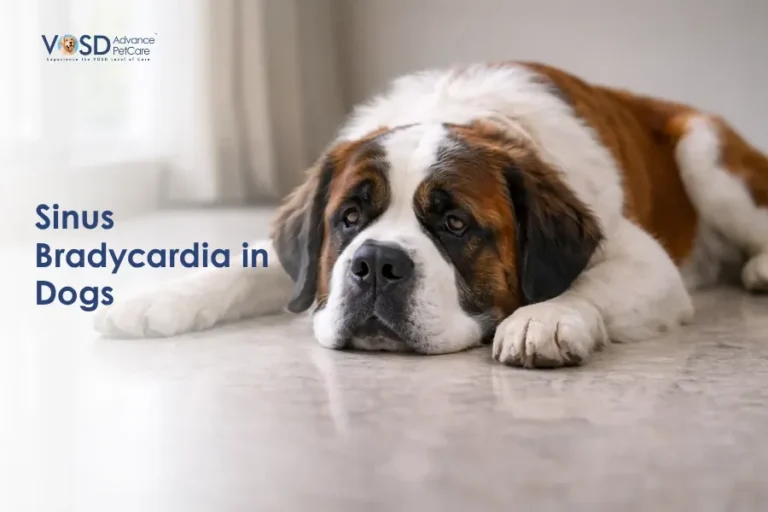
Sinus bradycardia in dogs is a heart rate that is slower than the normal range for the dog’s size and age, arising from the sinoatrial (SA) node, the heart’s natural pacemaker. The reassuring starting point for most pet parents is this: a slow heart rate is not inherently dangerous, and in many dogs it is entirely normal. Large, athletic, or deeply relaxed dogs often have naturally lower heart rates that reflect healthy cardiovascular fitness. However, sinus bradycardia can also indicate an underlying medical condition that warrants investigation. Knowing when a slow heart rate is expected and when it needs attention is what this guide is here to help you understand.
What Is Sinus Bradycardia in Dogs?
The term sinus bradycardia has two components. Sinus refers to the sinoatrial (SA) node, the cluster of specialised cells in the right atrium that generates the electrical impulses initiating each heartbeat. Bradycardia simply means a heart rate below the normal range for the species and size of animal. In sinus bradycardia, the SA node is still functioning and the heart’s rhythm remains regular and coordinated. The only abnormality is that the SA node is firing less frequently than expected.
This distinguishes sinus bradycardia from other causes of slow heart rate, such as complete AV block, in which the SA node fires normally but its impulses fail to reach the ventricles. In sinus bradycardia, every SA node impulse successfully travels through the conduction system and produces a heartbeat. There are simply fewer of them per minute than normal.
Whether sinus bradycardia is clinically significant depends entirely on the context. The same heart rate that represents perfectly healthy athletic conditioning in one dog may represent a clinically important finding in another.
Normal and Low Heart Rate Ranges in Dogs
| Dog Size | Normal Resting Heart Rate | Bradycardia Threshold (approximate) |
|---|---|---|
| Large breeds (above 25 kg) | 60 to 100 beats per minute | Below 60 beats per minute at rest |
| Medium breeds (10 to 25 kg) | 70 to 110 beats per minute | Below 60 to 70 beats per minute at rest |
| Small breeds (below 10 kg) | 90 to 140 beats per minute | Below 80 to 90 beats per minute at rest |
| Athletic or working dogs | May be 40 to 60 beats per minute | Context-dependent; assess alongside clinical signs |
These are general guidelines rather than absolute thresholds. A large, extremely fit working dog with a resting heart rate of 45 beats per minute and no clinical signs is not experiencing sinus bradycardia in a clinical sense. A small-breed dog with a heart rate of 55 beats per minute, weakness, and lethargy is a different picture entirely. Heart rate must always be interpreted in context, alongside the dog’s size, fitness level, clinical condition, and the circumstances of the examination.
Symptoms of Sinus Bradycardia in Dogs
The symptoms of sinus bradycardia in dogs vary significantly depending on whether the condition is physiological (a normal response) or pathological (driven by an underlying problem):
- Many dogs with sinus bradycardia show no symptoms at all. The slow heart rate is detected only during a veterinary examination, and the dog appears entirely well.
- Mild weakness or reduced enthusiasm for activity may be present in dogs where the slow heart rate reduces cardiac output to a degree that limits exercise performance.
- Exercise intolerance, tiring more quickly than expected during walks, may reflect insufficient cardiac reserve at the lower heart rate.
- Lethargy and reduced engagement with normal daily activities can occur when a slow heart rate is driven by an underlying metabolic condition such as hypothyroidism.
- Fainting (syncope) or sudden weakness may occur in dogs where the heart rate drops low enough to reduce cerebral perfusion transiently. This is uncommon in straightforward sinus bradycardia but warrants prompt investigation when it occurs.
- A slow, strong pulse detectable when you feel the femoral pulse in the groin or the heartbeat through the chest wall.
In dogs with physiological sinus bradycardia, particularly sleeping dogs or those in a deeply relaxed state, the heart rate naturally falls and may trigger brief concern. This type of slowing is normal and self-resolving. The heart rate increases promptly when the dog wakes or becomes active. Clinical sinus bradycardia that warrants investigation is characterised by a persistently low rate even in alert, active states, or by the association with clinical signs such as weakness or fainting.
Related Videos


Causes of Sinus Bradycardia in Dogs
Sinus bradycardia in dogs arises from a range of causes, spanning normal physiology to significant underlying disease:
1. High Vagal Tone (Physiological): The vagus nerve is the primary parasympathetic input to the SA node. When vagal tone is high, the SA node fires more slowly. This occurs normally during sleep, deep relaxation, in response to gastrointestinal stimulation (eating, nausea, vomiting), and during certain respiratory phases. High vagal tone is the most common cause of incidentally detected slow heart rates in dogs and is not a disease finding. Characteristically, this type of bradycardia resolves when the dog is stimulated or exercises, and the heart rate increases normally with activity.
2. Athletic Conditioning: Highly trained or very active dogs develop a degree of cardiac efficiency that allows a lower resting heart rate to maintain adequate cardiac output. This is a healthy adaptation, not a pathological finding, and requires no investigation in an otherwise well dog with no clinical signs.
3. Hypothyroidism: Reduced thyroid hormone levels slow metabolic processes throughout the body, including the SA node’s firing rate. Hypothyroidism is one of the more common endocrine causes of sinus bradycardia in dogs and is typically accompanied by other signs including weight gain, lethargy, cold intolerance, and changes in coat quality. Thyroid supplementation resolves the bradycardia in most hypothyroid dogs.
4. Electrolyte Imbalances: Severely elevated potassium levels (hyperkalaemia), most commonly seen in dogs with Addison’s disease (hypoadrenocorticism) or severe urinary tract obstruction, profoundly suppress SA node firing and can produce marked bradycardia. Hyperkalaemia-associated bradycardia is a potentially life-threatening emergency requiring prompt correction.
5. Certain Medications: Several drugs suppress SA node activity as a direct or indirect effect. These include beta blockers (atenolol, metoprolol), calcium channel blockers (diltiazem), digoxin (at excessive doses), certain anaesthetic agents, and high-dose opioids. Medication-induced sinus bradycardia typically resolves once the dose is adjusted or the drug is discontinued under veterinary guidance.
6. Increased Intracranial Pressure: Raised pressure within the skull, from head trauma, brain tumours, or severe haemorrhage, can produce bradycardia as part of the Cushing reflex (bradycardia, hypertension, and irregular breathing). This is an advanced neurological finding associated with serious brain pathology.
7. Hypothermia: Severely reduced body temperature, from prolonged exposure to cold or as a complication of shock or surgery, slows cellular metabolic activity throughout the body and reduces SA node firing rate. Hypothermia is a relevant consideration for stray and outdoor dogs in cold regions, particularly thin or elderly animals.
8. Primary SA Node Disease: Intrinsic degeneration of the SA node tissue, as seen in sick sinus syndrome, can produce bradycardia as one component of a broader pattern of sinus node dysfunction.
How Vets Diagnose Sinus Bradycardia in Dogs
Diagnosis is straightforward in most cases. The more important task is determining whether the bradycardia is physiological or driven by an underlying condition:
1. Physical Examination and Auscultation: The vet takes the heart rate, assesses pulse quality, checks body temperature, evaluates general clinical condition, and looks for signs of underlying disease such as those associated with hypothyroidism or Addison’s disease.
2. Electrocardiogram (ECG): The ECG confirms that the slow rhythm is originating from the SA node (regular P-QRS-T sequence at a reduced rate), distinguishes sinus bradycardia from AV block and other causes of slow heart rate, and checks for any associated rhythm abnormalities.
3. Atropine Response Test: In dogs where it is unclear whether the bradycardia is vagally mediated or reflects intrinsic SA node disease, an intravenous or intramuscular dose of atropine is administered. In vagally mediated sinus bradycardia, the heart rate increases promptly and significantly. In dogs with intrinsic SA node disease or another cause, the response is blunted or absent. This test helps guide further diagnostic workup.
4. Blood Tests: A full blood count, biochemistry panel, electrolyte assessment, and thyroid hormone level (T4) are performed to identify or exclude hypothyroidism, Addison’s disease, hyperkalaemia, and other metabolic causes.
5. Additional Investigations: Echocardiography, chest X-rays, and Holter monitoring may be recommended based on the initial findings and clinical context.
Treatment for Sinus Bradycardia in Dogs
Treatment depends entirely on the cause and whether the bradycardia is producing clinical signs:
- Physiological sinus bradycardia (vagal tone, athletic conditioning): No treatment is required. The low heart rate is a normal finding and needs only to be recognised as such. Unnecessary treatment would be counterproductive.
- Hypothyroidism: Thyroid hormone supplementation (thyroxine, typically levothyroxine) restores normal thyroid levels over four to eight weeks, and the heart rate normalises as part of the broader metabolic improvement.
- Hyperkalaemia from Addison’s disease: Emergency correction of elevated potassium with intravenous fluids and dextrose, followed by long-term management of Addison’s disease with mineralocorticoid and glucocorticoid supplementation, resolves the bradycardia.
- Medication-induced bradycardia: Dose adjustment or discontinuation of the causative drug under veterinary guidance, with monitoring of the heart rate response to the change.
- Symptomatic sinus bradycardia with no reversible cause: In dogs where the bradycardia is producing clinical signs and no reversible underlying cause can be identified or treated, drug treatment to increase heart rate (such as theophylline or terbutaline) or pacemaker implantation for dogs with associated sick sinus syndrome may be considered.
Prognosis for Sinus Bradycardia in Dogs
The prognosis for sinus bradycardia in dogs is generally excellent in the majority of cases:
- Dogs with physiological sinus bradycardia have a completely normal life expectancy with no impact on quality or length of life.
- Dogs with hypothyroidism-associated bradycardia respond very well to thyroid hormone supplementation, with the heart rate normalising and quality of life returning to normal.
- Dogs with Addison’s disease-associated hyperkalaemia and bradycardia have an excellent prognosis with appropriate long-term management of the underlying endocrine condition.
- Dogs with drug-induced bradycardia typically normalise promptly when the medication is adjusted.
- Dogs with sinus bradycardia secondary to sick sinus syndrome or primary SA node degeneration have a prognosis dependent on the severity of the underlying condition and the response to treatment.
Living with a Dog with Sinus Bradycardia
- Monitor activity levels: Note whether your dog’s exercise tolerance is changing over time. A gradual reduction in stamina may indicate that the bradycardia is becoming more clinically relevant.
- Attend regular veterinary check-ups: Annual heart rate assessment and clinical examination confirm whether the bradycardia remains stable and appropriate to context.
- Give all medications consistently: If your dog is receiving treatment for an underlying condition such as hypothyroidism or Addison’s disease, consistent daily dosing is essential for maintaining the metabolic stability that allows the heart rate to remain normal.
- Keep a note of any fainting or weakness: Any episode of collapse, fainting, or unusual weakness in a dog with known sinus bradycardia should be reported to your vet promptly, as it may indicate progression of the underlying condition.
- Avoid unsupervised medication changes: Never adjust or stop medications that may affect heart rate, including cardiac drugs, thyroid medications, or steroids, without veterinary guidance.
When to See a Vet
Contact your veterinarian promptly if your dog shows any of the following:
- A slow heart rate combined with weakness, lethargy, or reduced activity that has appeared or worsened recently
- Any episode of fainting, collapse, or sudden weakness
- Signs suggestive of hypothyroidism (weight gain, cold intolerance, coat changes, lethargy) alongside a slow heart rate
- Vomiting, diarrhoea, or weakness alongside a slow heart rate, which may suggest Addison’s disease
- A slow heart rate that does not increase when the dog is active or excited
Sinus bradycardia in dogs is a finding that rewards a thoughtful and contextual assessment rather than an automatic assumption of disease. For many dogs, a slow resting heart rate is a sign of good cardiac health rather than a problem. For others, it is a window into an underlying condition that will respond well to appropriate treatment once it is identified. Regular veterinary check-ups, attentive observation at home, and acting when something changes are the most effective tools any pet parent has for ensuring their dog’s cardiac health is appropriately monitored.