Cold agglutinin disease in dogs is a condition that most pet parents will not have come across until their own dog is affected. It is a rare autoimmune condition in which the immune system produces antibodies that attack and clump the dog’s own red blood cells, and does so more actively when the body’s extremities are exposed to cooler temperatures. The result is a form of haemolytic anaemia, where red blood cells are destroyed faster than the body can replace them.
While cold agglutinin disease in dogs is uncommon, it is important to recognise because its signs can be subtle in the early stages and can worsen quickly if the underlying condition goes unaddressed. With careful management and consistent veterinary care, many affected dogs achieve good stability and a reasonable quality of life.
What Is Cold Agglutinin Disease in Dogs?
Cold agglutinin disease in dogs is a form of immune-mediated haemolytic anaemia (IMHA) triggered by cold-reactive antibodies. In a healthy dog, the immune system identifies and attacks foreign threats. In cold agglutinin disease, the immune system mistakenly produces antibodies that bind to the surface of the dog’s own red blood cells at lower temperatures, causing them to clump together in a process called agglutination.
These clumps of red blood cells are then recognised as abnormal by the spleen and liver, which remove them from circulation. When red blood cells are destroyed faster than the bone marrow can produce new ones, anaemia develops. The lower the temperature in the affected body part, the more actively the antibodies bind, which is why the ears, paws, tail, and nose, which are the areas most exposed to ambient temperature, are often where signs are first noticed.
How Cold Temperatures Affect the Blood Cells
In cold agglutinin disease in dogs, the antibodies involved are most active at temperatures below the core body temperature. The extremities, being further from the warm core of the body, are naturally cooler. This means that blood flowing through the ears, paws, and tail tip is more vulnerable to antibody binding and red blood cell clumping. The clumped cells impair normal circulation in these areas, which can cause visible changes such as bluish or pale discolouration and coldness in the affected extremities, alongside the broader effects of anaemia throughout the body.
| Feature | Cold Agglutinin Disease | Warm IMHA |
|---|---|---|
| Antibody activity | Highest at lower temperatures | Active at body temperature |
| Areas most affected | Extremities (ears, paws, tail, nose) | Systemic, no temperature pattern |
| Visible extremity changes | Yes, bluish or pale discolouration | Not typical |
| Seasonal pattern | Often worse in cooler months | No seasonal pattern |
| Rarity | Rare | More common |
| Management priority | Warmth plus immunosuppression | Immunosuppression primarily |
Symptoms of Cold Agglutinin Disease in Dogs
The symptoms of cold agglutinin disease in dogs reflect both the anaemia caused by red blood cell destruction and the localised effects of impaired circulation in the extremities.
General Symptoms of Anaemia
- Pale or white gums instead of the normal healthy pink
- Weakness and rapid tiring during normal activity
- Profound lethargy and reluctance to move
- Rapid breathing or increased heart rate as the body compensates for reduced oxygen delivery
- Reduced appetite and weight loss
- Dark, reddish-brown, or orange-tinged urine caused by the breakdown products of destroyed red blood cells
- Collapse in severe cases
Cold-Specific Symptoms
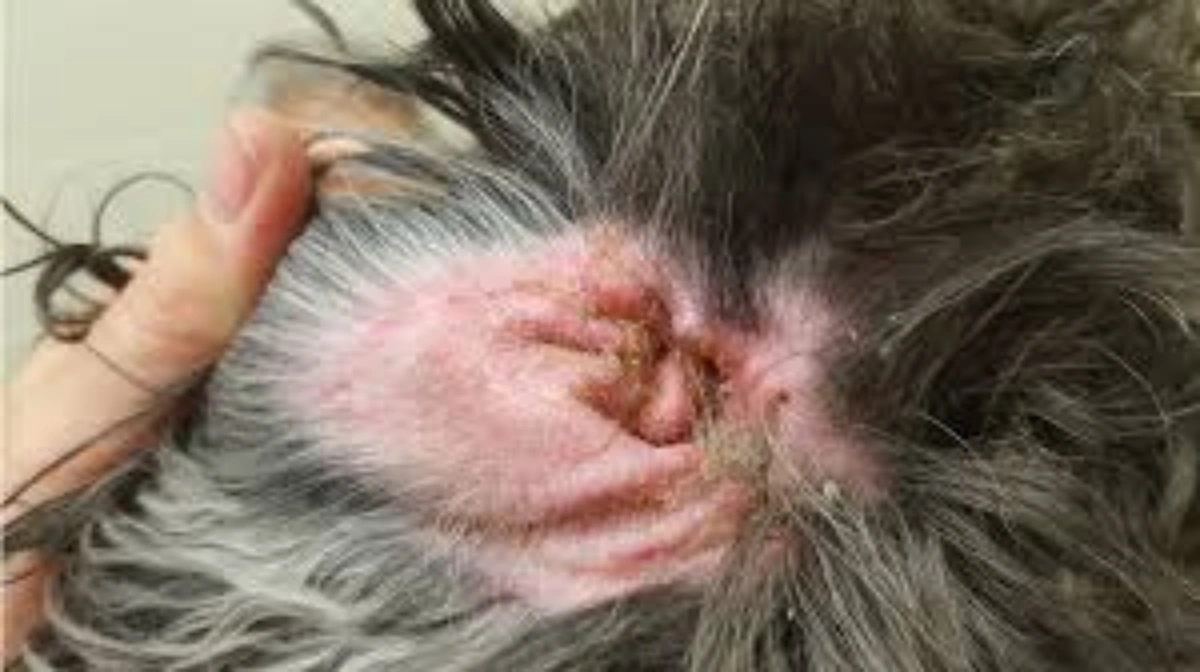
- Bluish or pale discolouration of the ear tips, paw pads, nose, or tail tip
- Coldness to the touch in the extremities even when the rest of the body is warm
- Worsening of weakness or lethargy during cooler weather or after time spent on cold floors
- In advanced cases, tissue damage or necrosis at the extremity tips due to prolonged impaired circulation
At VOSD, we occasionally see dogs that become unusually weak and lethargic during the cooler months and whose signs improve when kept warm and indoors. In a small number of these dogs, investigation reveals an underlying immune-mediated condition affecting the blood. Cold agglutinin disease in dogs is rare, but it is one that a pattern of cold-worsened weakness should prompt a veterinarian to investigate.
Causes and Triggers of Cold Agglutinin Disease in Dogs
Cold agglutinin disease in dogs can be primary, meaning it arises without an identifiable underlying cause, or secondary, meaning it develops as a consequence of another condition. Secondary cold agglutinin disease is more common than the primary form.
Primary Cold Agglutinin Disease
In primary cold agglutinin disease in dogs, the immune system spontaneously begins producing cold-reactive antibodies without any identifiable trigger. This form is rare and is thought to have a genetic component in some cases, though this is not fully understood in dogs.
Secondary Cold Agglutinin Disease
Secondary cold agglutinin disease in dogs develops as a result of another underlying condition that disrupts normal immune function. Known triggers include the following.
- Infections: Certain bacterial, viral, and protozoal infections can stimulate the production of cold-reactive antibodies. In India, tick-borne diseases such as Babesiosis, Ehrlichiosis, and Mycoplasma infections are particularly relevant triggers and should always be screened for in affected dogs.
- Cancer: Lymphoma and other cancers of the lymphatic or immune system can trigger abnormal antibody production, including cold-reactive types.
- Other immune-mediated conditions: Dogs with systemic lupus or other autoimmune diseases may develop cold agglutinin disease as part of a broader immune system dysregulation.
- Certain medications: Drug-induced immune reactions have been reported in association with haemolytic anaemia in dogs, though this is uncommon.
Risk Factors in the Indian Context
India’s climate varies significantly by region and season. Even in cities that experience relatively mild winters, indoor dogs sleeping on cold tiled floors, or dogs in cooler hill stations and northern regions, can experience sufficient temperature exposure to trigger symptoms in a dog with cold agglutinin disease.
- Dogs that sleep on uncarpeted stone or tile floors in winter months may be more exposed than pet parents realise
- Tick-borne infections, which are prevalent across much of India year-round, are among the most common secondary triggers
- Dogs with pre-existing immune-mediated conditions are at higher risk of developing secondary cold agglutinin disease
Related Videos

Diagnosis of Cold Agglutinin Disease in Dogs
Diagnosing cold agglutinin disease in dogs requires a combination of clinical observation, laboratory testing, and investigation for underlying causes. It is not always a straightforward or rapid process.
- Physical examination: Your veterinarian will assess gum colour, heart rate, breathing, temperature of the extremities, and any visible discolouration of the ears, paws, or nose. A full body examination looks for signs of underlying disease.
- Complete blood count (CBC): This will reveal anaemia, with a low red blood cell count and haemoglobin level. The blood smear may show red blood cell clumping, which is a key indicator of agglutination.
- Cold agglutination test: A simple but informative bedside test in which a blood sample is cooled to a lower temperature to observe whether visible agglutination of red blood cells occurs. This can provide rapid supportive evidence for the diagnosis.
- Coombs test: This specialised test detects antibodies on the surface of red blood cells and helps confirm immune-mediated haemolytic anaemia.
- Tick-borne disease screening: In India, testing for Babesia, Ehrlichia, Anaplasma, and Mycoplasma is a standard and important part of the workup for any dog with haemolytic anaemia.
- Imaging and further screening: Chest X-rays, abdominal ultrasound, and lymph node assessment may be recommended to rule out underlying cancer or other systemic disease.
Treatment and Management of Cold Agglutinin Disease in Dogs
Treatment for cold agglutinin disease in dogs addresses both the immune-mediated destruction of red blood cells and any identifiable underlying cause.
- Keeping the dog warm: This is a uniquely important aspect of managing cold agglutinin disease in dogs compared to other forms of IMHA. Keeping affected dogs in a consistently warm environment, away from cold floors and draughts, reduces the activity of cold-reactive antibodies and can meaningfully reduce the rate of red blood cell destruction.
- Immunosuppressive therapy: Prednisolone is the most commonly used first-line immunosuppressive medication. It reduces the immune system’s production of the antibodies driving red blood cell destruction. In more severe or non-responsive cases, additional immunosuppressive agents may be added.
- Treating the underlying cause: If a tick-borne infection or other identifiable trigger is found, treating it directly is an essential part of management. Cold agglutinin disease in dogs secondary to tick fever often improves significantly once the infection is treated.
- Blood transfusion: In dogs with severe anaemia that has developed rapidly, a blood transfusion may be required as a stabilising measure while immunosuppressive treatment takes effect.
- Regular monitoring: Periodic blood counts are essential to assess response to treatment, monitor for relapse, and guide dose adjustments of immunosuppressive medications.
Related Products



Prognosis: What to Expect
The prognosis for cold agglutinin disease in dogs varies depending on whether the condition is primary or secondary and how severe the anaemia is at the time of diagnosis.
- Dogs with secondary cold agglutinin disease caused by a treatable infection such as tick-borne disease often respond well once the underlying infection is treated and immunosuppressive therapy is established.
- Dogs with primary cold agglutinin disease or that associated with cancer have a more variable outlook. Long-term immunosuppressive management is typically required, with periodic monitoring to catch any deterioration early.
- Dogs diagnosed before severe anaemia has developed generally do better than those whose condition has progressed significantly before treatment begins.
Home Care Tips
Managing cold agglutinin disease in dogs at home requires consistent attention to warmth, nutrition, medication, and monitoring.
- Keep your dog in a consistently warm indoor environment, particularly during cooler months. Provide warm, padded bedding away from cold tile floors, draughts, and air conditioning.
- Use a dog-appropriate blanket or coat for outdoor walks during cooler weather, keeping the ears, paws, and tail protected from cold air where possible.
- Administer all prescribed medications consistently and never stop corticosteroids or immunosuppressive drugs abruptly without veterinary guidance.
- Offer a nutritious, balanced diet to support immune health and overall body condition during long-term management.
- Check gum colour at home regularly. Pale gums are a reliable early indicator of worsening anaemia and should prompt an immediate veterinary call.
- Attend all scheduled blood test monitoring appointments to allow your veterinarian to track red blood cell levels and adjust treatment as needed.
- Reduce unnecessary stressors at home, as stress can affect immune function in dogs managing autoimmune conditions.
When to See a Vet
Seek veterinary attention urgently if your dog shows any of the following signs.
- Pale, white, or yellowish gums
- Sudden and severe weakness or collapse
- Dark, reddish, or orange-tinged urine
- Bluish or cold discolouration at the ear tips, paw pads, or nose
- Rapid breathing or an unusually fast heart rate at rest
- A dog already diagnosed with cold agglutinin disease that is deteriorating despite ongoing treatment
Cold agglutinin disease in dogs is a rare but significant autoimmune condition that requires careful and consistent management. Its hallmark, that antibodies are most active in cooler conditions, means that keeping the dog warm is as much a part of treatment as medication. In India, tick-borne infections are among the most important secondary triggers to identify and treat, and with prompt intervention many dogs achieve good recovery. Whether the condition is primary or secondary, early diagnosis and adherence to treatment give the best chance of a stable and comfortable life. If your dog shows signs of weakness, pale gums, or cold discolouration of the extremities, do not wait. Cold agglutinin disease in dogs is always more manageable when caught and treated early.