
Hemangiosarcoma is one of the most difficult cancers in veterinary medicine, not because it is impossible to treat, but because it so often announces itself in crisis. A tumour arising silently within the spleen or heart gives no warning until it ruptures, and internal haemorrhage is frequently the first sign a pet parent sees. By that point, the dog needs emergency surgery, not a routine consultation. Understanding what hemangiosarcoma is, which dogs are most at risk, and what early signs are worth acting on is genuinely useful knowledge, because in the small window where earlier detection is possible, it can change what options are available.
What is Hemangiosarcoma in Dogs?
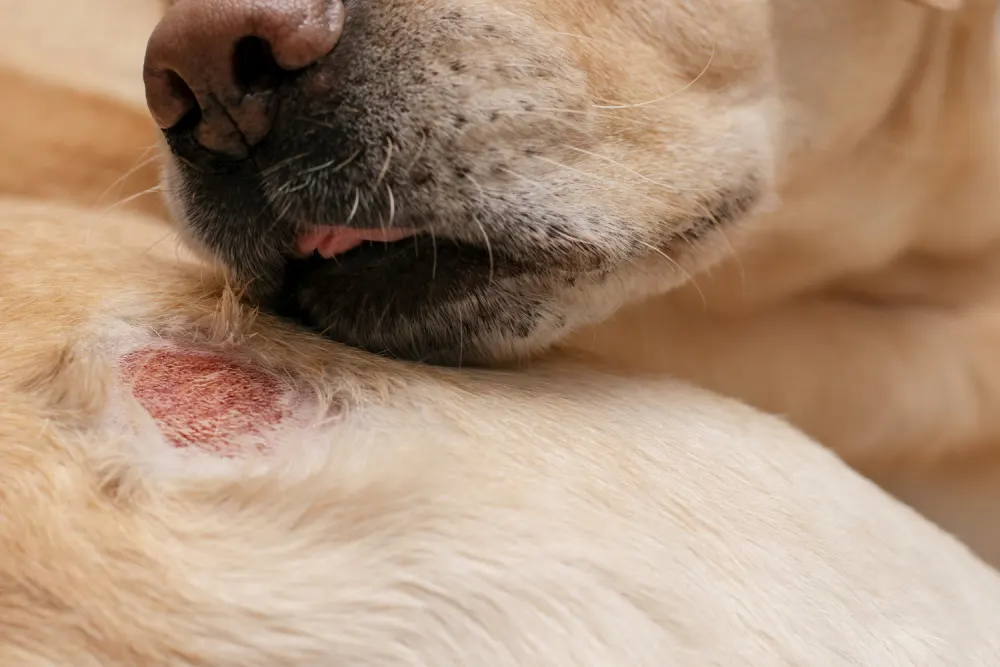
Hemangiosarcoma is a malignant tumour arising from the endothelial cells, the cells that line the interior walls of blood vessels. Because these cells are found throughout the body, hemangiosarcoma can arise in virtually any location where blood vessels exist. In dogs, the three most common primary sites are the spleen, the right atrium of the heart, and the liver. Cutaneous (skin) hemangiosarcoma, occurring as dark, blood-filled nodules under or within the skin, is a distinct form with a somewhat better prognosis than visceral disease.
What makes visceral hemangiosarcoma particularly dangerous is the nature of the tumours themselves: they are blood-filled, fragile masses growing within or on highly vascular organs. The tumour walls are structurally unstable, and as the mass enlarges, spontaneous rupture becomes increasingly likely. When a splenic or hepatic hemangiosarcoma ruptures, blood haemorrhages directly into the abdominal cavity, rapidly, sometimes massively, producing haemoabdomen. The dog can collapse within minutes of what appeared to be normal health. For a detailed clinical overview of this condition and its pathophysiology, Hemangiosarcoma in dogs, cancer of the Blood Vessels provides a comprehensive reference.
Symptoms of Blood Vessel Cancer in Dogs
The clinical picture of hemangiosarcoma divides into two scenarios: the slow, subtle decline as the tumour grows before rupture, and the acute crisis that follows haemorrhage. Many dogs are present in the second scenario because the first went unrecognised.
Common Clinical Signs
Before rupture (subacute phase):
- Intermittent lethargy, episodes of unusual tiredness that seem to resolve, sometimes correlating with small, self-limiting bleeds from the tumour surface
- Reduced exercise tolerance, the dog tires more easily than usual, slows on walks, or avoids activities they previously enjoyed
- Mild abdominal distension, a subtly rounder or fuller belly as fluid accumulates slowly
- Unexplained weight loss, gradual loss of body condition despite normal feeding
- Pale or slightly muted gum colour, intermittent mild anaemia from slow, ongoing blood loss
At or after rupture (acute phase):
- Sudden severe weakness or collapse, a dog that was standing minutes earlier is now unable to rise
- Pale, white, or grey gums, critical anaemia from haemoabdomen; mucous membranes may be almost white
- Rapid, shallow breathing, compensating for reduced oxygen-carrying capacity
- Rapid, weak pulse, cardiovascular compensation for acute blood loss
- Distended, tense abdomen, filling with blood
- Rapid heart rate with arrhythmia, particularly with cardiac hemangiosarcoma, where tumour location and haemorrhage directly affect heart rhythm
The intermittent episodes in the subacute phase, a dog that seems off for a day then bounces back, are a pattern that experienced clinicians recognise as a significant red flag in middle-aged and older large breed dogs. These episodes, sometimes called “fainting spells” by owners, often represent small bleeds that temporarily resolve. The next bleed may not resolve.
Causes and Risk Factors
The precise cellular mechanism driving hemangiosarcoma development is not fully understood. Like most cancers, it likely involves a combination of accumulated genetic mutations, environmental exposure, and immune surveillance failure.
Breed predisposition is the most well-documented risk factor. German Shepherds, Golden Retrievers, and Labrador Retrievers are disproportionately represented in hemangiosarcoma case series, with Golden Retrievers having among the highest documented incidence of any breed. Boxers, Doberman Pinschers, Skye Terriers, and Whippets also appear at elevated frequency. In large cohort studies of Golden Retrievers, hemangiosarcoma accounts for a significant proportion of cancer-related deaths.
Age the vast majority of cases, dogs are diagnosed over eight years old. Middle-aged large breed dogs presenting with unexplained episodic weakness should have hemangiosarcoma actively considered on the differential.
Solar radiation, cutaneous hemangiosarcoma, particularly on sparsely haired skin (the ventral abdomen, inguinal area, and inner thighs of short-coated dogs), has been associated with ultraviolet exposure. Lightly pigmented skin in sun-exposed areas is a modifiable risk factor for this specific form.
Genetic mutations, research has identified specific tumour suppressor gene mutations in canine hemangiosarcoma, and this area is the subject of active investigation in veterinary oncology, particularly in Golden Retriever-focused studies.
Related Videos


Diagnosing Blood Vessel Cancer in Dogs
Diagnosing hemangiosarcoma before rupture, when it is still a management choice rather than an emergency, requires a combination of routine screening and prompt investigation of subtle signs.
Abdominal ultrasound is the most important diagnostic tool for detecting splenic and hepatic hemangiosarcoma before rupture. A well-performed ultrasound by an experienced operator can identify a splenic mass, characterise its vascularity, and assess for free abdominal fluid, indicating early haemorrhage. Routine screening ultrasound in at-risk breeds from age seven onwards is the current standard recommendation at many veterinary oncology referral centres.
FAST ultrasound (Focused Assessment with Sonography for Trauma), a rapid, abbreviated ultrasound scan used in emergency assessment to detect free abdominal fluid when haemoabdomen is suspected. This is often the first test performed on a collapsed dog.
Echocardiography, cardiac hemangiosarcoma (most commonly affecting the right atrium) is detected by echocardiogram; cardiac masses and pericardial effusion (fluid around the heart) are assessable on echo. Unexplained pericardial effusion in a large breed dog should prompt evaluation for right atrial hemangiosarcoma.
Thoracic radiographs, three-view chest X-rays, assess for pulmonary metastasis and cardiac silhouette enlargement (suggestive of pericardial effusion).
Complete Blood Count may reveal anaemia, thrombocytopenia, and schistocytes (fragmented red cells), which together suggest microangiopathic haemolytic anaemia, a pattern commonly associated with hemangiosarcoma and a useful diagnostic indicator.
Biopsy and histopathology, definitive diagnosis requires tissue examination. In many cases, this is obtained from the surgically removed spleen (splenectomy) rather than pre-operatively, because FNA of a splenic hemangiosarcoma carries haemorrhage risk and cytology from blood-filled masses is frequently non-diagnostic.
Abdominal fluid analysis, in haemoabdomen cases, the fluid is typically non-clotting blood with a PCV approaching peripheral blood; in some cases, cytology may identify tumour cells, though this is uncommon.
Prognosis and Treatment Options
Hemangiosarcoma carries a guarded to poor prognosis regardless of treatment, and it is important to be honest about this with pet parents while also conveying what treatment realistically offers. The conversation is not “treat or don’t treat”, it is “what does treatment provide in terms of quality time and comfort?”
Splenectomy, surgical removal of the spleen is the standard of care for splenic hemangiosarcoma and addresses the immediate haemorrhage risk. Median survival with splenectomy alone is approximately one to two months, because micrometastatic disease is almost universally present by the time visceral hemangiosarcoma is diagnosed. Splenectomy removes the primary haemorrhage risk and provides a tissue diagnosis, but does not address metastatic disease.
Splenectomy followed by adjuvant chemotherapy, doxorubicin-based protocols (VAC or AC) used after surgery extend median survival to approximately four to six months, with some dogs living longer. Chemotherapy reduces the pace of metastatic progression rather than eliminating it. This option is appropriate for dogs with good post-operative performance status.
Doxorubicin-based chemotherapy without surgery, a palliative option where surgery is not feasible; provides some disease control and may reduce haemorrhage frequency.
Yunnan Baiyao, a traditional Chinese herbal preparation increasingly used as an adjunct in canine hemangiosarcoma management; some retrospective evidence suggests it may reduce haemorrhagic episodes and has been associated with modestly extended survival in certain studies. It is used alongside, not instead of, conventional treatment.
I’m STILL Standing (metronomic chemotherapy protocol), a lower-dose, more frequent oral chemotherapy approach that has shown some promise in post-splenectomy hemangiosarcoma management; accessible in terms of cost and owner compliance compared to IV doxorubicin protocols.
For a broader context on how treatment decisions are made across canine cancer types, cancer in dogs, symptoms, types, and treatment provides a useful overview.
Managing Quality of Life
In advanced disease or where aggressive treatment is not elected, the focus shifts to ensuring the dog is comfortable, engaged, and free from pain. Effective symptom management includes anti-nausea medication, appetite stimulation where needed, and, crucially, monitoring for haemorrhagic episodes. Some pet parents opt for splenectomy purely to eliminate the rupture risk and the distress of acute haemorrhage, without pursuing adjuvant chemotherapy; this is a valid and compassionate choice. Palliative care frameworks, regular communication with the veterinary team, and clarity about what signs should prompt an emergency visit are the practical tools for managing this period well.
Related Products


Preventing Complications and Monitoring Health
Hemangiosarcoma cannot be prevented in a predisposed dog, but earlier detection is achievable with proactive monitoring:
- Annual or biannual abdominal ultrasound for breeds at elevated risk, German Shepherds, Golden Retrievers, Labradors, from age seven onwards; this is the single most effective tool for finding splenic masses before rupture
- Cardiac screening (echocardiogram) in dogs with unexplained weakness, exercise intolerance, or arrhythmia
- Prompt investigation of “off days”, an episode of unexplained weakness, pale gums, or collapse that resolves on its own, is not something to wait out; it warrants a same-day or next-morning veterinary assessment
- CBC as part of routine annual blood work, the pattern of anaemia, thrombocytopenia, and schistocytes can precede clinical symptoms
- Limit prolonged UV exposure in short-coated dogs for ventral skin. Practically, avoiding extended midday sun and providing shade reduces cutaneous hemangiosarcoma risk
When to Seek Emergency Veterinary Care
If your dog collapses, is unable to stand or rise, has pale or white gums, is breathing rapidly at rest, or has a visibly distended abdomen that appeared suddenly, go to an emergency veterinary clinic immediately. These signs in a middle-aged or older large breed dog represent haemoabdomen until proven otherwise and require urgent assessment. Do not wait to see if the dog improves; spontaneous temporary stabilisation after internal bleeding can create a false impression of recovery before the situation deteriorates again. Time matters acutely in these presentations.
Conclusion
Hemangiosarcoma is one of the hardest diagnoses in companion animal medicine, aggressive, often late-presenting, and carrying a prognosis that calls for honest conversation rather than false reassurance. And yet, dogs treated for hemangiosarcoma do have additional good-quality time. Splenectomy removes a life-threatening haemorrhage risk. Chemotherapy slows metastatic progression. Palliative care keeps dogs comfortable. What changes most when the diagnosis is made earlier, whether through routine screening or prompt response to subtle warning signs, is the range of options available and the nature of the decisions that need to be made. That is why attentive monitoring of at-risk dogs and acting on early signs rather than explaining them away genuinely matters.