We often see older dogs brought in after months of gradual changes, weight that redistributes into a rounded belly, patchy hair loss on the body, skin that becomes thin and prone to infections, and a dog that drinks and urinates more than usual. Cushing’s disease in dogs is frequently mistaken for the inevitable consequences of ageing, which means it often goes undiagnosed and unmanaged for longer than it should. The reassuring reality is that once properly identified, it is a very manageable condition with a good quality of life achievable for most affected dogs.
What is Cushing’s Disease in Dogs?
Cushing’s disease in dogs, also known as hyperadrenocorticism, is a condition where the adrenal glands produce excessive amounts of cortisol. Cortisol is a natural hormone produced by the adrenal glands in response to stress and physical demands. In appropriate amounts, it plays important roles in metabolism, immune function, and the body’s stress response. When it is produced in excess on a chronic basis, it disrupts multiple body systems in characteristic and recognisable ways.
Types of Cushing’s Disease in Dogs
There are three distinct forms of Cushing’s disease in dogs, each with a different underlying cause:
| Type | Cause | How Common | Notes |
|---|---|---|---|
| Pituitary-dependent | A small tumour in the pituitary gland overproduces ACTH, stimulating the adrenals to produce excess cortisol | Accounts for approximately 80 to 85 percent of cases | Most common form; tumours are usually small and benign |
| Adrenal-dependent | A tumour in one of the adrenal glands directly produces excess cortisol | Approximately 15 to 20 percent of cases | May be benign or malignant; surgical removal is the preferred treatment |
| Iatrogenic (steroid-induced) | Long-term or excessive use of corticosteroid medications suppresses the adrenal glands and produces a Cushing-like state | Seen in dogs on prolonged steroid treatment | Resolves with gradual, supervised steroid withdrawal |
In India, iatrogenic Cushing’s disease in dogs deserves particular mention. Steroids are sometimes used without full veterinary supervision for skin conditions, allergies, or joint pain, and long-term use without monitoring can produce the full picture of Cushing’s disease in a dog that has no underlying tumour. This is not a reflection of bad intent, it reflects a gap in awareness that this guide aims to help bridge.
Why Cortisol Balance Matters
Cortisol is sometimes called the stress hormone, but its role is much broader than managing acute stress. It regulates blood glucose levels, suppresses inflammation, supports immune responses, and helps the body manage energy during demanding periods. When cortisol is chronically elevated, these functions become dysregulated. Blood sugar rises, the immune system is persistently suppressed, fat distribution shifts, and the skin and muscle tissue gradually deteriorate under the sustained hormonal influence.
Related Videos




Symptoms of Cushing’s Disease in Dogs
The symptoms of Cushing’s disease in dogs develop slowly over months to years, which is why they are so often attributed to ageing. Here is what to watch for:
- Significantly increased water intake and urination, often the first and most noticeable sign
- Increased appetite, sometimes dramatically so
- Abdominal distension, commonly described as a pot-bellied appearance, caused by liver enlargement and fat redistribution
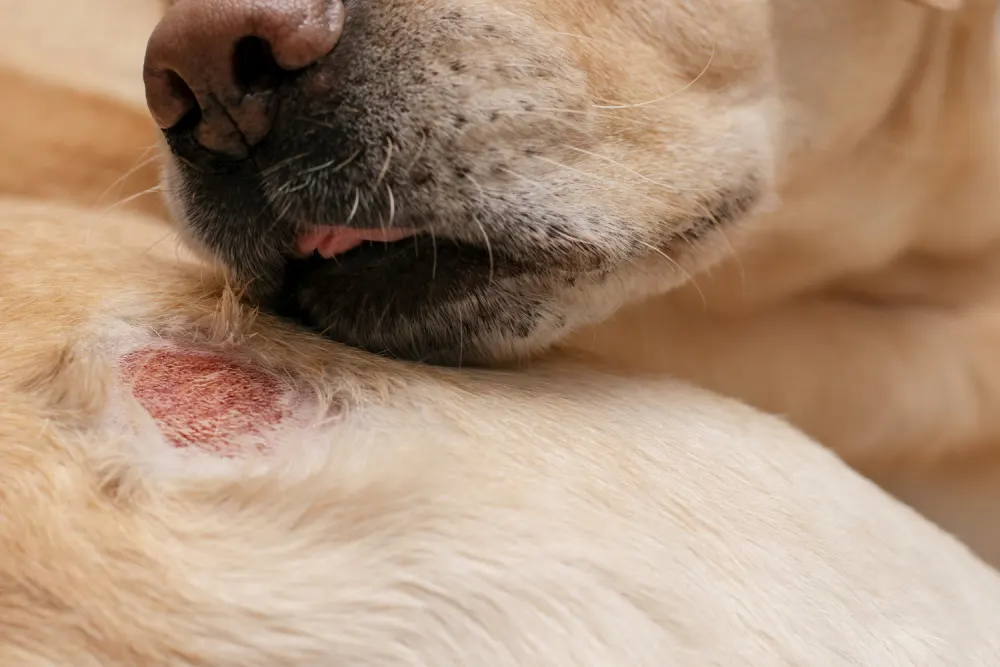
- Symmetrical hair loss on the trunk of the body, with the head and legs often unaffected
- Thin, fragile skin that bruises easily, tears with minor trauma, or develops calcium deposits
- Lethargy and reluctance to exercise
- Muscle weakness and wasting, particularly noticeable in the hindquarters
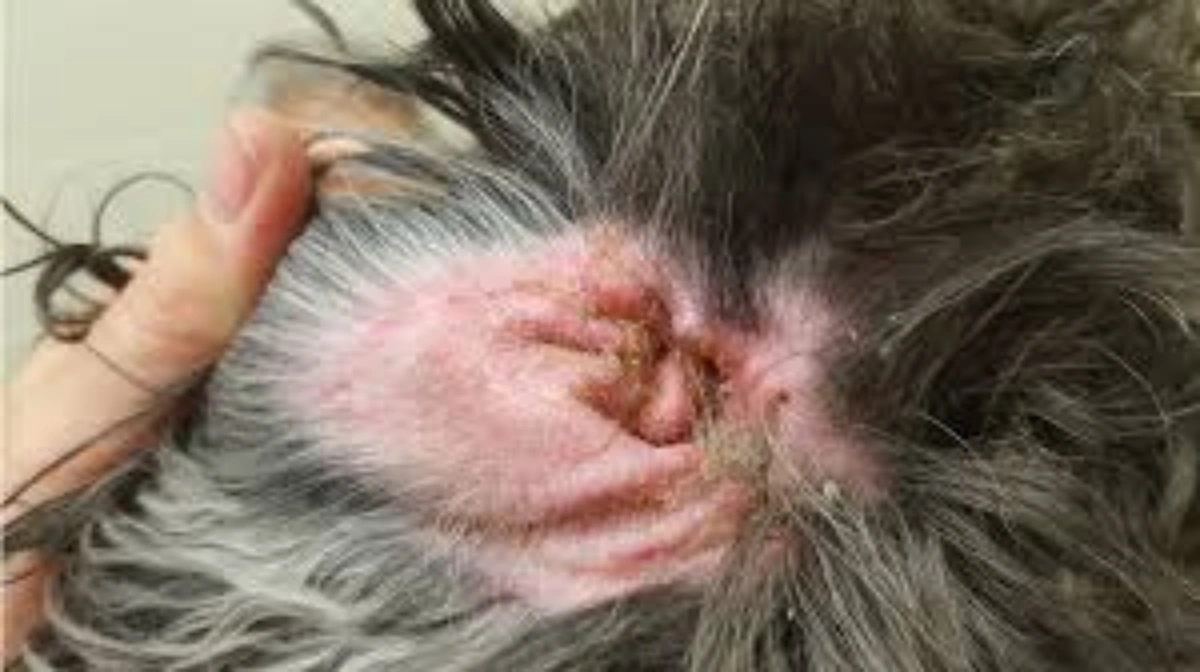
- Recurrent skin infections, as the immunosuppressive effects of cortisol reduce the dog’s ability to fight bacterial and yeast infections
- Recurrent urinary tract infections for the same reason
- Panting more than usual, even in cool temperatures
In younger dogs or those with adrenal tumours, the progression can occasionally be faster. In older dogs with pituitary-dependent disease, the gradual nature of the changes makes it very easy to accept them as normal.
Causes of Cushing’s Disease in Dogs
The cause of the excess cortisol depends on the type:
- Pituitary tumour: The most common cause. A small tumour in the pituitary gland at the base of the brain produces excess adrenocorticotrophic hormone, which continuously stimulates the adrenal glands to produce cortisol regardless of the body’s actual needs.
- Adrenal tumour: A tumour in one or both adrenal glands directly produces excess cortisol. These can be benign adenomas or, in a smaller proportion of cases, malignant adrenocarcinomas.
- Prolonged corticosteroid therapy: When a dog receives corticosteroids such as prednisolone for extended periods, the adrenal glands receive a sustained signal to suppress their own cortisol production. This eventually produces an adrenal insufficiency alongside a Cushing-like syndrome from the exogenous steroid. Gradual tapering rather than abrupt cessation is always required after prolonged steroid use.
Dogs at Higher Risk of Cushing’s Disease
Several factors are associated with higher risk:
- Age: most diagnoses are made in dogs over six years of age, and the majority present between eight and twelve years old
- Breed: Poodles, Dachshunds, Boxers, Beagles, Boston Terriers, and Labrador Retrievers are among the breeds with documented higher incidence
- Any dog on long-term steroid treatment without monitoring is at risk of iatrogenic disease
- Mixed-breed and indie dogs can and do develop Cushing’s disease, though breed-specific predispositions are less well characterised
How is Cushing’s Disease Diagnosed?
Diagnosis of Cushing’s disease in dogs requires specific hormonal testing in addition to the clinical picture. General blood work often shows suggestive changes, elevated liver enzymes, increased white blood cells, and sometimes elevated cholesterol, but these alone are not specific enough to confirm the diagnosis.
- ACTH stimulation test: The dog is given an injection of synthetic ACTH and blood cortisol levels are measured before and after the injection. An exaggerated cortisol response confirms that the adrenal glands are hyperactive. This test is also used for monitoring treatment response.
- Low-dose dexamethasone suppression test: The dog is given a small dose of dexamethasone, which should suppress cortisol production in a normal dog. Failure to suppress confirms Cushing’s disease. This test is particularly useful for differentiating between pituitary and adrenal-dependent disease when combined with a high-dose version.
- Urine cortisol-to-creatinine ratio: A urine sample can be used as a screening test. An elevated ratio suggests cortisol excess but requires confirmation with the above tests.
- Abdominal ultrasound: Imaging can identify adrenal gland enlargement or a visible adrenal tumour, and also assess the liver, which is frequently enlarged in Cushing’s disease. This helps distinguish between pituitary and adrenal-dependent disease.
Treatment Options for Cushing’s Disease in Dogs
Treatment depends on the type of Cushing’s disease and the individual dog’s health status:
Medical management with trilostane: This is the most commonly used and most accessible treatment for pituitary-dependent Cushing’s disease in dogs. Trilostane works by inhibiting the enzyme involved in cortisol production in the adrenal glands, reducing cortisol to a controlled level. It is given orally once or twice daily and requires regular monitoring with ACTH stimulation tests to ensure the dose is keeping cortisol within an appropriate range. Trilostane is available through veterinary clinics in India and is the standard of care for most dogs with Cushing’s disease.
Surgical adrenalectomy: For adrenal-dependent Cushing’s disease caused by an accessible tumour, surgical removal of the affected adrenal gland is the preferred treatment. The surgery is significant but, when performed successfully, can produce a full resolution of the disease in dogs with benign adrenal tumours.
Managing iatrogenic Cushing’s disease: If the cause is long-term steroid use, the treatment is gradual, carefully supervised reduction and withdrawal of the steroid over a period of weeks to months. This must never be done abruptly, as the adrenal glands need time to resume their own cortisol production.
Related Products


Prognosis and Long-Term Care
With appropriate treatment and consistent monitoring, most dogs with Cushing’s disease live comfortably for years after diagnosis. The disease is managed rather than cured in most cases, but effective management produces a significant improvement in quality of life.
Regular ACTH stimulation tests every three to six months are an ongoing requirement of trilostane treatment to confirm that the dose is keeping cortisol in the right range. Cortisol that drops too low is as problematic as cortisol that remains too high, and monitoring ensures the dog is maintaining the appropriate balance. This is why the reassurance that Cushing’s disease is manageable comes with the important qualifier that management requires consistent veterinary oversight.
Complications if Left Untreated
While the gradual nature of Cushing’s disease in dogs makes it tempting to delay investigation, leaving it unmanaged over extended periods carries real risks:
- Development of diabetes mellitus, as chronically elevated cortisol drives persistent insulin resistance
- Recurrent serious infections, including skin, urinary tract, and respiratory infections, due to the sustained immunosuppressive effect of excess cortisol
- Progressive muscle wasting and weakness, which significantly affects mobility and quality of life
- Hypertension and its associated organ consequences
- In pituitary-dependent cases, a large pituitary tumour can occasionally cause neurological signs over time
Common Mistakes Pet Parents Make
A few recurring patterns make management of Cushing’s disease in dogs more difficult than it needs to be:
- Attributing symptoms to old age and delaying investigation. While the symptoms do occur in older dogs, they are not a normal or inevitable consequence of ageing and deserve proper assessment.
- Stopping medication when the dog seems better. Trilostane manages cortisol continuously, stopping it allows cortisol to rise again and symptoms to return.
- Skipping monitoring blood tests. The dose that was correct six months ago may no longer be appropriate, and monitoring is the only way to confirm ongoing safety and efficacy.
- Using steroids for extended periods without veterinary supervision or monitoring, which risks producing iatrogenic Cushing’s disease in a dog that did not originally have it.