Most owners notice the watery eyes. The squinting. The occasional pawing at the face.
What they do not always realise is that their dog’s eyelid is physically rubbing against the surface of the eye with every single blink. Every blink. All day. Every day.
Entropion is not a minor irritation. It is a structural problem that causes continuous, relentless friction on the cornea. Left untreated, that friction creates ulcers, scarring, and in serious cases, permanent vision loss. The condition often looks mild on the outside. The damage it does on the inside is anything but.
A Structural Problem That Causes Continuous Pain
Entropion occurs when the eyelid rolls inward toward the eye instead of sitting flat against it. When this happens, the eyelashes and the outer skin of the lid make direct contact with the corneal surface.
The cornea is one of the most nerve-dense surfaces in the body. Any friction against it is immediately and intensely felt. A dog with entropion is not mildly uncomfortable. It is in constant discomfort that worsens every time it blinks.
The condition can affect the upper eyelid, the lower eyelid, or both. It can occur in one eye or both simultaneously.
What Your Dog May Be Showing You
The symptoms of entropion are driven by pain and the body’s response to ongoing corneal irritation.
Common signs include:
- Excessive tearing and tear staining below the eye
- Persistent squinting or holding the affected eye partially closed
- Redness of the eye and surrounding tissue
- Thick or mucoid discharge from the eye
- Frequent pawing or rubbing at the face
- Sensitivity to light
- Visible cloudiness on the corneal surface if ulceration has developed
Many owners live with these signs for weeks or months, attributing them to allergies or general eye sensitivity. The signs do not fluctuate the way allergy symptoms do. They are consistent because the cause, the inward-rolling eyelid, is always present.
Why This Happens in Some Dogs
Genetic Entropion
This is the most common cause. In many breeds, entropion is directly inherited as part of the same selective breeding that produced their facial structure and skin characteristics.
Breeds with the highest predisposition include:
- Shar-Peis, where excessive facial skin folds directly pull the eyelids inward
- Chow Chows
- Bulldogs and other brachycephalic breeds
- Rottweilers
- Labrador and Golden Retrievers
- Mastiffs
- Great Danes
- Cocker Spaniels
- Bloodhounds
In these breeds, the eyelid conformation is abnormal from birth or develops as the puppy grows and facial structure becomes established.
Secondary Entropion
This form develops as a consequence of another problem rather than as an inherited structural issue.
Causes of secondary entropion include:
- Severe eye pain causing the dog to squint so forcefully that the eyelid rolls inward, called spastic entropion
- Scarring of the eyelid tissue from previous injury, surgery, or chronic inflammation
- Loss of eyelid muscle tone in older dogs
- Neurological damage affecting eyelid function
Secondary entropion can occur in any breed and at any age.
Age-Related Changes
In some older dogs, the tissues supporting normal eyelid position weaken with age, allowing the lid to roll inward gradually. This form tends to be progressive and may worsen over months to years.
Related Videos


The Damage Cycle Inside the Eye
Understanding what entropion does to the eye over time explains why early treatment is not optional.
The cycle progresses as follows:
- Eyelid rolls inward – eyelashes and skin contact the corneal surface with every blink
- Friction creates inflammation – the cornea becomes irritated, red, and painful
- Repeated trauma breaks down the corneal surface – epithelial erosions and corneal ulcers develop
- Ulcers deepen without treatment – the risk of corneal perforation rises significantly
- Chronic inflammation produces scarring – scar tissue permanently clouds the cornea
- Vision is compromised or lost – in severe or long-standing cases, irreversibly
Each stage in this sequence is preventable. But only if the entropion itself is addressed. Managing the ulcers or the inflammation without correcting the eyelid is treating the consequence while the cause continues doing damage.
Different Forms This Condition Can Take
Primary entropion is genetic. It is present because of the dog’s inherited anatomy and will not resolve without surgical correction. This is the most common form and the one most frequently seen in the predisposed breeds listed above.
Secondary or spastic entropion develops because something else is causing the dog to hold its eye closed forcefully. Severe pain from a corneal ulcer, uveitis, or another painful eye condition can cause the orbicularis muscle to contract so strongly that the eyelid rolls inward. This form may resolve if the primary painful condition is successfully treated.
Cicatricial entropion results from scarring of the eyelid tissue, which contracts and pulls the lid margin inward. This form is less common and can follow trauma, chemical burns, or previous eyelid surgery.
Distinguishing between these forms matters clinically because the treatment approach differs between them.
How Vets Confirm the Problem
Diagnosis of entropion is primarily clinical. The rolled eyelid is visible on careful examination.
The diagnostic process typically includes:
- Physical examination of the eyelids with the dog awake and relaxed, assessing the degree and position of the inward roll
- Topical anaesthetic drops applied to the eye to temporarily eliminate the pain-driven muscle spasm, which helps distinguish primary entropion from spastic secondary entropion. If the eyelid normalises after numbing drops, spastic entropion is likely.
- Fluorescein staining of the corneal surface to identify any existing ulceration that requires immediate treatment alongside managing the entropion
- Assessment of the underlying cause in secondary cases, identifying and addressing the primary painful condition driving the muscle spasm
Correcting the Eyelid: Treatment Explained
Temporary Sutures in Puppies
In young puppies, particularly in heavily predisposed breeds like Shar-Peis, the eyelid conformation at eight to twelve weeks may predict severe entropion. Rather than performing permanent surgery on a face that is still growing and changing, temporary eyelid tacking sutures are placed to hold the lid in the correct position.
These sutures are removed after several weeks. As the puppy grows and facial conformation matures, a decision about whether permanent surgical correction is needed can be made with more accurate information.
Lubricating Eye Drops
Lubricants do not correct entropion. They reduce the friction damage while other decisions are being made or while the dog is being prepared for surgery. They are a short-term supportive measure, not a treatment.
Surgical Correction
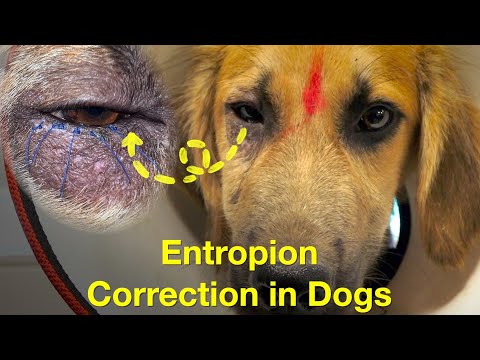
Surgery is the only definitive treatment for primary entropion. The procedure, called a Hotz-Celsus procedure in its most common form, involves removing a carefully measured ellipse of skin and tissue from the outer surface of the affected eyelid. As the tissue heals, it tightens and pulls the eyelid edge outward into the correct position.
Key points about entropion surgery:
- It is performed under general anaesthesia
- It is highly effective when performed correctly and at the right time
- The amount of tissue removed must be precise. Too little leaves the entropion uncorrected. Too much creates ectropion, where the lid rolls outward.
- Most dogs require a single surgical procedure. Some severe cases or cases in growing dogs require staged corrections.
- Recovery typically involves antibiotic eye drops, an Elizabethan collar, and a follow-up examination at two weeks
Related Products
What Recovery Looks Like for Your Dog
Most dogs show dramatic improvement in comfort within days of surgical correction. The relief from constant corneal friction is immediate once the eyelid is in the correct position.
What to expect during recovery:
- Swelling and mild bruising around the eyelid in the first few days
- Antibiotic drops applied to the eye as directed
- Elizabethan collar worn continuously until sutures are removed at approximately two weeks
- The eye becomes progressively clearer and more comfortable as inflammation resolves
Dogs whose entropion is corrected before permanent corneal scarring develops typically recover full or near-full visual function. Dogs with existing corneal scarring may retain some degree of cloudiness permanently, though the scarring often fades partially over months once the source of irritation is removed.
What Happens If It Is Ignored
Untreated entropion follows a predictable and damaging path.
The consequences of delay include:
- Corneal ulceration from the relentless friction, which is painful and prone to secondary infection. Our detailed guide on Eye Ulcer in Dogs covers the progression and management of corneal ulcers in full, including why they represent a veterinary emergency when deep.
- Deep or perforating ulcers in severe or long-standing cases, where the ulcer erodes through the full corneal thickness
- Corneal scarring that permanently reduces visual clarity in the affected area
- Chronic infection from bacteria colonising the damaged corneal surface
- Permanent vision impairment in dogs where scarring has extensively involved the visual axis
- Loss of the eye in the most extreme cases, where perforation has occurred, and the eye cannot be saved
None of these outcomes is inevitable. All of them are preventable with timely treatment.
A dog that has been squinting and tearing for six months has been in pain for six months. The damage accumulates quietly while the symptoms are dismissed as minor. It is a pattern seen far too often, and the dogs pay the cost of the delay.
Entropion vs Other Eye Conditions
Because entropion’s symptoms overlap with those of other eye conditions, it is worth understanding the distinctions clearly.
Entropion is a structural eyelid problem. The eyelid rolls inward. The damage it causes, including ulcers and inflammation, is the consequence rather than the primary condition.
Ectropion is the opposite structural problem. The eyelid rolls outward, exposing the conjunctiva and creating a different set of problems, including chronic exposure and environmental contamination. The treatment is also surgical but involves a different technique.
Corneal ulcers are a consequence that entropion frequently causes. Treating only the ulcer while the entropion continues is incomplete management. The ulcer will recur as long as the eyelid continues to rub.
Conjunctivitis can produce similar surface symptoms, including redness, discharge, and tearing. The key difference is that conjunctivitis is an inflammatory condition of the eye surface, while entropion is a structural eyelid problem. Entropion does not respond to antibiotic or anti-inflammatory drops alone.
For owners researching the full range of Dog Medical Conditions that can mimic or complicate each other, understanding these structural distinctions is fundamental to seeking the right treatment.
When It Becomes More Than Discomfort
Most entropion cases begin as chronic irritation and progress gradually. However, several situations represent a significant escalation that requires urgent attention.
Seek immediate veterinary care if:
- The dog is unable or unwilling to open the affected eye
- There is visible cloudiness, a white spot, or a depression on the corneal surface indicating ulceration
- Discharge has become thick, yellow, or green, suggesting infection
- The dog is in obvious acute pain rather than chronic low-level discomfort
- There has been a sudden worsening in a dog with previously mild symptoms
At this point, the entropion has almost certainly produced a significant corneal ulcer. As covered in our guide on eye ulcers, deep corneal ulcers are emergencies that can progress to perforation rapidly.
When You Should See a Vet Without Delay
Do not wait if your dog is showing:
- Persistent squinting in one or both eyes
- Excessive tearing or tear staining below the eye
- Redness that has been present for more than a day or two
- Frequent pawing at the face or rubbing against surfaces
- Any visible change in the appearance of the corneal surface
- Discharge that is not clear and watery
These signs indicate that the cornea is being damaged. The longer the friction continues, the more damage accumulates. Early intervention produces better outcomes and prevents the cascade of complications that untreated entropion reliably produces.