At first glance, it can look like nothing more than slightly puffy gums. But enlarged gums in dogs are more than a cosmetic issue.
When gum tissue grows excessively and begins to cover the teeth, it creates deep pockets between the gum and the tooth surface. Those pockets trap food, bacteria, and debris in a space that cannot be cleaned at home. Infection takes hold quietly beneath the surface, and by the time visible signs appear, the damage to the underlying structures is often already significant.
Gingival hyperplasia, the clinical term for abnormal gum tissue overgrowth, is a condition that progresses when left unmanaged. It is not always painful in the earliest stages, which is exactly what makes it easy to miss. Understanding what to look for, what drives it, and how it is treated gives your dog the best chance of avoiding its more serious consequences.
What Are Enlarged Gums in Dogs?
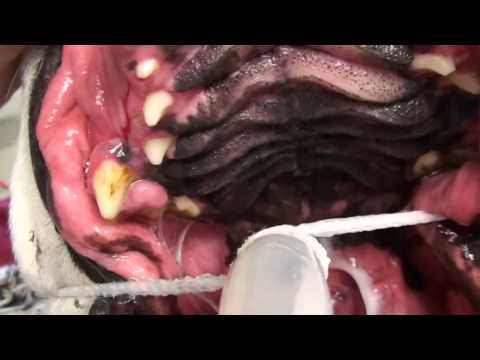
Gingival hyperplasia is the abnormal proliferation of gum tissue beyond its normal boundaries. Instead of sitting neatly at the base of each tooth, the gum tissue thickens, extends upward, and in moderate to severe cases, begins to partially or completely cover the visible crown of the tooth.
The overgrown tissue creates what are called pseudopockets, false gum pockets that mimic the deep pockets seen in advanced periodontal disease. These spaces are inaccessible to routine cleaning and provide an ideal environment for bacterial colonisation.
In some dogs, the overgrowth is uniform, affecting the gums broadly. In others, it appears as discrete thickened masses around individual teeth. Either way, the underlying risk is the same: a chronically infected, bacteria-laden environment that steadily undermines dental and systemic health.
Symptoms of Enlarged Gums in Dogs
Gingival hyperplasia has both visible signs and behavioural indicators. Recognising either early significantly improves the treatment outcome.
Common Clinical Signs
- Thickened, swollen, or lumpy gum tissue that appears larger than normal
- Gums visibly covering part or all of the tooth crown
- Redness and inflammation along the gum line
- Bleeding gums, particularly when touched or during eating
- Persistent bad breath (halitosis) that does not resolve with basic dental care
- Difficulty chewing, dropping food, or a reluctance to eat hard food
- Excessive drooling
One of the most important things to understand about this condition is what happens beneath the visible overgrowth. The pockets formed by excess gum tissue trap food particles and bacteria that cannot be reached by brushing. Over time, this creates a cycle of chronic bacterial infection that progressively damages the surrounding tissue and bone.
If you notice red or inflamed gums alongside any swelling or enlargement, do not dismiss it as ordinary sensitivity. Redness combined with tissue overgrowth is a signal that the inflammatory process is already active.
Causes of Enlarged Gums in Dogs
Gingival hyperplasia is typically multifactorial. Genetic predisposition, bacterial triggers, medications, and mechanical irritation can all contribute, often in combination.
Plaque and Periodontal Disease
The most common driver of gum overgrowth is chronic plaque accumulation and the bacterial inflammation it creates. When plaque builds up along the gum line and is not adequately removed, the body mounts an inflammatory response. In some dogs, particularly those with a genetic predisposition, this inflammation triggers not just swelling but actual cellular proliferation of the gum tissue.
This is the same inflammatory cycle that drives periodontal gum disease in dogs, and the two conditions frequently coexist. Plaque that progresses to tartar and chronic gum infection creates the conditions for hyperplasia to develop and worsen.
Genetic Predisposition
Certain breeds are significantly more prone to gingival hyperplasia regardless of their dental hygiene status. Boxers, English Bulldogs, Great Danes, Labrador Retrievers, and Collies are among the breeds most commonly affected.
In these dogs, the gum tissue appears to have an inherent tendency to overgrow in response to even mild inflammation. This does not mean the condition is inevitable, but it does mean that more vigilant and more frequent dental monitoring is essential from an early age.
Medication-Induced Gum Overgrowth
Some medications are directly associated with gingival overgrowth as a side effect. Cyclosporine, an immunosuppressive drug used for conditions such as immune-mediated disease or atopic dermatitis, is the most commonly implicated in dogs. Calcium channel blockers used for cardiac conditions have also been associated with this reaction in some cases.
When medication is the primary driver, the overgrowth tends to be diffuse, affecting the gums broadly rather than locally. Identifying the causative medication is an important part of the diagnostic process because adjusting or changing the drug may improve or fully resolve the condition.
Chronic Irritation or Trauma
Repetitive mechanical irritation of the gum tissue can also contribute to hyperplasia. Misaligned teeth pressing repeatedly against the gum surface, foreign objects lodged near the gum line, or habitual chewing on hard objects that abrade the gum tissue can all stimulate abnormal tissue proliferation over time.
In dogs with existing dental overcrowding or malocclusion, this mechanical component is particularly relevant and should be addressed as part of any treatment plan.
Related Videos



How Veterinarians Diagnose Enlarged Gums in Dogs
Diagnosis combines a thorough clinical examination with additional investigation where the presentation warrants it.
Oral Examination
The veterinarian will assess the extent of the gum overgrowth, the degree of inflammation, the depth of any pockets formed between the gum and tooth, and the amount of plaque and tartar present. This examination is typically performed under sedation or general anaesthesia for accuracy and completeness.
The vet will also assess whether the overgrowth is uniform or localised, as the pattern of tissue growth can provide diagnostic clues about the underlying cause.
Biopsy (If Needed)
When the gum tissue appears unusually firm, irregular, or pigmented, or when there is any concern that the overgrowth may represent a tumour rather than benign hyperplasia, a tissue biopsy is performed. A sample is sent for histopathological analysis to confirm the diagnosis and rule out oral cancer.
This is a critical step in any case where the appearance of the tissue is atypical. Not all gum masses are benign, and treatment decisions should always be based on confirmed diagnosis.
Dental X-rays
Radiographs assess the condition of the bone supporting the teeth, detect any underlying periodontal damage, and reveal whether the bacterial activity in the pseudopockets has begun to cause bone loss. X-rays are particularly important in cases where the gum overgrowth has been present for an extended period, as silent bone loss is a common complication.
Treatment for Enlarged Gums in Dogs
Treatment depends on the severity of the overgrowth and the underlying cause. Addressing the cause, not just the symptom, is essential for lasting improvement.
Professional Dental Cleaning
In mild cases, thorough professional dental cleaning under anaesthesia forms the foundation of treatment. Removing plaque and tartar reduces the bacterial and inflammatory stimulus driving the gum overgrowth. In dogs where the condition is in its earliest stages, and the tissue overgrowth is minimal, consistent professional cleaning combined with rigorous at-home dental care may be sufficient to prevent further progression.
However, professional cleaning alone does not remove excess tissue that has already formed. It addresses the cause, not the established overgrowth.
Gingivectomy and Gingivoplasty (Surgery)
For moderate to severe gingival hyperplasia, surgical removal of the excess gum tissue is the most effective treatment. The procedure is called a gingivectomy when tissue is removed, and gingivoplasty when the gum contour is reshaped to restore a normal, functional form.
The surgery is performed under general anaesthesia. Excess tissue is excised, the gum line is reshaped to eliminate the pseudopockets, and the underlying teeth are cleaned thoroughly. The result is a gum profile that sits correctly against the tooth, removing the bacterial trap that was sustaining the infection cycle.
Recovery is generally straightforward. Soft food is recommended during the healing period, and post-operative antibiotics and pain relief are typically prescribed.
Medication Adjustment (If Drug-Induced)
When a specific medication is identified as the primary cause of gingival overgrowth, the prescribing veterinarian will assess whether the drug can be reduced in dose, substituted with an alternative, or discontinued. In many drug-induced cases, reducing or changing the medication leads to significant improvement in the gum tissue over the following weeks.
This decision must always be made carefully in consultation with the vet managing the underlying condition for which the medication was originally prescribed.
Related Products


Prognosis and Recurrence
The prognosis after treatment for gingival hyperplasia is generally good. Most dogs show clear improvement in gum appearance, comfort, and oral hygiene following professional cleaning and surgery.
The important caveat is recurrence. In genetically predisposed breeds, gingival hyperplasia has a strong tendency to return, even after successful surgical treatment. This is not a treatment failure. It reflects the underlying biology of these breeds and means that ongoing professional dental monitoring, more frequent professional cleanings, and consistent at-home oral hygiene are not optional extras. They are the difference between a condition that is well managed and one that cycles back to requiring surgery again.
Preventing Enlarged Gums in Dogs
Prevention is most effective when started early and maintained consistently.
Brush your dog’s teeth at least two to three times per week using a veterinary-approved toothpaste. Regular brushing reduces plaque accumulation at the gum line and directly lowers the inflammatory stimulus that drives overgrowth. Schedule professional dental cleanings at the frequency your vet recommends, which may be more often for predisposed breeds. Address any signs of early gum inflammation, including redness or bleeding, before they progress. Early treatment of gum disease in dogs consistently produces better outcomes than managing advanced disease.
When to See a Veterinarian
Contact your veterinarian promptly if you notice any of the following:
- Gum tissue visibly covering part or all of one or more teeth
- Bleeding gums, particularly without obvious injury
- Rapid or noticeable change in gum size or texture
- Persistent bad breath unresponsive to dental hygiene
- Difficulty eating, dropping food, or reluctance to chew
- Any firm, irregular, or discoloured gum mass
Gingival hyperplasia does not resolve on its own. Early veterinary assessment gives you the most treatment options and your dog the most straightforward path to a comfortable, healthy mouth.