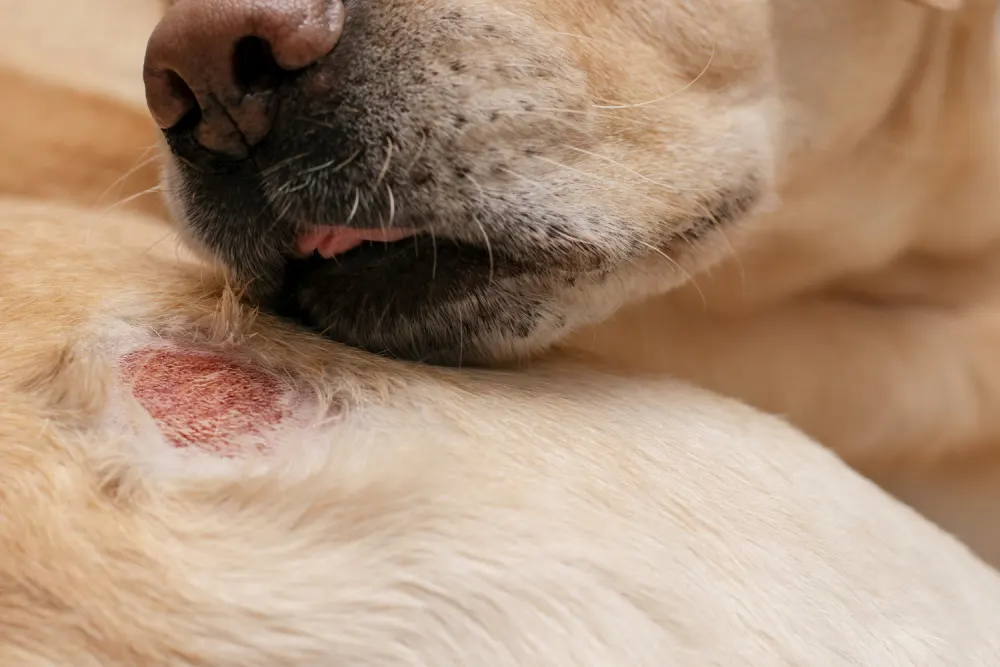
You find a firm lump on your dog. Not soft and moveable like a lipoma. Firm. Fixed. Growing into the surrounding tissue rather than sitting above it.
This kind of lump is different from the benign fatty lumps that older dogs commonly develop. And when the biopsy result comes back as fibrosarcoma, the conversation with your veterinarian takes on a different weight.
Fibrosarcoma is a malignant tumor that develops from fibroblasts, the cells that make up the fibrous connective tissue found throughout the body. These tumors most commonly appear under the skin, in the oral cavity, on the limbs, or in the body wall. They grow locally, often aggressively, invading the surrounding tissue in a way that makes complete surgical removal technically challenging.
The relatively lower rate of distant metastasis compared to some other cancers might seem reassuring, but fibrosarcomas have a significant tendency to recur locally after treatment. Understanding what you are dealing with, and responding with the appropriate urgency, makes a real difference to what can be achieved.
What Is Fibrosarcoma in Dogs?
Fibrosarcoma belongs to the category of soft tissue sarcomas, which are malignant tumors arising from mesenchymal cells, the precursor cells of connective tissue, muscle, fat, and other supporting structures in the body.
In fibrosarcoma specifically, the tumor arises from fibroblasts, which are the cells responsible for producing collagen and other structural components of connective tissue. When fibroblasts undergo malignant transformation, they begin proliferating in an uncontrolled and invasive manner, forming a firm, irregular mass that extends into and through the surrounding tissues rather than displacing them cleanly.
This infiltrative growth pattern is one of fibrosarcoma’s defining and most clinically challenging characteristics. Because the tumor does not have a clean boundary separating it from normal tissue, it is very difficult to remove with certainty that all tumor cells have been excised. Microscopic tumor cells extend beyond the visible margin of the mass, and these residual cells are what drive local recurrence after surgery.
While metastasis to distant sites such as the lungs and lymph nodes does occur in fibrosarcoma, it is less common and typically occurs later in the disease course than with some other malignant tumors. The primary challenge with fibrosarcoma is local disease control rather than systemic spread, at least in the early stages.
Where Fibrosarcomas Occur in Dogs
Fibrosarcomas can develop in any location where connective tissue is present, which means virtually anywhere in the body. However, certain sites are more frequently affected than others.
Oral Fibrosarcoma
Oral fibrosarcoma is one of the most clinically significant presentations. It is the third most common oral tumor in dogs, arising most frequently on the gingiva, hard palate, or other oral mucosal surfaces. What makes oral fibrosarcoma particularly challenging is its propensity to invade the underlying jawbone. By the time many oral fibrosarcomas are diagnosed, the tumor has already eroded into the mandible or maxilla, making surgical removal substantially more complex and requiring bone resection rather than simple soft tissue excision.
Dogs with oral fibrosarcoma often present with difficulty eating, drooling, bleeding from the mouth, facial swelling, and sometimes a visible or palpable mass within the oral cavity. Oral masses in dogs require prompt veterinary evaluation because the range of tumors that can develop in the mouth varies considerably in their behavior and prognosis, and distinguishing between them requires tissue diagnosis rather than clinical assessment alone.
Skin and Soft Tissue Fibrosarcoma
Subcutaneous and soft tissue fibrosarcomas appear as firm, often poorly demarcated masses beneath the skin. They may be initially mistaken for lipomas or other benign lumps, but their firm texture, irregular borders, and tendency to be fixed to underlying tissue rather than freely moveable are distinguishing features that should prompt early veterinary evaluation.
These tumors can develop on the limbs, trunk, body wall, and other locations. They grow slowly in many cases, but their infiltrative nature means that even a slow-growing tumor is progressively invading deeper structures over time.
Symptoms of Fibrosarcoma in Dogs
Visible Tumor Signs
The physical signs of fibrosarcoma depend significantly on where the tumor is located, but several features are common across different presentations.
Firm nodular lumps beneath the skin or within the oral cavity that have a harder, less yielding quality than benign fatty lumps. Fibrosarcomas feel more solid and are often fixed to surrounding tissue.
Swelling of the affected area that may be gradual or more rapid as the tumor grows. Facial swelling is particularly associated with oral fibrosarcomas invading the jaw.
Ulceration of the skin or oral mucosa over a tumor that has grown to the point where the overlying tissue breaks down.
Bleeding from an ulcerated mass or from oral tumors that are disrupted during eating or by contact with the teeth.
Health and Behaviour Changes
Difficulty eating is one of the most prominent behavioral signs associated with oral fibrosarcoma. Dogs may drop food, eat more slowly than usual, show a preference for softer foods, or refuse to eat altogether as the oral mass grows and causes pain during chewing.
Drooling more than is normal for the individual dog, often with blood-tinged saliva in dogs with oral tumors associated with oral tumors that have become ulcerated or infected.
Lameness in a dog with a fibrosarcoma affecting a limb, where the tumor’s growth or invasion of adjacent structures produces pain with movement.
Appetite loss and associated weight loss as pain, difficulty eating, or the general metabolic effects of malignancy reduce the dog’s food intake over time.
Understanding the full range of cancer in dogs symptoms across different tumor types and locations helps pet parents recognize that cancer does not always present in obvious ways and that changes in behavior or function deserve investigation as much as visible lumps.
Related Videos


Causes of Fibrosarcoma in Dogs
Breed and Age Risk
Fibrosarcoma occurs more commonly in medium to large breed dogs, and middle-aged to older dogs are more frequently affected than young dogs. The relationship between advancing age and tumor development reflects the accumulation of replicative errors in cells over time and the gradual decline in immune surveillance that comes with aging.
Certain large breeds including Doberman Pinschers, Gordon Setters, and Irish Wolfhounds appear in the literature as having elevated rates of soft tissue sarcomas including fibrosarcoma, though the condition can and does occur across many breeds.
Environmental and Biological Factors
The exact cause of fibrosarcoma in any individual dog is typically not identifiable. Like most cancers, it arises from a complex combination of factors rather than a single trigger.
Chronic inflammation at a tissue site has been proposed as a contributing factor in some soft tissue sarcomas, with ongoing inflammatory processes creating a cellular environment that is more permissive of malignant transformation.
Environmental exposures to certain carcinogenic substances over time, as well as the role of specific viral factors in some tumor types, contribute to the background risk.
Genetic mutations in the regulatory pathways that control fibroblast proliferation and differentiation are ultimately responsible for the malignant transformation, but what triggers those mutations is usually multifactorial and not traceable to a single cause.
The connection between cellular health and bone marrow function is relevant context for understanding how systemic health status influences cancer risk. Stem cell disorders and abnormal bone marrow development represent another category of conditions where cellular regulatory failure drives disease, illustrating the broader importance of cellular health across the body.
How Fibrosarcomas Are Diagnosed
Fine Needle Aspiration
Fine needle aspiration is typically the first specific diagnostic test applied to a suspected fibrosarcoma. A fine needle is inserted into the mass and cells are aspirated for cytological examination. In fibrosarcoma, the cells collected on FNA may appear spindled, consistent with a soft tissue sarcoma, but cytology alone is often insufficient to definitively classify the specific tumor type or grade. It serves as a useful preliminary step that guides whether more definitive tissue evaluation is needed.
Biopsy and Histopathology
Biopsy is required to confirm the diagnosis of fibrosarcoma definitively. The tissue sample allows a veterinary pathologist to examine the architectural arrangement of the tumor cells, assess the degree of cellular atypia and mitotic activity, and classify the tumor type and histological grade with confidence. Grade is particularly important in soft tissue sarcomas because it correlates with the risk of metastasis and guides treatment intensity.
Pre-biopsy planning matters. The biopsy tract can become contaminated with tumor cells and must be planned so that it can be fully excised along with the tumor during definitive surgery without compromising the surgical margins. An improperly placed biopsy can complicate subsequent surgical management.
Imaging Tests
CT scanning is the preferred imaging modality for surgical planning of fibrosarcomas. It provides detailed three-dimensional information about the tumor’s size, extent, relationship to surrounding structures including bones, vessels, and nerves, and any evidence of local invasion. For oral fibrosarcomas, CT is particularly valuable for assessing the degree of bone involvement.
MRI provides superior soft tissue contrast and is useful for assessing the extent of soft tissue invasion in complex locations.
Chest X-rays or CT of the thorax are performed to evaluate for pulmonary metastasis as part of staging, even though distant metastasis is less common in fibrosarcoma than in some other malignancies.
Treatment for Fibrosarcomas in Dogs
Surgical Removal
Surgery is the cornerstone of fibrosarcoma treatment. The primary goal is complete excision with wide surgical margins, meaning a substantial cuff of normal tissue surrounds the removed tumor on all sides. In soft tissue sarcomas, the recommended surgical margin is typically two to three centimeters of normal tissue in all directions, which requires careful pre-surgical planning to ensure sufficient normal tissue is available.
The challenge with fibrosarcoma is that its infiltrative growth pattern means tumor cells extend microscopically beyond the visible boundary of the mass. Achieving truly wide, clean margins often requires removing substantially more tissue than the visible tumor alone and, in some locations such as the oral cavity or limbs, may require bone resection or other complex surgical approaches.
When clean margins are not achieved, the risk of local recurrence is high. Referral to a specialist surgical oncologist for complex fibrosarcoma cases significantly improves the likelihood of achieving the margins needed for durable local control.
Radiation Therapy
Radiation therapy plays an important role in fibrosarcoma management, particularly when complete surgical excision with clean margins is not achievable. Postoperative radiation to the tumor bed reduces the risk of local recurrence after surgery with incomplete margins by targeting residual microscopic disease that surgery could not address.
In some cases, radiation is used pre-operatively to reduce tumor size before surgical excision. It may also be used as the primary local treatment modality when surgery is not feasible due to tumor location.
Chemotherapy
The role of chemotherapy in fibrosarcoma is less clearly established than in some other malignancies, partly because fibrosarcoma is relatively less chemosensitive than tumors of other cell types. However, chemotherapy may be considered in cases with evidence of or high risk for metastasis, or as part of a multimodal treatment approach in aggressive, high-grade tumors. The specific agents and protocols are selected based on the individual case characteristics.
Related Products



Prognosis for Dogs with Fibrosarcoma
Prognosis for fibrosarcoma in dogs is determined by a combination of factors, with tumor location, histological grade, and the quality of surgical margins being among the most influential.
Dogs with low-grade fibrosarcomas completely excised with wide clean margins have the most favorable prognosis for long-term disease control. Even in these cases, regular monitoring for local recurrence is an essential part of post-treatment follow-up.
Oral fibrosarcomas carry a more guarded prognosis than many cutaneous or subcutaneous fibrosarcomas, due to the difficulty of achieving adequate surgical margins in the oral cavity and the tendency for bone invasion by the time of diagnosis. Survival times after aggressive multimodal treatment for oral fibrosarcoma are generally measured in months to a year or two rather than years.
High-grade fibrosarcomas carry a higher risk of metastasis and local recurrence regardless of treatment, and the prognosis in these cases is more guarded.
The consistent theme across all prognostic factors is that early identification and aggressive, appropriately planned treatment improve outcomes. A tumor identified and treated when small and localized will almost always have a better prognosis than the same tumor found at an advanced, invasive stage.
Monitoring Lumps in Dogs
Pet parents of dogs in breeds or age groups predisposed to soft tissue tumors should incorporate regular, systematic physical checks into their routine care.
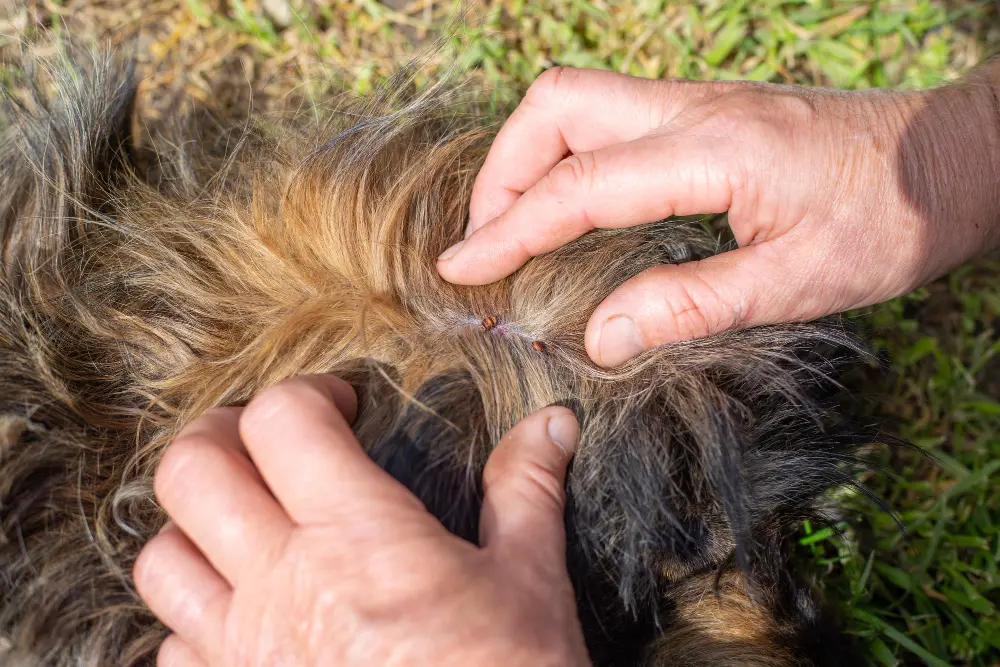
Running your hands over your dog’s entire body regularly, including areas that are less visible such as under the limbs, along the body wall, and inside the mouth if your dog tolerates it, allows you to notice new lumps or changes in existing ones promptly.
Any firm, fixed, irregularly bordered lump warrants same-week veterinary evaluation rather than a wait and see approach. A lump that has been present for several weeks without veterinary assessment has already had time to grow and potentially deepen its infiltration into surrounding tissues.
Can Fibrosarcoma Be Prevented?
There is no reliable way to prevent fibrosarcoma from developing in a dog that has the genetic predisposition and environmental exposure history that ultimately drive malignant transformation. But there are consistent practices that reduce overall cancer risk and maximize the chance of early detection.
Regular veterinary checkups including thorough physical examination of the entire body give a professional the opportunity to identify early-stage masses before they reach the size and invasive extent that makes treatment more complex.
Prompt evaluation of any new lumps rather than observation over several months prevents the diagnostic delay that is unfortunately common with fibrosarcoma. A firm, fixed lump that has been growing for six months before being assessed has already had that time to invade surrounding tissue.
Monitoring for recurrence after treatment is not optional. Local recurrence is common in fibrosarcoma, and recurrent tumors are often more challenging to treat than the primary. Regular post-treatment imaging and examination at the intervals recommended by your veterinary oncologist gives the best chance of catching recurrence early enough for effective re-intervention.