Liver disease is expected in old dogs. It is not supposed to happen in puppies.
When a young dog, sometimes just months old, begins showing signs of liver failure, the diagnosis that comes back is often one that owners have never heard of: liver fibrosis. Not inflammation. Not infection. Scarring. The liver, which should be regenerating normally, is instead laying down scar tissue that replaces functioning cells and progressively destroys the organ’s ability to do its job.
This is a silent condition. The earliest signs are vague and easy to attribute to other causes. By the time the diagnosis is confirmed, significant fibrosis may already be present. Understanding this disease early, and why early detection changes what is possible, is the most important thing an owner of an at-risk breed can know.
What This Condition Really Means Inside the Liver
The liver is one of the most regenerative organs in the body. Under normal circumstances, damaged liver cells are replaced with new, functional hepatocytes. In fibrosis, this regenerative process breaks down. Instead of replacing damaged tissue with new functional cells, the body deposits collagen, a fibrous connective tissue, into the gaps left by dying hepatocytes.
What fibrosis means structurally:
- Normal liver tissue is gradually replaced by dense, non-functional scar tissue
- The architecture of the liver becomes distorted
- Blood flow through the liver is obstructed by the fibrotic tissue
- The liver’s ability to filter toxins, produce proteins, regulate blood sugar, and perform hundreds of metabolic functions progressively declines
Fibrosis itself is a process, not a single event. It develops over time, which is why the window for intervention exists. The earlier the condition is identified, the more functioning liver tissue can be protected.
What Owners Usually Notice, and What They Miss
The insidious nature of juvenile liver fibrosis is that its early signs are non-specific and easily attributed to simpler problems.
Early signs that are often missed:
- Poor appetite, which is dismissed as pickiness
- Slower than expected growth or weight gain compared to littermates
- Occasional vomiting or loose stools, attributed to diet changes
- Mild lethargy that fluctuates and does not seem consistent
Later signs that signal progression:
- Persistent vomiting and diarrhoea
- Visible abdominal distension from fluid accumulation, called ascites
- Increased thirst and urination
- Yellow tinge to the gums, skin, or whites of the eyes (jaundice)
- Neurological signs, including confusion, circling, head pressing, and seizures, indicate hepatic encephalopathy from toxins accumulating in the blood
The critical point for owners:
A young dog that is growing poorly, vomiting intermittently, and appearing dull despite otherwise normal care deserves liver function assessment, not simply dietary adjustment. The signs of early liver disease in young dogs are not dramatic. They are subtle, and they are easy to explain away.
Why This Happens So Early in Life
Genetic and Breed Predisposition
Juvenile hepatic fibrosis has a well-documented genetic component in several breeds. The liver’s abnormal response to injury, producing excessive fibrosis rather than normal regeneration, appears to be heritable in these populations.
Breeds with documented higher risk:
- Doberman Pinschers
- Labrador Retrievers
- Cocker Spaniels
- Springer Spaniels
- Bedlington Terriers
- Standard Poodles
- German Shepherd Dogs
In some of these breeds, the fibrosis is associated with abnormal copper metabolism, where excess copper accumulates in liver tissue and drives chronic injury and scarring. This is directly relevant to the relationship between copper storage liver disease in dogs and fibrosis, as chronic copper toxicity is one of the most established triggers of progressive hepatic fibrosis in predisposed breeds.
Chronic Liver Inflammation
Persistent hepatitis from any cause, whether infectious, immune-mediated, or toxic, creates sustained liver injury that the fibrotic response attempts to repair. When the inflammation is chronic rather than acute, the repair process produces cumulative scarring rather than normal regeneration.
Congenital Structural Abnormalities
Some dogs are born with structural abnormalities of the liver vasculature or bile duct system that create chronic pressure and flow disruption, driving early fibrotic change from the outset.
Related Videos


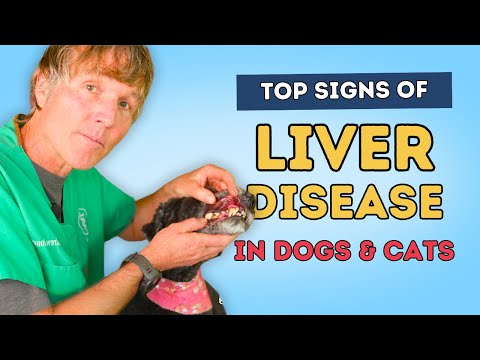

Inside the Body: How Fibrosis Progressively Destroys the Liver
This mechanism is the foundation of understanding why fibrosis is so difficult to reverse once established.
The sequence proceeds as follows:
- Liver injury occurs, from whatever cause, whether copper accumulation, inflammation, or structural abnormality
- Hepatic stellate cells are activated, specialised cells normally in a quiescent state that become activated in response to liver injury
- Activated stellate cells produce collagen, laying down fibrous connective tissue as a wound-healing response
- Collagen accumulates in the liver parenchyma, building up between and around the hepatocytes
- Normal liver architecture is disrupted, with fibrotic bands separating functional liver tissue into islands that become progressively smaller
- Blood flow through the portal vein is obstructed by the fibrous tissue, raising portal blood pressure, a condition called portal hypertension
- Functional liver mass declines as more hepatocytes are lost and replaced by scar tissue that performs no metabolic function
- Liver failure develops when the remaining functional tissue falls below the threshold needed to maintain normal body function
The key clinical implication of this mechanism is that early intervention, before extensive collagen deposition has occurred, offers the possibility of slowing or partially halting the process. Intervention after widespread scarring has already occurred can only manage the consequences.
Different Forms This Condition May Present As
Congenital hepatic fibrosis:
Present from birth due to a developmental abnormality of the liver or biliary system. These dogs may show signs of liver disease from a very young age, sometimes within the first weeks of life.
Idiopathic juvenile hepatic fibrosis:
Fibrosis develops in young dogs without an identifiable underlying cause. The mechanism is presumed to involve a genetically determined abnormal fibrotic response to normal or minor liver stress. This form is the one most directly described as juvenile hepatic fibrosis.
Secondary fibrosis from chronic hepatitis:
When any form of chronic liver inflammation is inadequately managed, progressive fibrosis develops as a consequence. This includes the fibrosis associated with copper storage disease, immune-mediated hepatitis, and certain infectious liver diseases. Understanding related inflammatory conditions such as granulomatous liver inflammation in dogs provides important context on how persistent hepatic inflammation drives fibrotic change over time.
How Vets Confirm Liver Fibrosis in Young Dogs
Blood Tests
Liver function tests, including ALT, AST, ALP, GGT, albumin, bilirubin, and bile acids, provide the first indication of liver disease. In young dogs, significantly abnormal liver enzymes are not normal findings and require investigation. However, blood tests cannot diagnose fibrosis specifically. They indicate liver disease is present and guide the next steps.
Abdominal Ultrasound
Ultrasound assesses liver size, texture, and architecture. Fibrotic liver tissue appears hyperechoic on ultrasound, with an irregular, coarser texture than normal liver. Portal hypertension may be visible as abnormal blood flow patterns or as ascites. Ultrasound is an important and non-invasive part of the diagnostic process.
Liver Biopsy
Biopsy is the gold standard for diagnosing and staging hepatic fibrosis. Tissue samples are examined histopathologically, and the degree of fibrosis can be graded from mild to severe. Biopsy also identifies the pattern of fibrosis, the presence of copper accumulation, the nature of any inflammation, and the proportion of remaining functional tissue.
Why early diagnosis is challenging:
In very early fibrosis, blood tests may show only mild abnormalities. Ultrasound changes may be subtle. Owners may not notice the mild early symptoms. By the time diagnosis is confirmed in many cases, significant fibrosis is already present. This is the argument for early, proactive screening in at-risk breeds.
Treatment: Managing Damage That Cannot Fully Reverse
The most important reality to communicate honestly is that established fibrosis cannot be fully reversed. The scar tissue that has formed does not dissolve with treatment. What treatment achieves is slowing or halting further progression and managing the complications that fibrosis creates.
Addressing the Underlying Cause
If a specific cause is identified, treating it is the highest priority.
Examples:
- Copper chelation therapy and dietary copper restriction in dogs with copper storage disease, which addresses the primary driver of ongoing liver injury
- Immunosuppressive therapy for immune-mediated hepatitis
- Antibiotic treatment for infectious causes
Removing the source of ongoing liver injury gives the remaining functional tissue the best chance of compensation and stability.
Liver-Supportive Medication
- S-adenosylmethionine (SAMe) supports liver cell function and has antifibrotic properties
- Silymarin (milk thistle) is widely used as a hepatoprotective agent and has some evidence for slowing fibrotic progression
- Vitamin E as an antioxidant may reduce oxidative damage to remaining hepatocytes
- Ursodiol supports bile flow and has anti-inflammatory properties within the liver
Managing Complications
- Ascites is managed with diuretics to reduce fluid accumulation and dietary sodium restriction
- Hepatic encephalopathy is managed with dietary protein modification, lactulose to reduce ammonia production in the gut, and antibiotics to reduce gut bacterial ammonia production where indicated
- Portal hypertension management is supportive, focusing on reducing the consequences rather than the pressure itself
Dietary Management
A liver-supportive diet is an important long-term management tool. This typically involves moderate protein of high biological value, adequate calories to prevent muscle wasting, reduced copper in breeds with copper storage tendencies, and highly digestible ingredients.
Liver Fibrosis vs Cirrhosis vs Hepatitis: Understanding the Difference
| Feature | Hepatitis | Fibrosis | Cirrhosis |
|---|---|---|---|
| Primary process | Inflammation | Scar tissue deposition | End-stage scarring + architectural destruction |
| Reversibility | Often yes | Partially, if early | No |
| Stage | Early disease | Progressive disease | End-stage disease |
| Functional liver tissue | Present | Reducing | Severely depleted |
| Prognosis | Variable but often manageable | Guarded, depends on stage | Poor |
| Treatment goal | Resolve inflammation | Slow progression | Manage complications |
Hepatitis is the fire. Fibrosis is the scarring the fire leaves behind. Cirrhosis is what happens when that scarring has accumulated to the point of no return.
The relationship between abnormal metabolic function and liver disease has additional complexity in certain breeds. Understanding conditions like pyruvate kinase deficiency in dogs illustrates how genetic metabolic disorders can produce secondary organ damage, including hepatic fibrosis, through the cumulative effects of abnormal cell metabolism.
When This Condition Becomes an Emergency
Seek emergency veterinary care immediately if a young dog shows:
- Seizures or sudden disorientation, which may indicate hepatic encephalopathy
- Rapid abdominal distension
- Collapse or severe weakness
- Complete refusal to eat alongside jaundice
- Yellow discolouration of the gums or eyes
These signs indicate the liver’s compensatory capacity has been exceeded. Emergency stabilisation, including fluid support, encephalopathy management, and urgent specialist assessment, is required.
When You Should Seek Veterinary Care
Book a veterinary appointment promptly if a young dog shows:
- Poor growth compared to littermates
- Intermittent vomiting that has persisted for more than a week or two
- Reduced appetite in a puppy that should be eating enthusiastically
- Any mild jaundice, including slightly yellow-tinged eyes
- Increased thirst and urination in a young dog
- Mild neurological signs, including occasional confusion or head pressing
Early liver function testing in puppies from breeds with documented genetic liver disease risk is worth discussing with your veterinarian, even before symptoms appear.