When a virus makes international headlines, the questions come quickly. Can my dog get it? Can my pet spread it to me? Should I be worried?
These are reasonable questions. But in the case of Zika virus and pets, the honest answer requires separating what is scientifically established from what is speculated, and what is genuinely relevant to your dog from what is a media-driven concern.
The short version: current evidence does not support pets as significant participants in the Zika virus cycle. Your dog is not a meaningful risk factor for Zika. But understanding why requires looking at what the science actually says, rather than what the fear assumes.
Understanding the Virus Itself
The Zika virus is a flavivirus, belonging to the same family as dengue, yellow fever, and West Nile virus. It is transmitted primarily by Aedes mosquitoes, particularly Aedes aegypti and Aedes albopictus, the same mosquito species responsible for dengue transmission in India and across South Asia.
Key facts about Zika in humans:
- Most infected people, roughly 80 per cent, experience no symptoms at all
- Those who do develop symptoms typically have mild fever, rash, joint pain, and conjunctivitis lasting a few days
- The most serious concern is the risk of microcephaly and other neurological complications in unborn children when pregnant women are infected
- Secondary transmission in humans occurs through sexual contact with an infected person
The virus gained global attention during the 2015 to 2016 outbreak in South and Central America. It has since been identified in multiple regions, including parts of Southeast Asia and the Pacific.
Can Dogs or Pets Get Zika? What Science Actually Says
This is the central question, and the scientific evidence provides a reasonably clear answer.
What research has found:
- Studies examining dogs, cats, and other domestic animals in Zika-endemic regions have found no confirmed cases of illness caused by Zika infection in pets
- A significant research study examining pets and peri-domestic animals in Zika-affected areas found evidence against Zika virus infection being a relevant phenomenon in companion animals
- Experimental studies have attempted to infect dogs with Zika virus under controlled laboratory conditions and found that dogs do not develop measurable illness and appear resistant to meaningful infection
What this means practically:
- Your dog walking through a Zika-endemic area is not at meaningful risk of developing Zika disease
- There is no documented clinical presentation of Zika illness in companion animals
- Pets are not considered reservoirs of the virus in the natural transmission cycle
This is not a case of insufficient data creating uncertainty about a real risk. It is a case where the available evidence consistently points in the same direction: pets are not clinically relevant to Zika virus disease.
Why There Is Still Uncertainty
Being scientifically honest means acknowledging the limits of current knowledge.
Reasons some uncertainty remains:
- The total body of animal research on Zika is still relatively limited, and more studies continue to be published
- Some experimental studies have detected transient antibody responses in animals exposed to the virus, suggesting some biological contact occurred, even without clinical disease developing
- Cross-reactivity between Zika antibodies and those of related flaviviruses like dengue can complicate serological testing results in animals
- The natural reservoir hosts of Zika in the wild are not fully characterised, and non-human primates are considered the most likely animal reservoir
What this uncertainty does not mean:
- It does not mean your pet is silently infected
- It does not mean your pet poses a transmission risk to your family
- It does not change the current scientific consensus that companion animals are not part of the Zika transmission cycle
Responsible science acknowledges gaps in knowledge. It does not, however, treat the absence of complete certainty as equivalent to confirmed risk.
Related Videos



How Zika Spreads and Why Pets Are Not Part of the Cycle
Understanding Zika’s transmission biology explains why pets are not involved.
The primary transmission cycle:
- An Aedes mosquito bites an infected person and picks up the virus
- The virus replicates within the mosquito
- The mosquito bites another person, transmitting the virus
Why pets do not fit into this cycle:
- For an animal to amplify a mosquito-borne virus, it must develop a sufficient level of virus in its blood, called viraemia, to infect a mosquito that bites it
- Studies suggest that dogs and cats do not develop the level of viraemia required to infect a biting mosquito
- Without adequate viraemia, pets cannot serve as a bridge between an infected mosquito and a human host
- Pets are therefore considered dead-end hosts for Zika, meaning the virus does not replicate effectively enough in them to continue the transmission chain
This is fundamentally different from how dengue, tick-borne diseases, and other vector-borne illnesses interact with animals, where the animal may play an active role in the disease cycle.
What Symptoms Would Look Like If Infection Occurred
No confirmed clinical cases in pets exist to describe symptoms from direct observation. However, based on how related flaviviruses occasionally produce mild illness in animals experimentally:
Theoretical signs, if Zika infection in pets were to produce illness:
- Mild, short-duration fever
- Lethargy and reduced activity
- Possible mild conjunctivitis or eye inflammation
These are entirely non-specific signs that accompany dozens of common dog illnesses. If your dog is showing fever and lethargy, the cause is overwhelmingly more likely to be a bacterial infection, tick-borne disease, or another common canine illness than Zika.
Attribute these symptoms to common causes first. Pursue standard veterinary diagnostic pathways. Do not default to Zika as an explanation.
Risk Reality: What Pet Owners Should Actually Worry About
This is the section that matters most for dog owners in India.
While Zika generates significant media attention, the mosquito-borne and vector-borne diseases that actually cause illness and death in Indian dogs deserve far more concern.
Real veterinary risks in India from insects and vectors:
- Ehrlichiosis and babesiosis from tick bites, causing fever, severe anaemia, bleeding disorders, and potentially fatal outcomes
- Heartworm disease is transmitted by mosquitoes in certain regions, causing progressive heart and lung damage
- Leishmaniasis transmitted by sandflies in endemic regions, causing chronic systemic disease
- Leptospirosis from contaminated standing water that mosquitoes breed in, producing kidney and liver failure
These conditions have been documented, established, and have serious impacts on dogs in India every year. Protecting your dog from ticks and mosquitoes matters enormously, but for these reasons rather than because of Zika.
For a comprehensive understanding of conditions that pose genuine veterinary risk to dogs in India, our library of dog medical conditions covers these diseases with the clinical depth they deserve.
Zika vs Other Pet-Relevant Infections
| Feature | Zika Virus | Tick-Borne Diseases | Heartworm |
|---|---|---|---|
| Confirmed illness in dogs | No | Yes, significant | Yes, significant |
| Transmission vector | Aedes mosquito (does not infect dogs meaningfully) | Ticks (directly infect dogs) | Mosquitoes (dogs are primary hosts) |
| Clinical risk to dogs in India | Negligible | High | Moderate to high in endemic areas |
| Treatment required | Not applicable | Yes, urgent | Yes, preventive and curative |
| Pet owner priority level | Low | High | High |
The contrast is stark. The conditions that genuinely threaten your dog’s health are well-established, preventable, and treatable. Zika does not currently belong on the list of meaningful veterinary concerns for companion animals.
Can Pets Spread Zika to Humans?
No. There is no scientific evidence that dogs, cats, or other domestic pets can transmit the Zika virus to humans.
The reasons are the same as above:
- Pets do not develop adequate viraemia to infect biting mosquitoes
- Without mosquito amplification, there is no mechanism for pet-to-human transmission
- No documented cases of human Zika infection linked to a pet have been recorded anywhere in the world
This is not a theoretical reassurance pending further study. It reflects a consistent body of evidence across multiple research groups examining this specific question.
You do not need to distance yourself from your dog because of Zika concerns. Your dog is not a Zika risk factor.
What Happens in Other Animals
Research has examined the role of various animal species in the Zika transmission cycle.
What is known:
- Non-human primates, particularly certain monkey species in Africa and Asia, are considered the primary animal reservoir of the Zika virus in nature
- The virus has been detected in other wild animal species in endemic regions, though their clinical significance remains unclear
- Domestic animals, including dogs, cats, pigs, and rodents, have been examined in endemic areas and do not show evidence of playing a meaningful role in transmission
The distinction between wild primates as a natural reservoir and domestic pets as incidental, non-reservoir species is important. The ecology of Zika transmission does not involve the animals sharing your home.
When Zika Becomes Relevant for Pet Owners
There is one specific context where Zika deserves consideration in relation to pets.
International travel with pets to Zika-endemic regions:
- If you are travelling with your dog to a region with active Zika transmission, the primary concern is not your dog’s health but rather the general mosquito exposure environment
- Reducing mosquito exposure for both you and your dog in these environments makes sense as a general precaution
- Consult your veterinarian before international travel about appropriate parasite and insect prevention measures for the specific destination
Outside of this context, Zika is not a relevant consideration for the daily health management of a dog living in India, even in areas where Aedes mosquitoes are present.
Prevention Focus: What Actually Protects Your Dog
Mosquito prevention for dogs matters, but for the right reasons.
Practical measures to reduce mosquito and vector exposure:
- Use veterinarian-recommended tick and flea prevention products consistently, particularly during monsoon and warm months
- Eliminate standing water around the home where Aedes mosquitoes breed, including plant pots, water containers, and clogged drains
- Avoid walking dogs near stagnant water sources, particularly during dawn and dusk when mosquitoes are most active
- Use pet-safe insect repellents if recommended by your veterinarian for your specific environment and risk profile
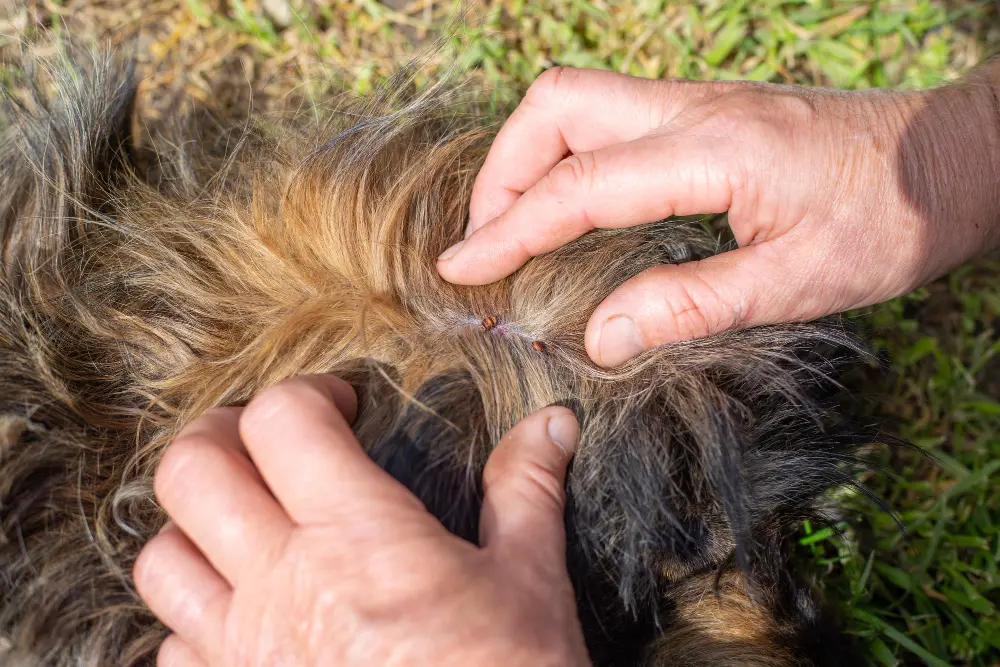
- Check for ticks after every outdoor session and remove them promptly using the correct technique
These measures protect your dog from the real vector-borne disease risks that cause genuine illness and death in Indian dogs every year. They are worth doing regardless of Zika.
Related Products


When You Should Still Consult a Vet
If your dog develops any of the following signs, seek veterinary assessment promptly.
Signs that warrant veterinary attention:
- Fever lasting more than 24 hours
- Lethargy and reduced appetite alongside any other symptoms
- Eye inflammation, discharge, or cloudiness
- Unusual bleeding or bruising
- Joint pain or reluctance to move
When you bring your dog to the veterinarian with these signs, the diagnostic pathway will correctly focus on the common, established causes of these symptoms in dogs, including bacterial infections, tick-borne disease, and other known pathogens.
Zika is not a condition that should be elevated in the differential diagnosis for a sick dog. A standard veterinary assessment will address the actual cause effectively.
At VOSD, we work with dogs facing genuine, documented health challenges every day. Our approach is grounded in evidence, not in the anxiety that media coverage of emerging viruses often generates. That same evidence-based clarity is what guides this article.