A soft swelling appearing under your dog’s jaw, along the neck, or beneath the tongue is the kind of thing that stops a pet parent immediately. And it should.
Swelling in these areas is one of the more visible signs of a salivary gland disorder, most commonly a condition called a salivary mucocele or sialocele. While the name is unfamiliar to most pet parents, the condition itself is the most common salivary gland disorder seen in dogs. It occurs when saliva leaks out of a damaged duct and accumulates in the surrounding tissue, forming a fluid-filled swelling that grows gradually over time.
The swelling itself is often painless in the early stages. That is precisely what makes it easy to overlook. But left untreated, salivary gland swellings can interfere with eating, swallowing, and in the most serious cases, breathing.
What Is Salivary Gland Swelling in Dogs?
Dogs have four pairs of major salivary glands: the parotid, mandibular, sublingual, and zygomatic glands. Each produces saliva that travels through a duct into the mouth. When a duct is damaged, blocked, or ruptured, saliva either accumulates within the gland itself or leaks into the surrounding tissue.
A salivary mucocele forms when leaked saliva pools in the soft tissue, stimulating a reaction that creates a fluid-filled, cyst-like swelling lined by granulation tissue rather than a true cyst wall. This is the most frequently diagnosed salivary gland condition in dogs.
Other presentations include inflammation of the gland itself (sialadenitis), blockage of the duct by a salivary stone, and, in rare cases, tumour development within the gland. Each has a different clinical profile, but the presenting sign, a visible swelling in the head or neck region, is often the same.
Symptoms of Salivary Gland Swelling in Dogs
The signs vary depending on which gland is affected and how large the swelling has become.
Common Clinical Signs
- A soft, fluctuant swelling under the jaw, along the neck, beneath the tongue, or near the eye
- Excessive drooling or hypersalivation
- Difficulty eating, chewing, or swallowing
- Pain or tenderness when the swelling is touched, though this is sometimes absent entirely
- Breathing difficulty in severe or pharyngeal cases
- Loss of appetite associated with discomfort during eating
- Occasional blood-tinged saliva if the swelling has been traumatized
One of the clinical realities of this condition is that the swelling can develop slowly over weeks or months before it becomes large enough to be noticed. Because many mucoceles are not painful initially, dogs do not draw attention to them through obvious distress. By the time the swelling is clearly visible, it has often been growing for some time.
Any new, persistent swelling in the head or neck region of a dog warrants veterinary assessment, regardless of whether the dog appears uncomfortable.
Causes of Salivary Gland Swelling in Dogs
Causes fall broadly into traumatic, inflammatory, obstructive, and neoplastic categories.
Salivary Mucocele (Most Common Cause)
The mucocele forms when a salivary duct or the gland capsule itself is damaged, causing saliva to leak into the surrounding tissue. The body cannot reabsorb this accumulated saliva effectively, and instead forms a reactive tissue capsule around it. The swelling grows as more saliva continues to leak.
The exact cause of the initial duct damage is not always identifiable. In many cases, minor trauma, repetitive pressure, or an unwitnessed injury is responsible.
Trauma or Injury
Direct trauma to the neck, jaw, or mouth, including dog bites, blunt force injury, or penetrating foreign objects, can rupture salivary ducts and trigger mucocele formation. In dogs that have sustained bite wounds to the neck region, salivary gland involvement should always be considered, even if the external wounds appear superficial.
Infections and Inflammation (Sialadenitis)
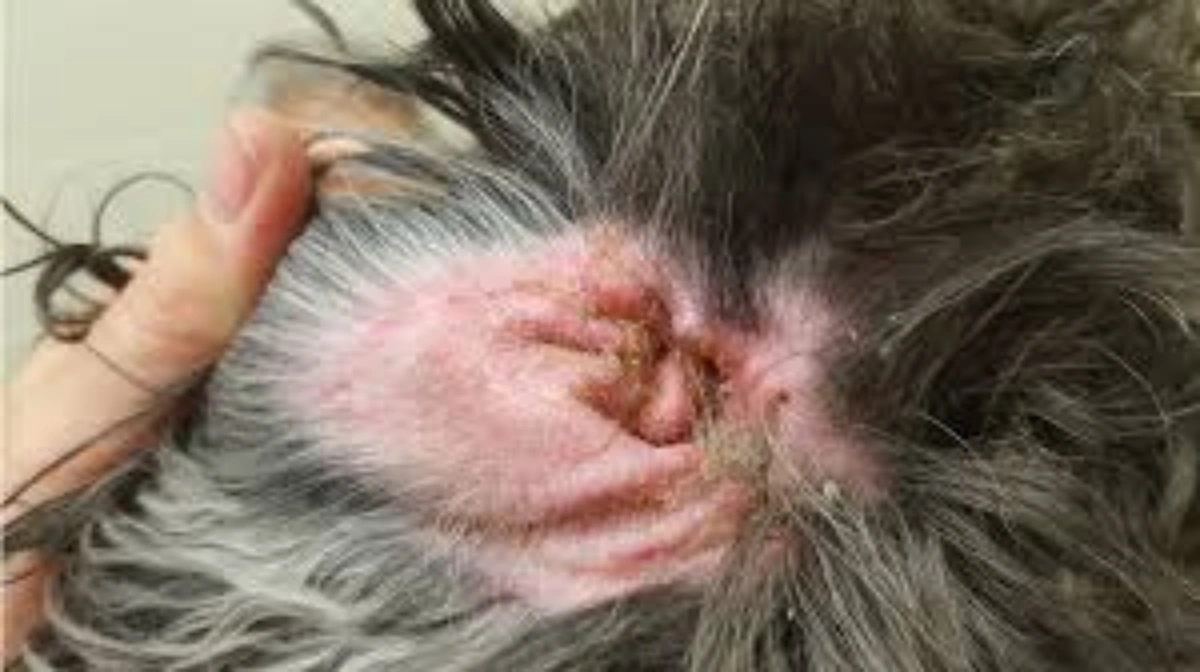
Bacterial or viral infections can cause direct inflammation of the salivary gland tissue, producing swelling, pain, and in some cases, abscess formation. Sialadenitis may follow an upper respiratory infection, local wound infection, or systemic illness. Mumps in dogs, caused by viral parotitis, is one infectious cause of salivary gland swelling, though it is uncommon. Inflammation in adjacent head and neck structures, including ear infections in dogs, can occasionally involve regional lymph nodes and soft tissue in ways that affect the appearance and presentation of salivary gland disorders.
Salivary Gland Tumours (Rare but Serious)
Neoplastic conditions of the salivary glands are uncommon in dogs but do occur, most frequently in older animals. A firm, rapidly enlarging, or irregular mass in the salivary gland region should always raise suspicion for tumour involvement and requires biopsy for definitive diagnosis. Tumours behave very differently from mucoceles and require a fundamentally different treatment approach.
Obstruction or Salivary Stones
Mineralized deposits, called sialoliths or salivary stones, can form within the duct and obstruct the flow of saliva. The backed-up saliva causes the duct and sometimes the gland itself to distend and swell. This is a less common cause than mucocele formation, but it should be considered as part of the diagnostic evaluation.
Related Videos


Types of Salivary Gland Swelling in Dogs
The location of the swelling reflects which gland or duct is involved and has important clinical implications.
Cervical Mucocele
This is the most common presentation. The swelling appears in the neck or under the jaw, typically as a soft, painless, slowly enlarging mass. It usually involves the mandibular or sublingual gland and duct.
Sublingual Mucocele (Ranula)
When the sublingual gland or duct is involved, and saliva accumulates beneath the tongue, the resulting swelling is called a ranula. It appears as a soft, bluish, fluctuant mass on the floor of the mouth. Ranulas can interfere directly with the tongue’s movement and make eating and swallowing increasingly uncomfortable.
Pharyngeal Mucocele
This is the most clinically urgent presentation. When saliva accumulates in the pharyngeal region, the swelling encroaches on the airway and throat. Dogs with pharyngeal mucoceles may show gagging, exaggerated swallowing, voice change, and, in severe cases, significant breathing difficulty. This presentation requires prompt veterinary assessment and potentially emergency intervention.
Zygomatic Mucocele
When the zygomatic gland, located behind the eye, is involved, the swelling appears in the region beneath or behind the eye. This can cause visible eye protrusion, discomfort, and in some cases, interference with vision. It is the least common of the four presentations.
How Veterinarians Diagnose Salivary Gland Swelling
Physical Examination
The veterinarian assesses the location, size, consistency, and behaviour of the swelling when pressure is applied. Mucoceles typically feel soft, fluctuant, and non-painful. A firm or irregularly shaped mass raises concern for tumour involvement. The mouth, tongue, and pharynx are examined alongside the external neck and jaw.
Fine Needle Aspiration (FNA)
A needle is inserted into the swelling to collect a small sample of fluid for analysis. Mucoceles produce a characteristic viscous, stringy fluid with a specific appearance under microscopy that confirms the diagnosis. FNA is a simple, minimally invasive procedure that provides highly useful diagnostic information.
Imaging (X-ray, Ultrasound, or CT)
Imaging helps identify which specific gland is involved, the extent of the swelling, and whether any associated structures are affected. Ultrasound is particularly useful for characterizing fluid-filled masses. CT scanning provides the most detailed anatomical information and is often used in cases involving pharyngeal or zygomatic involvement where surgical planning requires precise localization.
Treatment for Salivary Gland Swelling in Dogs
Surgical Removal (Standard Treatment)
Surgical removal of the affected salivary gland, a procedure called sialoadenectomy, is the most effective and definitive treatment for salivary mucoceles. Simply draining the swelling without removing the gland consistently results in recurrence, because the damaged duct continues to leak saliva into the surrounding tissue.
The goal of surgery is to remove the source: the gland and its associated duct. When performed correctly, the recurrence rate is very low, and most dogs recover fully without any functional deficit, as the remaining salivary glands compensate adequately for the loss of one gland.
Drainage (Temporary Relief Only)
Aspiration of the fluid provides a temporary reduction of the swelling but is not a curative treatment. It may be used as a short-term measure to relieve discomfort or breathing difficulty while surgical planning is completed, but it should not be relied upon as a standalone management strategy. Recurrence after aspiration alone is the norm rather than the exception.
Medications (Infection and Inflammation)
When sialadenitis or secondary infection is present, antibiotics and anti-inflammatory medications are used to control the acute episode. In infection-driven cases, resolving the infection may reduce the swelling significantly. However, where structural damage to the duct has occurred, medical management alone is unlikely to prevent recurrence.
Related Products



Prognosis and Recovery
The prognosis following surgical treatment is excellent in the majority of cases. Most dogs recover without complications and show no long-term effects from the removal of the affected gland.
Recurrence after complete surgical removal is uncommon. When recurrence does occur, it typically indicates that not all of the affected gland tissue was removed during the initial procedure, and a second surgery may be required.
Untreated salivary mucoceles do not resolve spontaneously. They continue to grow, become more likely to cause eating and swallowing difficulties, and in the case of pharyngeal involvement, pose a genuine airway risk.
Complications of Untreated Salivary Gland Swelling
Breathing Difficulties
Pharyngeal mucoceles that are not treated can enlarge to the point of causing significant airway obstruction. This is a life-threatening complication that requires emergency surgical intervention.
Infection and Abscess Formation
The tissue surrounding an untreated mucocele can become secondarily infected, converting a manageable fluid-filled swelling into a painful abscess requiring more complex treatment. Systemic illness can follow if the infection spreads.
Chronic Discomfort and Eating Issues
Even mucoceles that do not compromise the airway cause progressive discomfort as they enlarge. Ranulas beneath the tongue directly interfere with the mechanics of eating and swallowing, reducing food intake and affecting body condition over time.
When to See a Veterinarian
Contact your veterinarian promptly if your dog shows any of the following:
- Any new or growing swelling under the jaw, along the neck, beneath the tongue, or near the eye
- Difficulty breathing or swallowing
- Sudden change in voice or persistent gagging
- Rapid growth of a previously identified swelling
- Pain, fever, or signs of systemic illness alongside the swelling
A salivary gland swelling that is identified early is straightforward to treat surgically and carries an excellent prognosis. One that is left to grow significantly, particularly if it involves the pharynx, becomes both more complex to manage and more dangerous for your dog.