A hematoma is a localized collection of blood that has leaked out of damaged blood vessels and pooled within surrounding tissue. In dogs, the most commonly affected site is the ear flap – the aural hematoma – though hematomas can form anywhere that blood vessels rupture under trauma or sustained mechanical stress. They are not dangerous in isolation, but they are uncomfortable, they worsen without treatment, and they almost always indicate something else going on that triggered the vessel damage in the first place. Treating the hematoma alone without addressing the underlying cause reliably leads to recurrence.
What Is a Hematoma in Dogs?
When a blood vessel breaks, blood either escapes the body entirely (external bleeding) or collects in the surrounding tissue (hematoma). The resulting pocket fills with blood that gradually clots and organizes, creating a swelling that is firm to fluctuant depending on age and how much blood has accumulated.
Aural hematomas, blood pooling between the skin and cartilage of the ear flap, are by far the most frequently diagnosed type in dogs, largely because the ear flap’s thin, well-vascularised structure is particularly vulnerable to the shearing forces of repeated head shaking and scratching. When a dog shakes or scratches with enough force, the small vessels running through the ear pinna rupture, and blood fills the space between the skin layers. The result is a fluid-filled swelling that can expand to cover much of the ear flap within hours to days.
Hematomas can also occur elsewhere, under the skin following blunt trauma, within muscles after significant injury, or occasionally in internal locations, but external ear hematomas are the presentation most pet parents will encounter. For an in-depth look at this specific condition, ear hematomas in dogs covers the clinical picture comprehensively.
Symptoms of Hematoma in Dogs
Symptom presentation depends on location. Ear hematomas are the most recognizable and prompt the majority of veterinary presentations.
Common Clinical Signs
- Swollen, balloon-like ear flap – the pinna fills with blood, becoming soft, puffy, and noticeably heavier than the opposite ear
- Warmth and redness at the swelling site – indicating active inflammation and blood accumulation
- Tenderness on touch – the dog may flinch, pull away, or vocalize when the ear is handled
- Persistent head shaking and ear scratching – often the behaviour that caused the hematoma in the first place, and which continues because the underlying irritation (infection, mites, allergy) has not been resolved
- Head tilt – the weight and discomfort of the swollen ear flap can cause the dog to carry their head to one side
- Pain on jaw movement – in large aural hematomas, the swelling can impinge on adjacent structures
- Visible fluid movement when the ear flap is gently palpated – fresh hematomas are fluctuant; older ones become firmer as the blood clots and fibrous tissue begins to form
In traumatic hematomas at other body sites, symptoms include localized swelling, heat, tenderness, and overlying skin discolouration.
Causes of Hematoma in Dogs
The immediate cause of an aural hematoma is vessel rupture from mechanical trauma, the shearing force of repeated head shaking or ear scratching. But the question that matters clinically is: why is the dog shaking and scratching in the first place?
The answer is almost always an underlying problem in or around the ear. The hematoma is a consequence; the ear irritation is the cause. Treating only the hematoma without addressing its driver reliably results in recurrence.
Underlying Conditions That Trigger Hematomas
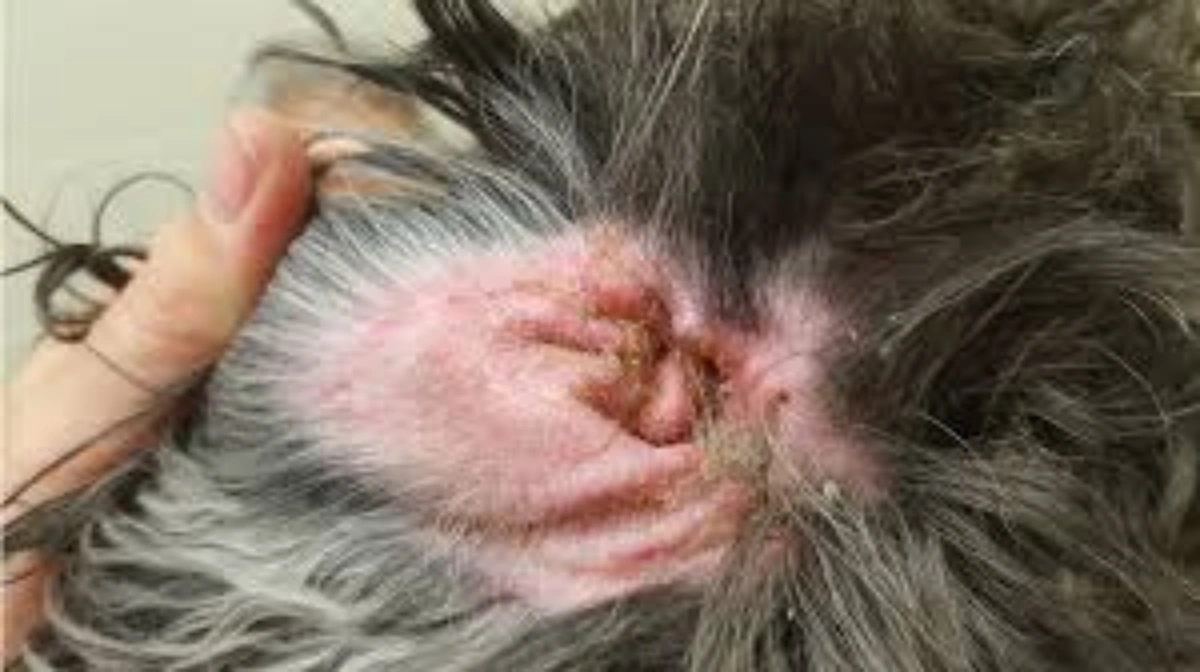
- Otitis externa (ear canal infection) – bacterial or yeast infection in the external ear canal produces intense irritation and discharge; the dog shakes and scratches in response, and the vessel damage accumulates with each episode.
- Otitis is by far the most common precipitating cause, particularly in dogs with floppy ears (Cocker Spaniels, Basset Hounds, Labrador Retrievers), dogs with hairy ear canals, and dogs who swim regularly.
- Ear mites (Otodectes cynotis) – more common in puppies and dogs from multi-animal households; produce significant irritation and scratching
- Allergic skin disease (atopy) – dogs with environmental or food allergies frequently develop secondary ear inflammation as part of a broader allergic response; chronic ear disease in an allergic dog sets the stage for repeated hematoma formation
- Foreign bodies – grass seeds, insects, or debris lodged in the ear canal trigger acute, intense shaking
- Skin conditions – generalized skin disease that extends to the ear pinna and outer canal can increase local vulnerability to vessel injury
- Trauma – direct blunt injury to the ear (bite wounds, impact) can cause hematoma formation without any concurrent ear disease
In rescue dogs, particularly those with a history of neglected ear care, chronic otitis and secondary hematoma formation are common presentations that the VOSD team encounters regularly. Early ear hygiene and infection management prevent the majority of these cases.
Related Videos


Diagnosing Hematoma in Dogs
Clinical diagnosis of an aural hematoma is usually straightforward – the characteristic fluctuant, fluid-filled swelling of the ear flap is visually and palpably distinctive. The more important diagnostic work lies in identifying the underlying condition.
Physical and otoscopic examination – the veterinarian examines the full ear canal for infection, foreign bodies, excess hair, and discharge. Both ears are assessed; otitis in one ear often indicates the other ear is affected or at risk.
Cytology of ear discharge – a smear of material from the ear canal is examined microscopically to identify bacteria, yeast, and inflammatory cells; it determines whether infection is present and guides antibiotic or antifungal selection.
Needle aspiration – in some presentations, a small sample of fluid may be withdrawn from the hematoma to confirm its nature and rule out abscess or cyst; the aspirated material from a hematoma is blood, distinguishing it from purulent material.
Allergy assessment – in dogs with recurrent ear disease or concurrent skin changes, allergy testing or elimination dietary trial may be recommended to address the root cause.
Treatment of Hematoma in Dogs
Left untreated, an aural hematoma does not simply resolve – the blood organizes into fibrous tissue, the ear cartilage becomes distorted and contracted, and the dog is left with a permanently thickened, cauliflower-shaped ear flap. This “cauliflower ear” deformity is irreversible and is the reason prompt treatment matters. It also offers no guarantee against infection, which can develop in the trapped organised blood.
The most complete guide to treatment options for aural hematomas, including aftercare and follow-up protocols, is available in the treatment of ear hematoma in dogs. The principal approaches are summarised below.
Surgical vs Non-Surgical Treatment
Surgical drainage and suturing – the definitive treatment for established aural hematomas. Under general anesthesia, the ear flap is incised, the accumulated blood and clot material is removed, and the skin is sutured to the underlying cartilage using a mattress or through-and-through suture pattern. These sutures serve two purposes: they prevent re-accumulation of blood, and they encourage adhesion between the separated tissue layers. The ear is bandaged post-operatively. This approach offers the lowest recurrence rate and the best cosmetic outcome.
Needle aspiration (alone) – draining the hematoma with a needle and syringe can provide temporary relief, but has a high recurrence rate because the underlying space remains open and the vessel damage is not addressed. It may be appropriate as a short-term management measure in dogs who are not surgical candidates.
Teat cannula or drain placement – a small drain inserted into the hematoma allows ongoing drainage without repeated needle puncture; sometimes used as an alternative to surgery in specific cases or where owner compliance with post-operative care is a concern.
Medical management – intralesional or oral corticosteroids may reduce inflammation and immune-mediated contribution to hematoma formation in some cases; most effective in early, small hematomas and often used as an adjunct to drainage rather than as sole treatment.
In all cases, treating the underlying ear disease simultaneously is not optional – it is the component that prevents the cycle from restarting.
Prognosis and Recovery
Dogs treated promptly for aural hematoma – with proper drainage or surgery and concurrent management of the underlying ear condition – typically recover well, with a good cosmetic outcome and minimal long-term impact on ear function.
Untreated or inadequately treated hematomas carry the risk of permanent cartilage deformity, chronic pain, and increased susceptibility to future ear infections in the remodelled tissue. Recurrence is common if the underlying cause (otitis, allergy) is not resolved alongside the hematoma treatment.
Post-operative recovery involves wearing an Elizabethan collar to prevent the dog from scratching the sutured ear, continued management of any ear infection or allergy, and follow-up for suture removal and reassessment. Most dogs return to normal comfort within two to three weeks of surgical treatment.
Related Products



Preventing Hematomas in Dogs
Most aural hematomas are preventable through proactive ear care:
- Early treatment of ear infections – any discharge, odour, or increased ear scratching should prompt a veterinary ear examination rather than home monitoring; untreated otitis is the most common path to hematoma
- Regular ear cleaning – particularly important in floppy-eared breeds, heavy swimmers, and dogs with known allergy history; frequency and method should be guided by a veterinarian
- Allergy management – dogs with chronic ear disease driven by atopy or food allergy require long-term allergy management, not repeated courses of ear drops
- Parasite prevention – routine treatment prevents ear mite infestations that trigger intense scratching
- Routine veterinary ear checks – including at every annual health examination; many early ear infections are identified and treated before they produce symptoms
When to Seek Veterinary Help
A visibly swollen ear flap, a dog who will not stop shaking their head, or an ear that is painful to touch – these are presentations for a veterinary appointment within 24–48 hours, not a “let’s see how it goes.” Hematomas do not improve without intervention, and the window for achieving a good cosmetic outcome narrows as the blood organizes into fibrous tissue. If the swelling is large, developing quickly, or the dog is in evident pain, same-day assessment is appropriate.
Conclusion
Hematomas in dogs – particularly aural hematomas – are among the more common reasons dogs present to veterinary clinics, and they are highly treatable when caught early. What makes the difference long-term is not just treating the blood accumulation, but identifying and addressing what triggered it. A dog whose ear infection is managed, whose allergies are controlled, and whose ear hygiene is maintained rarely develops a hematoma in the first place. And when one does occur, prompt veterinary care keeps it from becoming a permanent problem.