
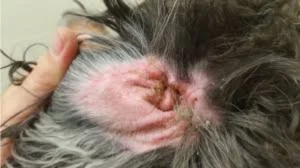
Ear Infections in Dogs: Causes, Symptoms & Treatment
Ear infections are among the most frequently reported reasons for veterinary consultations in India, yet they are also among the most commonly undertreated. A single course of ear drops may

In a city like Bengaluru, where a 10 km drive can take 60 minutes, and hardly any parking is available, twice-daily hospital visits are not just inconvenient; they interrupt treatment continuity.
VOSD Intensive Care Residency Programs™ provide structured, protocol-driven inpatient stabilisation delivered at VOSD IPD, Indiranagar; a 24×7 residential veterinary facility built around the VOSD Level of Care™.
This is intensive care without interruption.
An Intensive Care Residency™ is a defined-duration inpatient stabilisation program (48-120 hours or more) designed for high-dependency medical conditions that require:
Unlike routine admission, a Residency follows a structured protocol with documented monitoring cycles and defined recovery milestones.
It is not boarding. It is not observation. It is systematic intensive care.

Many critical conditions require reassessment twice daily or more frequently.
In practice, this means:
Between visits, parameters may change:
Structured inpatient stabilisation eliminates these monitoring gaps.
All Intensive Care Residency Programs™ are delivered under the VOSD Level of Care™ framework, a structured clinical management model refined through high-volume institutional experience.
Across VOSD systems:
High case volume improves pattern recognition. Pattern recognition improves intervention timing. Structure improves probability.
VOSD IPD is not a day clinic. It is a 24×7 residential veterinary facility with:
This infrastructure allows uninterrupted stabilisation.

For acute kidney injury (AKI), chronic kidney disease crisis, leptospirosis renal phase, and severe dehydration with azotemia.
Includes:
For acute hepatitis, toxin-induced liver injury, hepatic encephalopathy risk.
Includes:
For severe vomiting, hemorrhagic gastroenteritis (HGE), pancreatitis, and dehydration.
Includes:
For confirmed or suspected leptospirosis.
Includes:
For diabetic ketoacidosis (DKA).
Includes:
For snakebite, rat poison ingestion, and toxin exposure.
Includes:
Every Intensive Care Residency™ includes:
This is institutional accountability – not verbal reassurance.
At home treatment in a situation where your dog is in, without VOSD’s structured monitoring:
With Residency care:
Continuity reduces variability.
Long-term medical care for critical and complex cases.
Medically supervised sterilization for high-risk animals.
Dedicated care for kidney-related conditions.
Specialized treatment for liver diseases.
Care for severe gastrointestinal disorders.
Controlled environment for contagious conditions.
Intensive monitoring and insulin therapy for diabetic crises.
Emergency treatment for poisoning and toxin exposure.
Remote consultations, second opinions, and ongoing case management.


info@vosd.in
If your dog has:
Structured monitoring improves safety.
Strategically located in Indiranagar, accessible from:
VOSD IPD is built for urban critical care.

Ear infections are among the most frequently reported reasons for veterinary consultations in India, yet they are also among the most commonly undertreated. A single course of ear drops may
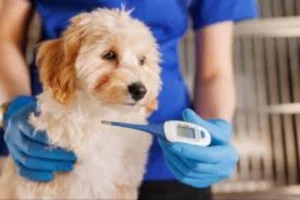
Is your dog running a fever? Learn how to check dog temperature, identify tick fever symptoms, and when to seek emergency vet care, expert diagnosis at VOSD Advance PetCare™.
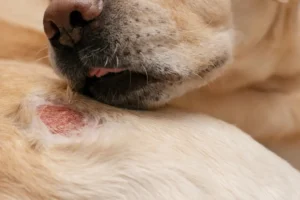
Is your dog scratching constantly? Learn causes, symptoms, and treatment of dog skin infections, allergies, hot spots, and hair loss, expert dermatology at VOSD Advance PetCare™.
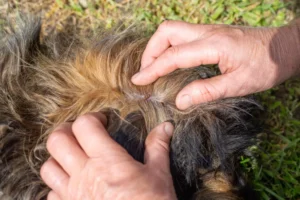
Understand how parasites affect dogs, the warning signs to watch for, and how proper treatment and prevention can protect your pet.