Lymphoid cancer affecting the lungs is not a common first presentation, but it is a recognised and serious one. In most cases, pulmonary involvement occurs as part of systemic lymphoma, where the cancer has spread to the lungs from lymph nodes, the spleen, or other organs. Less commonly, lymphoid malignancy can originate within the lung tissue itself (primary pulmonary lymphoma), a rarer but distinct clinical entity. Either way, when lymphoid cancer reaches the lungs, it affects the dog’s ability to breathe, and respiratory compromise is one of the most distressing and rapidly deteriorating conditions a dog can experience. Early recognition of breathing changes and prompt veterinary investigation of persistent respiratory symptoms is what gives treatment the best chance to help.
What Are Cancerous Lymphoid Cells in Dogs?
Lymphoma is a cancer of lymphocytes, the white blood cells responsible for adaptive immune responses. Lymphocytes are found throughout the body: in the bloodstream, lymph nodes, spleen, bone marrow, and in lymphoid tissue embedded within organs, including the gastrointestinal tract and lungs. Because lymphocytes circulate throughout the body, lymphoma has access to virtually every tissue and organ, which makes it a systemic disease even when it appears localised at diagnosis.
In the most common form of canine lymphoma, multicentric lymphoma, the cancer presents as generalised enlargement of peripheral lymph nodes. But lymphoma also occurs in mediastinal form (affecting lymph nodes and the thymus in the chest), alimentary form (affecting the gastrointestinal tract), and as extranodal lymphoma in specific sites, including the lungs, eyes, skin, and nervous system.
Pulmonary lymphoid involvement may manifest as interstitial infiltration (lymphoid cells spreading through lung tissue), discrete lung masses, or a mediastinal mass with secondary lung compression. Each pattern has clinical implications for symptoms, diagnostic approach, and treatment response. For a broader overview of canine medical conditions and how they are categorised and managed, the VOSD dog medical conditions resource library is useful.
Symptoms of Lymphoid Cancer in the Lungs of Dogs
Respiratory signs dominate the clinical picture when lymphoid cancer involves the lungs directly. In systemic lymphoma with incidental pulmonary infiltration, breathing symptoms may accompany more typical lymphoma signs (enlarged lymph nodes, weight loss, lethargy). In dogs where the chest is the primary site of involvement, respiratory compromise may be the first and most prominent presentation.
Common Clinical Signs
- Persistent cough, dry, unproductive, or productive; progressive and not responding to standard cough management
- Breathing difficulty at rest, laboured, rapid, or shallow respirations; increased respiratory effort visible as exaggerated chest movement
- Exercise intolerance, the dog tires quickly, stops during short walks, or refuses physical activity they previously engaged in easily
- Increased respiratory rate at rest, counting breaths per minute at home, can identify subtle deterioration; more than 30 breaths per minute at rest in a relaxed dog warrants veterinary assessment
- Lethargy and generalised weakness, reduced engagement, reluctance to move, spending more time lying down
- Reduced appetite and weight loss, often progressive; body condition declines gradually
- Swollen lymph nodes, particularly if the pulmonary involvement is part of multicentric lymphoma; nodes under the jaw, in front of the shoulders, and behind the knees may be palpably enlarged
- Muffled heart and lung sounds, if pleural effusion (fluid accumulation in the chest cavity) has developed, the fluid dampens sound transmission
- Cyanotic (blue-tinged) gums, in advanced or acute respiratory decompensation; represents critically reduced oxygenation
Symptoms may develop gradually over weeks, giving a false impression that the dog is simply “slowing down” with age. In dogs over seven, a progressive cough or declining exercise tolerance should be investigated promptly rather than attributed to ageing alone.
Causes and Risk Factors
The exact cause of lymphoma in any individual dog is not identifiable with certainty. The scientific consensus points to a combination of genetic predisposition, immune system dysregulation, and environmental exposures acting over time.
Genetic predisposition, certain breeds are overrepresented in lymphoma case series: Golden Retrievers, Boxers, Bullmastiffs, Basset Hounds, Saint Bernards, Scottish Terriers, Airedale Terriers, and German Shepherds. This does not mean these breeds will develop lymphoma, but breed-aware pet parents should be particularly attentive to early signs and maintain regular veterinary screening.
Age, lymphoma can occur at any age, but is most commonly diagnosed in middle-aged to older dogs, typically between six and nine years. Mediastinal lymphoma has a notable exception: it is overrepresented in younger dogs (2–5 years) of certain breeds, particularly Boxers and Golden Retrievers, where it can behave distinctly from the more typical multicentric form.
Environmental factors, exposure to herbicides (particularly 2,4-D), certain chemicals, and secondhand tobacco smoke have been associated with increased lymphoma risk in epidemiological studies. These associations are plausible biologically but should not be stated as definitive causal relationships given the complexity of multi-factor cancer development.
Immune system abnormalities, chronic immune stimulation, autoimmune disease, or conditions requiring long-term immunosuppressive therapy may influence lymphoma risk, though the relationship is not straightforward.
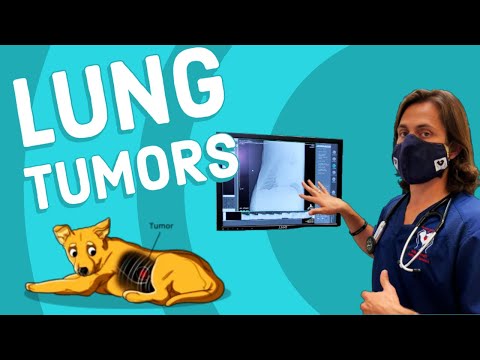
Related Videos


Diagnosing Cancerous Lymphoid Cells in the Lungs
Diagnosing pulmonary lymphoid involvement requires confirming the presence of abnormal lymphoid cells in the lungs, establishing the extent of disease, and, where possible, identifying the specific lymphoma subtype, because subtype influences prognosis and treatment selection significantly.
Thoracic radiographs (chest X-rays), the first imaging step, can identify pulmonary masses, interstitial infiltrates, mediastinal lymph node enlargement, and pleural effusion. Three-view thoracic X-rays provide a more complete assessment than a single view.
Thoracic ultrasound, useful for guiding fluid aspiration from pleural effusion and for assessing mediastinal masses; also detects pericardial effusion if cardiac involvement is present.
CT scan (computed tomography) provides far superior resolution of pulmonary lesions compared to radiographs; it identifies the number, location, and extent of lesions more precisely; increasingly available at veterinary referral centres and essential for surgical planning if resection is being considered.
Bronchoalveolar lavage (BAL), a sample of fluid and cells is collected from the airways during bronchoscopy; cytology of BAL fluid may identify malignant lymphoid cells in dogs with diffuse pulmonary infiltration.
Fine needle aspiration (FNA) and cytology of accessible peripheral lymph nodes or, under ultrasound or CT guidance, of pulmonary masses; often the fastest route to cytological diagnosis.
Biopsy and histopathology provide definitive diagnosis, tumour type classification, and, critically, immunophenotyping (B-cell vs T-cell lymphoma), which is one of the strongest prognostic indicators and directly guides chemotherapy protocol selection. B-cell lymphoma generally responds better to treatment and carries a more favourable prognosis than T-cell lymphoma.
Complete Blood Count and biochemistry panel, assesses for circulating lymphoblasts (leukaemic phase), haematological complications, hypercalcaemia (most commonly associated with T-cell lymphoma), and organ function for treatment planning.
Bone marrow aspiration determines the extent of marrow involvement, part of complete staging.
Prognosis and Treatment Options
Prognosis for canine lymphoma with pulmonary involvement depends on the specific form, the immunophenotype (B-cell vs T-cell), the extent of disease, and the dog’s overall health and performance status at diagnosis.
Chemotherapy is the primary treatment for systemic lymphoma, including presentations with pulmonary involvement. The CHOP protocol (cyclophosphamide, doxorubicin, vincristine, and prednisolone) is the standard multi-agent chemotherapy approach and achieves remission in approximately 80–90% of dogs with B-cell multicentric lymphoma, with median first remission times of 6–12 months. T-cell lymphoma responds less consistently and carries a shorter median survival.
Mediastinal lymphoma, when treated promptly, can respond dramatically to CHOP-based chemotherapy with a significant reduction in mass size and rapid symptom relief; even dogs in severe respiratory distress at diagnosis may stabilise quickly once chemotherapy begins. This form is considered relatively responsive to treatment.
Prednisolone alone, in dogs where multi-agent chemotherapy is not feasible (due to health status, owner preference, or resource constraints), prednisolone as a single agent can provide a meaningful short-term response and palliate symptoms, though remission duration is typically short, and prednisolone pre-treatment may reduce subsequent response to CHOP.
Pleural effusion drainage (thoracocentesis), in dogs with significant pleural fluid accumulation causing respiratory distress, thoracocentesis (draining fluid from the chest cavity with a needle) provides immediate breathing relief and can be a critical stabilisation step before chemotherapy begins.
Radiation therapy is used in specific scenarios, including cutaneous lymphoma and some localised extranodal presentations, but not a primary modality for systemic pulmonary disease.
Rescue protocols, for dogs who relapse after initial chemotherapy remission, second-line protocols (MOPP, lomustine-based, rabacfosadine) may achieve second remission, though response rates and duration are generally lower than first-line treatment.
Long-Term Care and Monitoring
Dogs in remission are monitored with regular physical examinations, CBC and biochemistry panels, and thoracic imaging at defined intervals to detect early relapse. Response to treatment, reduction of lymph node size, improvement in breathing, return of normal appetite and energy, is assessed at each treatment visit. Side effects of chemotherapy are managed as they arise; most dogs tolerate treatment well, and dose adjustments are made if significant toxicity occurs. The relationship between the owner’s observation at home and the clinical team is central to long-term management. Changes in breathing rate, energy, appetite, or lymph node size between visits should be communicated promptly.
Complications and Related Conditions
Lymphoid cancer affecting the lungs can produce several secondary complications that require management alongside the primary disease:
Pleural effusion, fluid accumulation in the chest cavity, compresses lung tissue and impairs breathing; it may require repeated drainage until chemotherapy reduces the underlying cause.
Secondary pulmonary infection, immunosuppression from both the cancer and chemotherapy, increases infection risk; dogs developing fever, productive cough, or sudden clinical deterioration during treatment should be evaluated for secondary bacterial pneumonia.
Paraneoplastic hypercalcaemia, elevated blood calcium, most common with T-cell lymphoma, can cause lethargy, excessive thirst, vomiting, and kidney damage; it requires management alongside cancer treatment.
Cutaneous involvement, in some cases of lymphoma, the skin is affected as part of the disease. Skin ulcers and lesions may develop, particularly with epitheliotropic (cutaneous) lymphoma or as part of advanced systemic disease. The management of skin ulceration in these contexts is detailed in skin ulcers in dogs, which covers assessment and wound care approaches relevant to dogs managing complex medical conditions.
When to Seek Veterinary Care
Take your dog to a veterinarian promptly if they show a cough that has lasted more than one to two weeks without improvement, any breathing difficulty at rest or with minimal exertion, unusually fast breathing in a resting dog, or a combination of lethargy and weight loss alongside any respiratory sign. If a dog already diagnosed with lymphoma shows sudden worsening of breathing, appears to be working hard to breathe, or has blue or white gums, this is an emergency. Pleural effusion can develop or worsen rapidly and requires same-day drainage to prevent respiratory failure.
Conclusion
Lymphoid cancer affecting the lungs is serious, but it sits within a disease category, canine lymphoma, that veterinary oncology has become genuinely better at managing. The key variables are: how early the diagnosis is made, whether the immunophenotype is B-cell or T-cell, and how quickly treatment begins. A dog whose breathing difficulty is investigated promptly, whose lymphoma is accurately typed, and who receives appropriate chemotherapy stands a meaningfully better chance of sustained remission than one whose symptoms are attributed to age until the disease is advanced. Routine veterinary monitoring, attentiveness to respiratory changes, and the confidence to act on early warning signs are the practical tools that make the difference.