If your dog is squatting repeatedly, straining without producing anything, or has not passed stool in two or more days, it is a sign that something needs attention. Severe constipation in dogs is not simply a matter of skipping a day, when it becomes significant, it causes real discomfort, can affect appetite and energy, and if left unaddressed, may lead to complications that are harder to manage. The good news is that most cases respond well to timely care, and there is a great deal you can do alongside your vet to help your dog feel better.
What is Severe Constipation in Dogs?
Constipation in dogs refers to infrequent, difficult, or absent passage of stool. When stool remains in the colon for an extended period, water continues to be absorbed from it, making it progressively harder and more difficult to pass. Severe constipation is when this has persisted for two or more days, the dog is visibly straining and uncomfortable, or the stool that does pass is extremely dry and hard.
A more extreme form of constipation is known as obstipation, where the colon becomes so packed with hardened stool that the dog is entirely unable to pass anything. This is a more serious situation that requires veterinary intervention rather than home management.
Why Severe Constipation in Dogs Needs Attention
It can be tempting to wait and see when a dog has not passed stool for a day or two. But when constipation becomes severe, there are real risks to leaving it unaddressed. Hardened stool in the colon causes discomfort and pain. In prolonged cases, toxins from the retained faecal matter can be reabsorbed into the body, leading to lethargy and nausea. In the most severe and chronic cases, repeated episodes of severe constipation can lead to a condition called megacolon, where the colon becomes permanently stretched and loses its ability to contract normally. Early treatment prevents this progression.
Symptoms of Severe Constipation in Dogs
The signs of severe constipation in dogs are usually visible during your regular routine with your dog. Here is what to watch for:
- Straining or squatting repeatedly without passing stool or passing only very small amounts
- Stool that is very dry, hard, or pellet-like when it does appear
- No stool passed for two or more days despite normal eating
- Whimpering, crying, or visible discomfort when attempting to defecate
- Lethargy or reduced interest in normal activity
- Reduced appetite or reluctance to eat
- Occasional vomiting in cases where the constipation has become more significant
- Dragging the bottom along the ground or licking at the anal area
- A firm or uncomfortable abdomen when gently touched
One thing to be aware of is that straining can sometimes be confused with diarrhoea by pet parents who are not able to observe the dog closely. A dog with severe constipation may squat repeatedly and produce nothing, or only small streaks of liquid around hardened stool. If you are unsure whether your dog is straining to defecate or showing signs of diarrhoea, a veterinary examination will clarify this quickly.
Related Videos


Common Causes of Severe Constipation in Dogs in India
Severe constipation in dogs can develop for a range of reasons. In the Indian context, several causes are particularly relevant:
- Dehydration: This is one of the most common contributors to constipation in Indian dogs, particularly during hot summers. When a dog does not drink enough water, more moisture is absorbed from stool in the colon, making it hard and difficult to pass. Ensuring access to fresh, clean water at all times is essential year-round.
- Bone-heavy diet: Feeding dogs cooked or raw bones is a common practice in Indian households. Bones, particularly cooked ones, produce a chalky, white, very hard stool and can contribute significantly to severe constipation. Dogs fed a high proportion of bones in their diet are at notable risk.
- Low fibre intake: Diets that lack adequate fibre do not stimulate normal colon movement effectively, which slows the passage of stool and allows it to dry out in the colon.
- Ingested hair or non-food material: Dogs that groom themselves heavily, live with other shedding animals, or scavenge may ingest hair or other material that accumulates in the colon and impedes stool passage.
- Lack of exercise: Physical activity stimulates gut motility. Dogs that are kept largely sedentary or do not get regular walks may develop slower digestive movement, contributing to constipation.
- Pain or discomfort: Dogs that are reluctant to posture properly due to joint pain, an anal gland problem, or a perineal hernia may avoid defecating, allowing stool to harden. Older dogs with arthritis are particularly prone to this pattern.
- Intestinal obstruction: In more serious cases, severe constipation may be caused or worsened by a partial obstruction from a foreign body, tumour, or hernia. This requires veterinary assessment to rule out.
- Certain medications: Some medications, including certain pain relief or antihistamine drugs, can reduce gut motility as a side effect and contribute to constipation.
In rescue and street dogs, severe constipation can sometimes result from ingesting plastic, fabric, or other non-digestible material. This is worth considering if a rescued dog is constipated without an obvious dietary cause.
How Vets Diagnose Severe Constipation in Dogs
When you bring a constipated dog to the vet, the diagnostic process is usually straightforward. Your vet will begin by asking about your dog’s diet, water intake, stool history, and how long the problem has been present.
- Physical and rectal examination: The vet will palpate the abdomen to feel for hardened stool in the colon and assess whether the dog shows pain or resistance. A rectal examination may be performed to assess the degree of impaction and rule out a perineal hernia or anal stricture.
- X-rays: Abdominal radiographs are particularly useful in cases of severe constipation. They can clearly show the extent of stool accumulation in the colon, reveal the presence of ingested foreign material such as bone fragments, and help rule out a more serious obstruction.
- Blood tests: If an underlying metabolic cause is suspected, such as hypothyroidism, hypercalcaemia, or kidney disease, blood work may be recommended to check for these conditions.
In most uncomplicated cases, a physical examination and X-ray provide enough information to plan treatment without the need for more extensive investigation.
Treatment for Severe Constipation in Dogs
Treatment depends on the severity of the constipation and whether an underlying cause has been identified. Here is what veterinary management typically involves:
- Rehydration: If dehydration is contributing to the constipation, intravenous or subcutaneous fluids may be administered to rehydrate the body and help soften stool in the colon.
- Stool softeners and laxatives: Veterinary-prescribed stool softeners or osmotic laxatives may be used to draw water into the colon and make stool easier to pass. These should only be given under veterinary guidance, as inappropriate use can cause electrolyte imbalances.
- Enema: In cases of significant impaction, a veterinary enema may be required to help loosen and clear hardened stool. This is always performed by a trained veterinary professional. Do not attempt to administer an enema at home, as incorrect technique or inappropriate solutions can seriously harm your dog.
- Manual evacuation: For severe obstipation, manual removal of hardened stool under sedation or anaesthesia may be necessary. This is performed in the clinic when other methods are not sufficient.
- Treating the underlying cause: If pain, an anal gland problem, or a structural issue is identified as the reason the dog has been avoiding defecating, this needs to be addressed alongside the constipation itself to prevent recurrence.
Never give your dog human laxatives, mineral oil, or any medication intended for people without specific veterinary advice. Many of these are unsafe for dogs and can cause harm rather than relief.
Home Care and Diet Support for Constipated Dogs
For mild cases of constipation, or to support recovery after veterinary treatment, there are safe and practical steps you can take at home:
- Increase water intake: Encourage drinking by ensuring fresh water is always available and consider adding a small amount of low-sodium broth to the water bowl to make it more appealing.
- Add plain cooked pumpkin: Plain pumpkin, without added sugar or spices, is a gentle source of soluble fibre that can help regulate stool consistency. A tablespoon or two mixed into food is generally well tolerated by most dogs.
- Feed a gentle, easily digestible diet: During a bout of constipation, offer plain boiled rice with boiled vegetables such as carrot or green beans. Avoid bone-based meals entirely until stools have normalised.
- Increase exercise: Regular gentle walks stimulate gut motility and help stool move through the colon more efficiently. Even a fifteen to twenty minute walk twice a day makes a meaningful difference.
- Reduce or eliminate bones from the diet: If your dog has been eating a significant proportion of bones, this is the most practical dietary change you can make to prevent recurrence of severe constipation.
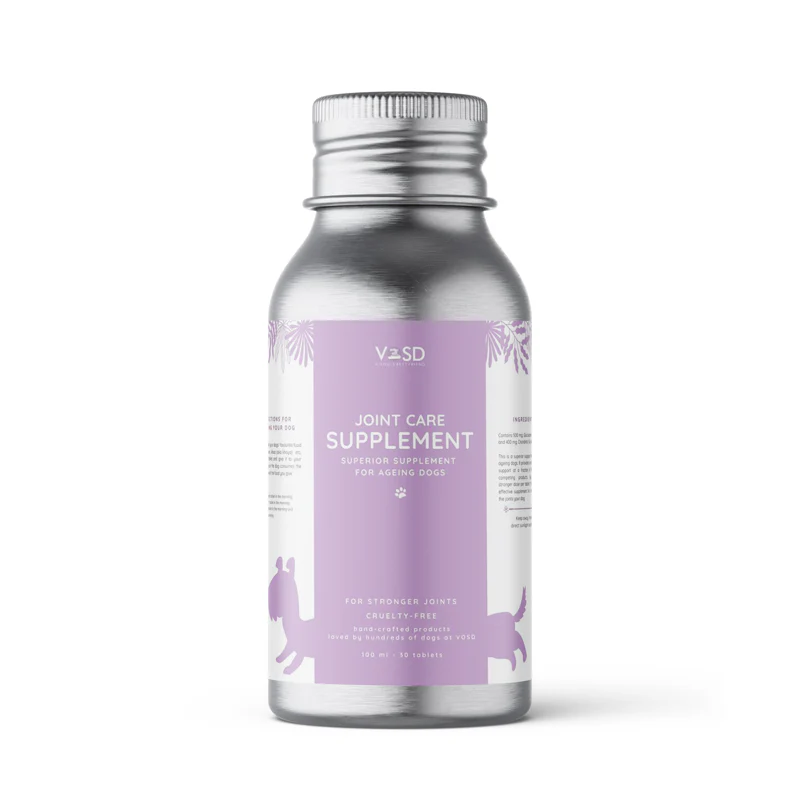
For dogs with joint pain that makes it difficult to posture comfortably for defecation, addressing that underlying discomfort may also help. VOSD Joint Care Supplement is formulated to support joint health and mobility in dogs, which may help older or arthritic dogs maintain the comfort needed for normal toileting posture. Always consult your vet before starting any new supplement, particularly for a dog with an ongoing health condition.
Related Products
When Constipation Becomes an Emergency
Most cases of severe constipation in dogs can be managed with veterinary treatment without becoming an emergency. However, contact your vet the same day or seek urgent care if:
- Your dog has not passed any stool for three or more days
- Your dog is vomiting alongside the constipation
- There is blood visible in or around the anal area
- Your dog appears to be in severe pain, cannot walk normally, or collapses
- You suspect your dog has ingested a foreign object such as plastic, fabric, or a large bone fragment
- The abdomen appears visibly distended and hard
If your dog has not passed stool for more than two to three days, it is always best to get a vet’s opinion early rather than continuing to wait at home.
Recovery and Long-Term Outlook
Most dogs with severe constipation recover well once appropriate treatment is given and dietary or lifestyle changes are made. A single episode that is addressed promptly rarely causes lasting problems.
Dogs that have recurring severe constipation need a more active long-term management plan, which may include a higher-fibre diet, regular exercise, and periodic veterinary check-ups. In dogs where an underlying cause such as arthritis, hypothyroidism, or chronic anal gland disease is identified, managing that condition consistently is the most effective way to prevent constipation from recurring.