
A dog that keeps vomiting, refuses food, and seems unusually dull is always a concern. When these signs appear together and do not settle within a few hours, one possibility that always needs to be considered is a dog intestinal blockage. This occurs when something prevents the normal passage of food and digestive contents through the intestines. It is a condition seen regularly in both pet dogs and rescued street dogs in India, and one where early veterinary involvement genuinely changes the outcome.
What is a Dog Intestinal Blockage?
A dog intestinal blockage, also known as an intestinal obstruction, occurs when a foreign object, mass, or other material lodges in the intestine and prevents food, fluid, and waste from passing through normally. It can affect any section of the digestive tract from the stomach to the large intestine, and it can be partial or complete.
A partial blockage allows some material to pass but causes significant discomfort and disruption. A complete blockage stops passage entirely and carries a higher risk of rapid deterioration, as pressure builds up and the intestinal wall can be damaged without timely treatment.
Why a Dog Intestinal Blockage Can Become Serious
When the intestine is blocked, the body cannot absorb fluids and nutrients normally. The dog becomes increasingly dehydrated and weakened. Pressure from the backed-up contents can reduce blood supply to the intestinal wall, causing the tissue to die. If the intestine is perforated, bacteria from the gut can spill into the abdominal cavity, leading to a broader infection. These complications are what make a dog intestinal blockage a condition that needs veterinary assessment without undue delay.
Symptoms of a Dog Intestinal Blockage
The symptoms of a dog intestinal blockage can begin subtly and are sometimes mistaken for a routine stomach upset in the early stages. Here is what to watch for:
- Repeated vomiting, often becoming more frequent over time rather than settling
- Complete loss of appetite or strong reluctance to eat or drink
- Abdominal pain, which may show as a hunched posture, reluctance to be touched around the belly, or restlessness
- No stool passed for one or more days, or only very small amounts
- Occasional diarrhoea in partial blockage cases, sometimes with mucus or blood
- Progressive lethargy and weakness
- A swollen or unusually firm abdomen in some cases
- Signs of dehydration such as dry gums and reduced skin elasticity
One thing worth noting is that the early signs of a dog intestinal blockage can look very similar to a simple upset stomach. The key difference is that symptoms do not improve, they worsen. A dog with an upset stomach typically shows improvement within twelve to twenty-four hours with rest and a bland diet. A dog with a blockage tends to deteriorate progressively despite basic care.
Related Videos


Common Causes of Dog Intestinal Blockage in India
In the Indian context, certain causes of dog intestinal blockage come up repeatedly, both in household pets and in rescued dogs:
- Foreign object ingestion: This is the most common cause. Dogs, particularly curious puppies and young dogs, swallow objects including plastic wrappers, cloth pieces, rubber, toy fragments, and string. Street dogs that scavenge for food may ingest plastic bags, foil, or fabric as a survival behaviour. This is not something to judge, it is simply what happens when a dog’s instincts meet an uncontrolled environment.
- Bones: Cooked bones are frequently fed to dogs in Indian households as treats or leftovers. Cooked bones splinter easily and can create sharp fragments that either lodge in the intestine or cause internal damage. Even large raw bone pieces can cause a partial or complete blockage.
- Ingested hair: Dogs that groom themselves heavily or live with other shedding animals may accumulate enough hair in the digestive tract to form a partial obstruction, particularly in the stomach or upper intestine.
- Intestinal tumours: In older dogs, growths within the intestinal wall can gradually narrow the passage and eventually cause a blockage. These cases tend to progress more slowly than foreign body obstructions.
- Severe constipation leading to obstipation: In extreme cases of untreated constipation, hardened stool accumulation can effectively block the passage of further material through the colon.
| Cause | Common in Which Dogs | Preventable? |
|---|---|---|
| Foreign object ingestion | Puppies, young dogs, rescued street dogs | Yes, with supervision and environment control |
| Cooked bone fragments | Any dog fed bones at home | Yes, by avoiding cooked bones entirely |
| Hair accumulation | Heavy shedding breeds, dogs that over-groom | Partially, with regular grooming |
| Intestinal tumours | Middle-aged and older dogs | No, but early detection helps |
| Hardened stool | Dogs with untreated constipation | Yes, with diet and hydration management |
When This Becomes an Emergency
If you suspect your dog has swallowed something, it is always safest to consult a vet early rather than waiting to see what happens. Seek veterinary attention the same day or urgently if your dog shows:
- Vomiting that has not stopped after several hours
- Complete refusal to eat or drink alongside vomiting
- Visible abdominal swelling or pain when the belly is touched
- Rapidly increasing weakness or an inability to stand steadily
- Blood in the vomit or stool
- A known or strongly suspected ingestion of a foreign object such as plastic, fabric, or a large bone piece
Do not wait to see if a suspected foreign object passes on its own once significant symptoms are present. Some objects do pass without complication, but this cannot be assumed once a dog is showing signs of obstruction.
How Vets Diagnose a Dog Intestinal Blockage
When you bring a dog suspected of having an intestinal blockage to the clinic, the vet will take a careful history first, particularly asking about what the dog may have eaten or had access to recently. The diagnostic process typically involves:
- Physical examination: The vet will palpate the abdomen carefully to feel for abnormal masses, painful areas, or gas-filled loops of intestine. Dogs with a blockage often show clear discomfort during abdominal palpation.
- X-rays: Abdominal radiographs are one of the most useful tools for identifying a dog intestinal blockage. They can reveal gas accumulation proximal to the blockage, radio-opaque objects such as bone fragments, and abnormal intestinal patterns. Some objects, such as fabric or plastic, are not visible on X-rays and may require further investigation.
- Ultrasound: Abdominal ultrasound can detect foreign objects that are not visible on X-rays, assess intestinal wall health, identify fluid accumulation, and help localise the site of the blockage.
- Blood tests: These assess the dog’s hydration, electrolyte levels, organ function, and signs of infection or shock. This information is essential before any surgical procedure.
It is worth knowing that not every blockage is immediately obvious on a single set of images. If the first X-rays are inconclusive but symptoms strongly suggest a blockage, the vet may recommend repeat imaging after a short observation period or proceed directly to further investigation based on clinical judgement.
Treatment for a Dog Intestinal Blockage
Treatment depends on the severity of the blockage, what is causing it, and how long it has been present.
1. Stabilisation: Before any intervention, the vet will address dehydration and electrolyte imbalances with intravenous fluids, provide pain management, and administer antibiotics if infection is a concern. This phase is important for preparing the dog for a safe anaesthetic if surgery is required.
2. Conservative management: In some cases of partial blockage, particularly where the object is small, smooth, and likely to pass, the vet may recommend close monitoring with intravenous fluid support to see whether the object moves through naturally. This approach is only appropriate for specific situations and requires careful ongoing assessment.
3. Surgery: The majority of confirmed dog intestinal blockages require surgical removal of the obstructing material. Depending on how long the blockage has been present and whether the intestinal wall is damaged, the vet may need to remove a section of intestine and rejoin the healthy ends. Prompt surgical intervention before tissue damage has occurred leads to a much cleaner and more straightforward procedure.
4. Endoscopy: In some cases where the object is lodged in the stomach or upper intestine and is accessible, an endoscopic retrieval may be possible without open surgery. This is only an option in specific circumstances and depends on the type and position of the object.
Post-Treatment Home Care
Once your dog is discharged, supporting recovery at home is an important part of the process:
- Keep your dog calm and restrict activity completely for the period advised by your vet. No jumping, running, or rough play until the surgical site has healed.
- Feed small, frequent portions of a bland, easily digestible diet such as plain boiled rice with boiled chicken. Transition back to normal food gradually over five to seven days as directed by your vet.
- Give all prescribed medications at the correct times and complete every course in full.
- Check the surgical wound daily for any redness, swelling, or discharge and report concerns to your vet promptly.
- Monitor your dog’s stool to confirm that normal passage has resumed after surgery. Let your vet know if your dog has not passed stool within twenty-four to forty-eight hours of returning home.
- Attend all follow-up appointments even if your dog seems to be recovering well.
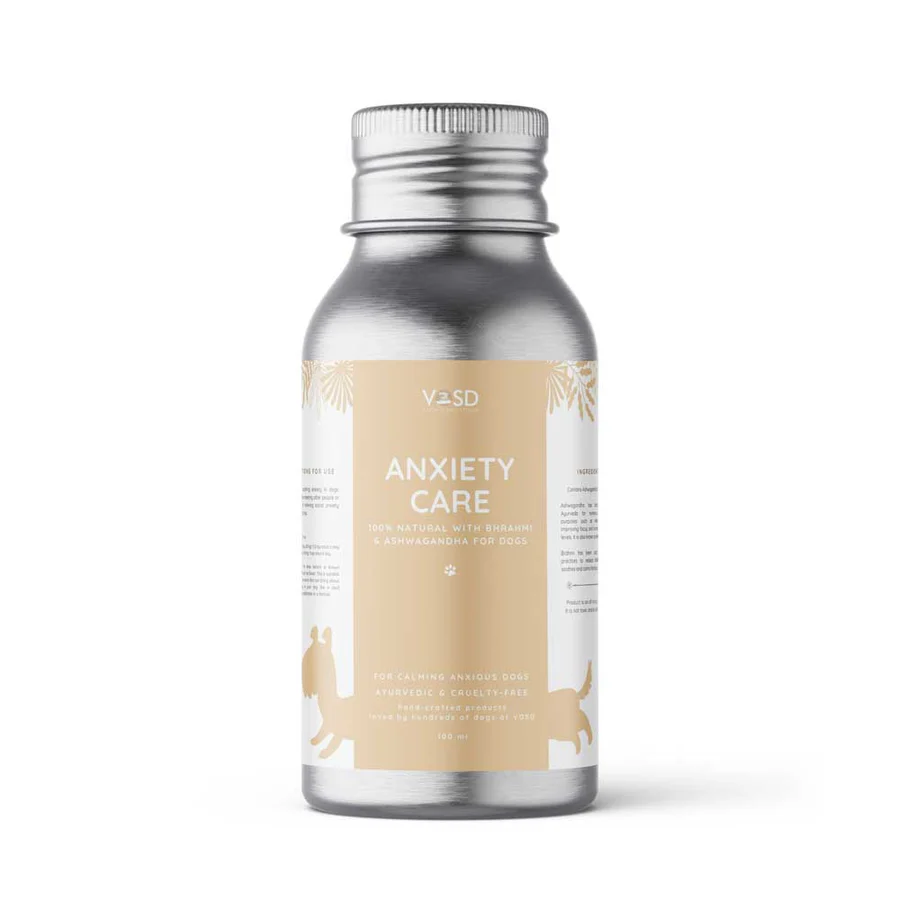
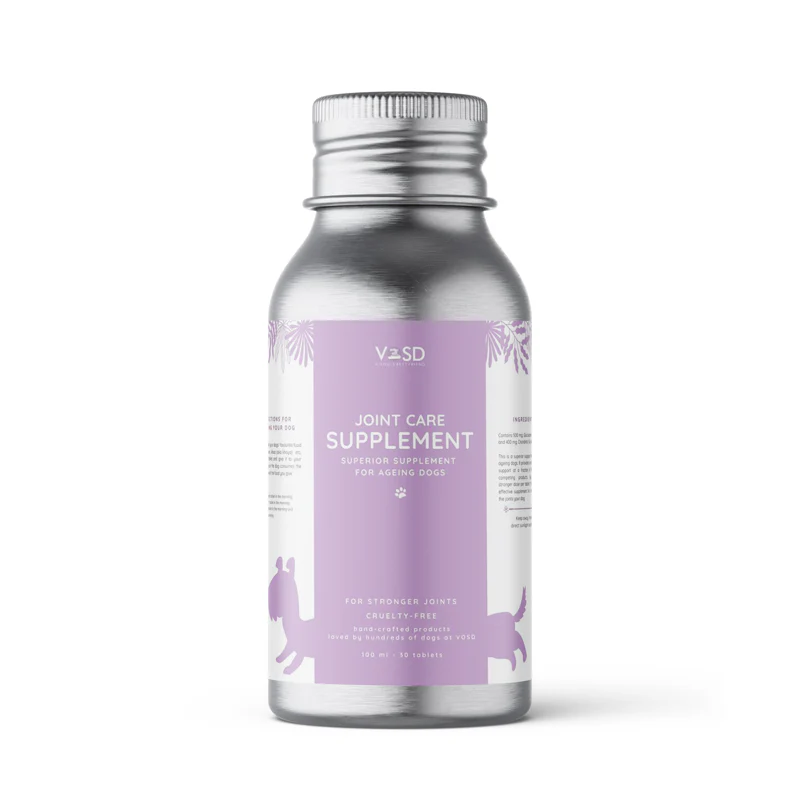
Dogs recovering from abdominal surgery often benefit from support during the rest-restricted recovery period. For dogs that become anxious or unsettled when activity is limited, VOSD Anxiety Care may help ease the transition. For older dogs recovering from surgery who need support for joint comfort as they ease back into gentle activity, VOSD Joint Care Supplement is worth discussing with your vet as part of the recovery plan. Always consult your vet before adding any supplement for a dog that has recently had surgery.
Related Products
Recovery and Long-Term Outlook
Dogs that receive treatment for a dog intestinal blockage before significant intestinal damage has occurred generally recover well and return to full health within two to four weeks. The outlook is directly linked to how quickly the condition was identified and treated.
Dogs that required removal of a section of intestine during surgery may have a slightly longer recovery and will need careful dietary management during the healing period. Most, however, go on to live normal and comfortable lives once fully recovered.
Going forward, the most important preventive step is removing access to the type of object that caused the original blockage. If your dog is a scavenger by habit, supervision on walks and securing all bins and waste at home are practical priorities.