You take your dog to the vet for what seems like a routine check. Or maybe your dog has been off for a few days, and you cannot quite put your finger on why. The abdomen feels slightly fuller than usual. The energy is lower. The gums look a little pale.
The veterinarian palpates the abdomen and pauses. The spleen is enlarged.
Splenomegaly, the medical term for an enlarged spleen in dogs, is not a diagnosis in itself. It is a finding. A signal that something else is happening in the body that is causing the spleen to expand beyond its normal size. Sometimes that something is treatable and resolves completely. Sometimes it is serious and requires urgent intervention.
The spleen is a deeply vascular organ that filters blood, recycles old red blood cells, stores platelets and white blood cells, and plays an important role in immune function. When it enlarges, it is usually because it is being asked to do more than it normally does, or because disease has directly affected its structure.
Understanding what caused the enlargement is what determines everything that follows.
Understanding Splenomegaly in Dogs
The spleen sits on the left side of the abdomen, tucked beneath the stomach. In a healthy dog, it is a firm, elongated organ that is not usually palpable during a routine examination. Its primary roles include filtering damaged or aging red blood cells from circulation, serving as a reservoir for red blood cells and platelets that can be mobilised rapidly in response to blood loss or increased demand, and housing immune cells that respond to infections in the bloodstream.
Because of its extensive blood supply and its central role in blood cell processing, the spleen is sensitive to changes in blood composition, immune activity, and circulatory dynamics. It enlarges as a reactive response to many different systemic diseases, not because it is the source of the problem, but because it is responding to one.
This distinction matters. Splenomegaly in dogs is almost always a secondary finding, a consequence of something happening elsewhere in the body rather than a primary disease of the spleen itself. Identifying and treating the underlying condition is the pathway to resolving the splenomegaly, except in cases where the spleen itself has become diseased, such as when a splenic tumor develops.
The enlarged spleen also poses its own immediate risks simply by virtue of its size and vascularity, which is why the complication of splenic rupture is taken so seriously.
Symptoms of Enlarged Spleen in Dogs
The symptoms of an enlarged spleen in dogs can range from subtle and non-specific to sudden and life-threatening, depending on the underlying cause and whether complications have developed.
Here is what to watch for:
- Weakness and lethargy reflect either the systemic effects of the underlying disease or the anemia that may accompany splenic involvement
- Pale gums indicate reduced red blood cell mass, either from the disease process affecting blood cell production or from blood loss if the spleen has begun to bleed.
- Vomiting or appetite loss as the enlarged spleen presses on surrounding abdominal organs and disrupts normal digestive function
- A distended abdomen that may be visible as a rounded or asymmetrical fullness, or palpable as a firm mass when the abdomen is gently pressed
- Sudden collapse in the most serious presentations, particularly when splenic rupture has occurred, and significant internal bleeding has developed rapidly
The sudden collapse presentation is a genuine emergency. A dog that was relatively stable and then collapses suddenly with pale gums and a distended abdomen may have experienced a splenic rupture with catastrophic internal bleeding. Every minute matters in that scenario.
For many dogs, the symptoms before any rupture or acute event are vague and non-specific. This is why splenomegaly is sometimes identified incidentally during a routine examination or imaging performed for other reasons before the dog is showing obvious clinical signs.
Causes of Enlarged Spleen in Dogs
The causes of splenomegaly in dogs span a wide range of conditions. Identifying the specific cause is the most important step in determining the appropriate treatment.
Cancer and Tumors
Splenic tumors are among the most common causes of significant splenomegaly in older dogs. Hemangiosarcoma, a malignant tumor of the blood vessel cells, is one of the most frequently diagnosed splenic tumors in dogs and is unfortunately associated with a poor prognosis. It causes the spleen to enlarge dramatically, often with blood-filled cavities within the tumor, creating a high risk of sudden rupture and internal bleeding.
Not all splenic masses are malignant. Nodular hyperplasia and hematomas are benign splenic masses that also cause enlargement and can appear very similar to hemangiosarcoma on imaging. Distinguishing benign from malignant splenic masses often requires histopathological examination of the removed tissue.
Infectious Diseases
Systemic infections, particularly tick-borne diseases, can cause significant reactive splenomegaly as the immune system responds to the infection. Hepatozoonosis and other parasitic or bacterial blood infections stimulate the spleen to expand as it mounts an immune response and attempts to filter the infectious organisms and damaged blood cells from the circulation.
Blood Disorders
Diseases that affect blood cell production or destruction drive reactive splenomegaly as the spleen attempts to compensate. Hemolytic anemias, immune-mediated blood cell destruction, and conditions like leukemia in dogs can all cause significant spleen enlargement as the organ responds to abnormal blood cell dynamics and, in leukemia, as malignant cells infiltrate the splenic tissue directly.
Trauma or Injury
Direct abdominal trauma from a vehicle accident, a fall, or a significant impact to the abdomen can damage the spleen, causing swelling from the resulting hematoma formation or from active bleeding within the splenic tissue. Traumatic splenomegaly may be accompanied by significant internal bleeding even if external injuries are not prominent, which is why abdominal imaging after significant trauma is an important step, even in dogs that initially appear stable.
Related Videos


Diagnosis of Splenomegaly in Dogs
Confirming splenomegaly and investigating its underlying cause requires a structured diagnostic approach combining physical assessment with imaging and laboratory analysis.
Physical examination of the abdomen is often the first step. An experienced veterinarian can frequently palpate an enlarged spleen during abdominal examination, identifying an abnormal mass or fullness in the left cranial abdomen. However, the full extent of the enlargement and its relationship to surrounding structures requires imaging to characterise properly.
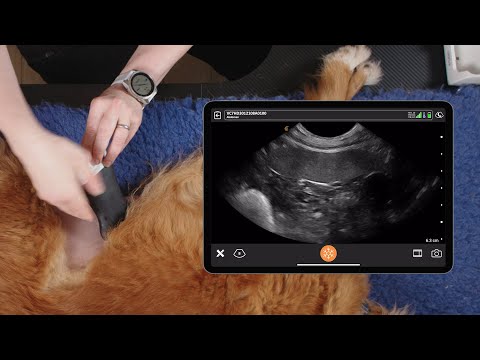
X-rays or abdominal ultrasound are the primary imaging tools. Abdominal X-rays can reveal a soft tissue mass in the splenic region and assess the overall abdominal cavity for free fluid, which would suggest bleeding. Ultrasound provides much more detailed information, allowing the veterinarian to assess the internal architecture of the spleen, identify focal masses versus diffuse enlargement, evaluate the liver and other abdominal organs, and detect free abdominal fluid with greater sensitivity than radiographs.
Blood tests, including CBC and chemistry panel, assess the systemic consequences of the splenomegaly and provide clues about the underlying cause. Anemia, abnormal white blood cell counts, thrombocytopenia, and abnormal biochemistry values all contribute to the diagnostic picture.
A biopsy is needed when a definitive tissue diagnosis is required, particularly when cancer is suspected. Biopsy of the spleen carries risks due to its vascularity, and in many cases, the decision is made to proceed directly to surgical removal of the spleen with histopathological examination of the excised tissue rather than attempting a needle biopsy of an intact but diseased organ.
Treatment for Enlarged Spleen in Dogs
Treatment for an enlarged spleen in dogs is directed at the underlying cause. The splenomegaly itself will not resolve until the condition driving it is addressed.
Treating the Underlying Disease
For infectious causes of splenomegaly, appropriate antimicrobial or antiparasitic treatment targeting the specific pathogen is the primary intervention. As the infection resolves, the reactive spleen enlargement typically diminishes over time.
For immune-mediated conditions causing blood cell destruction and reactive splenomegaly, immunosuppressive therapy aimed at reducing the inappropriate immune response is the cornerstone of treatment.
Splenectomy (Spleen Removal)
Surgical removal of the spleen is required when splenic tumors are present, when the spleen has ruptured, or when the degree of splenic involvement is causing life-threatening complications. Splenectomy is a significant but well-established surgical procedure in dogs.
An important and reassuring fact for pet parents facing this recommendation is that dogs can live healthy, comfortable lives after spleen removal. The liver, bone marrow, and lymph nodes take over the functions that the spleen normally performs. Dogs that undergo splenectomy for benign conditions often recover fully and go on to live normal lives with no significant ongoing health consequences from the absence of the spleen.
For malignant splenic tumors, splenectomy removes the immediate threat of rupture and bleeding, but the prognosis depends on the tumor type and whether it has spread to other sites.
Blood Transfusion
When significant anemia has developed, whether from blood loss due to splenic bleeding or from the underlying disease process affecting red blood cell production, blood transfusion may be required to stabilise the dog before or after surgery. Transfusions provide functional red blood cells and restore oxygen-carrying capacity to a level that allows the dog to tolerate surgical intervention safely.
Related Products


Prognosis and Long-Term Outlook
The prognosis for dogs with splenomegaly depends almost entirely on what has caused it.
Dogs with infectious or inflammatory causes of splenomegaly generally have a good prognosis when the underlying condition is identified and treated promptly. The spleen typically returns toward normal size as the disease process resolves.
Dogs with benign splenic masses, such as nodular hyperplasia or hematomas that are surgically removed, have an excellent prognosis. Splenectomy in these cases is frequently curative, and the dogs recover well with no ongoing need for treatment related to the spleen.
Dogs with hemangiosarcoma, unfortunately, face a guarded to poor prognosis. Even with surgical removal of the spleen, hemangiosarcoma has typically already spread microscopically by the time of diagnosis. Median survival times, even with surgery and chemotherapy, are measured in months rather than years. This is one of the most difficult conversations in small animal oncology, and the VOSD team understands how devastating this diagnosis can be for a family.
Dogs with leukemia or other systemic blood cancers causing splenomegaly have a prognosis tied to the specific disease type and its response to treatment.
Complications of an Enlarged Spleen in Dogs
The complications of splenomegaly are serious and in some cases life-threatening. Understanding them helps explain why veterinarians treat significant splenic enlargement with urgency.
Splenic rupture is the most immediately dangerous complication. The spleen is one of the most blood-rich organs in the body. An enlarged spleen containing a tumor or hematoma is under constant tension, and the capsule that contains it can tear spontaneously or with minimal trauma. When this occurs, blood pours into the abdominal cavity rapidly. The resulting hemorrhagic shock can kill a dog within hours without emergency surgical intervention.
Internal bleeding from a slowly leaking or acutely ruptured spleen causes progressive anemia and cardiovascular instability. A dog that collapses suddenly with pale gums and abdominal distension should be assumed to have splenic rupture until proven otherwise.
Severe anemia from ongoing blood loss or from the underlying disease process affecting blood cell production can compromise oxygen delivery to vital organs and, if severe enough, cause cardiac and neurological complications.
Organ failure in the most advanced cases, where the underlying disease has progressed significantly or where prolonged shock has deprived vital organs of adequate blood supply, can affect the kidneys, liver, and other organ systems.
Preventing Splenomegaly in Dogs
Not all causes of splenic enlargement can be prevented, but consistent preventive healthcare significantly reduces risk and supports early detection.
Routine veterinary examinations that include abdominal palpation are the single most important preventive measure. Many dogs with early splenomegaly show no obvious symptoms, and the enlarged spleen is discovered during a physical examination. Regular check-ups make this kind of incidental detection possible before the condition becomes a crisis.
Parasite prevention, including consistent tick prevention, significantly reduces the risk of tick-borne diseases that cause infectious splenomegaly. Year-round parasite prevention is a practical and effective measure for dogs in tick-endemic areas.
Early treatment of chronic diseases that are known to cause reactive splenomegaly, including immune-mediated conditions and blood disorders, prevents the prolonged splenic stimulation that drives progressive enlargement.
Prompt investigation of non-specific symptoms, including lethargy, reduced appetite, or mild abdominal fullness, rather than dismissing them as minor or age-related, allows earlier identification of conditions that may be affecting the spleen before they reach an advanced or complicated stage.