
First-degree heart block in dogs is a mild delay in the electrical signal that travels from the upper to the lower chambers of the heart. Unlike the more serious forms of heart block, it does not interrupt the heartbeat itself, and the vast majority of dogs with this finding live completely normal, active lives. It is most commonly discovered incidentally during a routine veterinary examination or ECG performed for another reason. While the name sounds concerning, first-degree heart block in dogs is generally the least worrying of all AV conduction disorders, and in many cases requires no treatment whatsoever. That said, it is always worth understanding what it means and when to keep a closer eye on your dog.
What Is First-Degree Heart Block in Dogs?
First-degree heart block is the mildest form of atrioventricular (AV) block, a group of conditions affecting the conduction of electrical impulses between the atria (upper heart chambers) and the ventricles (lower heart chambers). In first-degree AV block, every electrical impulse from the atria does successfully reach the ventricles, but the journey takes longer than normal. The impulse is delayed rather than blocked or dropped.
On an electrocardiogram (ECG), this shows up as a prolonged PR interval, which is the measured time between the start of atrial activation and the start of ventricular activation. In dogs, a PR interval above 0.13 seconds is generally considered prolonged, though reference ranges vary slightly by breed and heart rate.
Because every impulse still reaches the ventricles and produces a normal heartbeat, first-degree heart block in dogs does not usually cause any disruption to circulation or noticeable symptoms. It is best understood as a finding rather than a disease in most cases.
Understanding the Heart’s Electrical System in Dogs
To appreciate what first-degree heart block means, it helps to understand the normal sequence of electrical events in a dog’s heart. The heartbeat begins at the sinoatrial (SA) node, a cluster of specialised cells in the right atrium that acts as the heart’s natural pacemaker. The SA node fires a regular electrical impulse that spreads across the atria, causing them to contract.
This impulse then reaches the atrioventricular (AV) node, which is the gateway between the atria and the ventricles. Under normal circumstances, the AV node introduces a brief, controlled delay before the signal passes to the ventricles, allowing the atria to finish contracting and the ventricles to fill with blood before they pump.
In first-degree heart block, this delay at the AV node is longer than normal. The signal still gets through, and the ventricles still contract normally, but the timing is slightly off. Because the sequence of events remains intact, the heart continues to pump effectively and circulation is maintained without interruption.
How First-Degree Heart Block Compares to Other Types
| Type of Heart Block | What Happens | Symptoms | Treatment Usually Needed? |
|---|---|---|---|
| First-Degree AV Block | Signal delayed but all impulses reach ventricles | Usually none | Rarely, only if underlying cause needs treatment |
| Second-Degree AV Block (Mobitz Type I) | Delay progressively lengthens until a beat is dropped | Mild weakness or fatigue in some dogs | Sometimes, depending on severity |
| Second-Degree AV Block (Mobitz Type II) | Beats dropped suddenly without warning | Fainting, collapse, exercise intolerance | Yes, often requires pacemaker |
| Third-Degree (Complete) AV Block | No impulses reach ventricles at all | Severe: collapse, life-threatening | Yes, pacemaker is essential |
Related Videos

Symptoms of First-Degree Heart Block in Dogs
In the majority of dogs, first-degree heart block produces no symptoms whatsoever. It is one of the few cardiac findings that is genuinely often asymptomatic. However, in some cases, mild signs may be present, particularly if the block is associated with an underlying cardiac condition:
- Mild fatigue or slightly reduced enthusiasm for exercise in some dogs
- A marginally slower heart rate, which may be noticeable during a physical examination
- Occasional mild lethargy, though this is rarely directly attributable to first-degree block alone
It is important to note that if a dog with known first-degree heart block begins showing more obvious symptoms such as fainting, significant weakness, or breathing difficulty, this warrants prompt veterinary reassessment. These symptoms may indicate that the condition has progressed to a more significant form of AV block or that another cardiac issue is developing.
Causes of First-Degree Heart Block in Dogs
First-degree heart block in dogs can arise from several different causes, and in some cases it represents a normal physiological variation rather than a pathological finding:
- High vagal tone: The vagus nerve slows conduction through the AV node as part of normal autonomic regulation. Dogs with naturally high vagal tone, including well-conditioned athletic dogs or dogs in a deeply relaxed state, may show first-degree block that resolves with exercise or excitement.
- Underlying cardiac disease: Conditions such as dilated cardiomyopathy or myocarditis can affect AV node conduction and produce first-degree block as a secondary finding.
- Electrolyte imbalances: Elevated potassium (hyperkalaemia), which can result from kidney disease or Addison’s disease, slows conduction through the AV node.
- Certain medications: Drugs that slow conduction, including some cardiac medications and sedatives, can produce or exacerbate first-degree AV block.
- Infections and inflammatory conditions: Myocarditis (inflammation of the heart muscle) from bacterial or viral infections can affect AV conduction.
- Age-related changes: Gradual fibrosis or degenerative changes in the conduction system may produce a mild prolongation of the PR interval in older dogs.
Distinguishing between physiological first-degree block and block caused by an underlying condition is an important part of the veterinary workup, as it determines whether any treatment is needed.
Which Dogs Are More Likely to Develop First-Degree Heart Block?
First-degree heart block can occur in dogs of any breed, age, or size. However, it is seen more frequently in the following groups:
- Older dogs, in whom age-related changes to the conduction system are more common
- Dogs with known underlying cardiac disease, where AV conduction may be secondarily affected
- Athletic or very calm dogs with naturally high vagal tone, where the block may be a normal physiological finding
- Dogs on medications that affect AV node conduction
Regular veterinary health checks, rather than breed-specific monitoring alone, are the most reliable way to detect cardiac rhythm changes early and establish whether they are clinically significant.
Diagnosis of First-Degree Heart Block in Dogs
Because first-degree heart block in dogs usually causes no symptoms, diagnosis most commonly occurs during a routine veterinary examination or investigation of an unrelated health concern:
1. Physical Examination and Auscultation: The vet will listen to the heart carefully to assess rate and rhythm. First-degree block does not typically produce an audible irregularity, but a slow heart rate may be noted.
2. Electrocardiogram (ECG): The ECG is the definitive tool for diagnosing first-degree heart block. The characteristic finding is a prolonged PR interval in every beat, with an otherwise normal rhythm. This is both diagnostic and distinguishes first-degree block from the more serious second and third-degree forms.
3. Holter Monitor: If symptoms such as intermittent fatigue are present, a 24-hour Holter monitor may be used to assess whether the PR interval changes with activity or whether any higher-degree block is occurring during daily life.
4. Echocardiography: An echocardiogram is used to assess the structure and function of the heart, particularly when an underlying cardiac disease is suspected as the cause of the conduction delay.
5. Blood Tests: Electrolyte levels, kidney function, and adrenal function tests are performed to identify or exclude metabolic causes such as hyperkalaemia or Addison’s disease.
Treatment and Management of First-Degree Heart Block in Dogs
In the majority of dogs, first-degree heart block requires no specific treatment. Because the condition does not interrupt the heartbeat or cause circulation problems, treatment is only needed when an underlying cause is identified:
- No underlying cause found: Monitoring with regular ECGs and veterinary check-ups is all that is required. Most dogs need no medication and no restriction of normal activities.
- High vagal tone: No treatment is needed if vagal tone is the identified cause. The block typically resolves spontaneously with activity.
- Medication-induced block: If a drug is identified as the cause, the vet may adjust the dose or substitute an alternative medication.
- Electrolyte imbalance: Correcting the underlying metabolic abnormality, such as treating hyperkalaemia, usually resolves the conduction delay.
- Underlying cardiac disease: The primary focus of treatment is managing the underlying heart condition. The first-degree block itself is monitored for any progression.
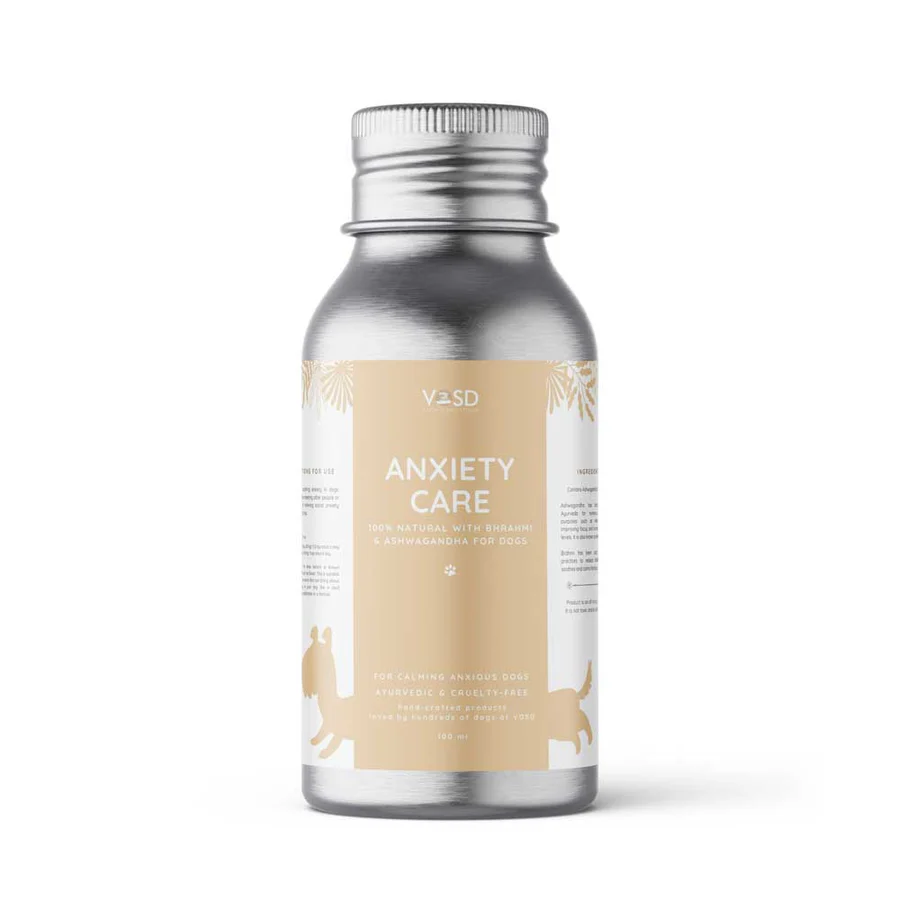
Dogs being monitored for first-degree heart block may find repeated veterinary visits and changes to their routine mildly stressful, particularly if additional cardiac testing is being performed. A calm, consistent home environment helps considerably between appointments. VOSD Anxiety Care is gently formulated to support dogs experiencing stress and unsettled behaviour. Always consult your vet before introducing any supplement alongside cardiac medications, as interactions need to be assessed.
Related Products
Prognosis for Dogs with First-Degree Heart Block
The prognosis for dogs with isolated first-degree heart block is excellent. Dogs in whom no underlying disease is identified typically live entirely normal lives with no progression and no impact on life expectancy. Routine monitoring with periodic ECGs is recommended to confirm that the condition remains stable.
When first-degree block is associated with an underlying cardiac or metabolic condition, the prognosis depends on the nature and severity of that condition rather than on the conduction delay itself. In many cases, successfully treating the underlying cause resolves or significantly reduces the PR interval prolongation.
The key concern with any form of AV block is the possibility of progression to a higher degree. While first-degree block does not commonly progress in dogs with no underlying disease, regular monitoring is important to detect any change early. Dogs with identified underlying cardiac disease should be reassessed more frequently.
Caring for a Dog with a Heart Rhythm Delay
For most dogs with first-degree heart block, day-to-day care requires very little adjustment:
- Maintain regular veterinary check-ups: Annual or biannual ECG rechecks allow early detection of any progression in the conduction delay.
- Monitor energy and activity levels at home: Note any changes in exercise tolerance, unusual fatigue, or new symptoms and report them to your vet promptly.
- Give all medications consistently: If your dog is on medication for an underlying condition, consistent dosing is essential for effective management.
- Avoid unnecessary stress: While stress does not directly worsen first-degree block, a calm routine supports overall cardiac health.
- Feed a balanced, appropriate diet: Good nutrition supports heart health. Your vet may have specific dietary recommendations if an underlying cardiac condition is also present.
When Should Pet Parents Seek Veterinary Advice?
Contact your veterinarian promptly if a dog with known first-degree heart block develops any of the following:
- Any episode of fainting or sudden collapse
- Significant and progressive reduction in exercise tolerance
- Breathing difficulty at rest or during mild activity
- Sudden, unexplained lethargy or weakness
- Pale or greyish gums at any time
These signs may indicate progression to a more significant form of heart block or development of another cardiac condition, and require prompt professional assessment.
Heart Conditions in Rescue Dogs: What We Often See
In rescue settings across India, dogs arrive with a wide range of undiagnosed health conditions, including cardiac rhythm disorders. Many have never received a veterinary examination, and incidental ECG findings such as first-degree heart block are identified during initial health assessments. For these dogs, establishing a baseline cardiac evaluation and implementing appropriate monitoring is an important part of providing responsible ongoing care.
First-degree heart block, when found in an otherwise healthy rescue dog, is generally a reassuring finding. It does not prevent adoption, does not require expensive ongoing treatment in most cases, and does not significantly affect quality of life. Documenting the finding and sharing it with the adopting family ensures continuity of appropriate monitoring.