
We often see young dogs with repeated regurgitation that is initially mistaken for simple indigestion or rapid eating. When the pattern continues despite dietary changes and the dog seems to be struggling after every meal, a more thorough investigation is worthwhile. Hiatal hernia in dogs is one condition that sits behind this kind of presentation, and while it sounds complex, many affected dogs can be managed successfully with a combination of feeding adjustments, medication, and where necessary, surgery.
What is a Hiatal Hernia in Dogs?
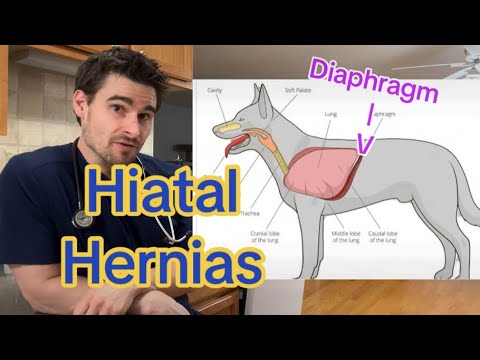
The diaphragm is a sheet of muscle that separates the chest cavity from the abdomen. The oesophagus passes through an opening in the diaphragm called the hiatus on its way from the throat down to the stomach. A hiatal hernia in dogs occurs when part of the stomach, and sometimes a section of the lower oesophagus, pushes upward through this opening into the chest cavity.
When this happens, the normal function of the gastro-oesophageal junction, the valve-like mechanism that prevents stomach contents from flowing back up, is disrupted. Stomach acid and food can move back into the oesophagus more easily, causing the characteristic symptoms of acid reflux and regurgitation.
Types of Hiatal Hernia in Dogs
There are two main types of hiatal hernia seen in dogs:
| Type | What Happens | How Common |
|---|---|---|
| Sliding hiatal hernia | The stomach intermittently slides up into the chest and back down, often varying with posture or breathing | Most common type in dogs |
| Paraesophageal hiatal hernia | Part of the stomach herniates permanently beside the oesophagus and remains fixed in the chest | Rare in dogs |
The sliding type is far more commonly diagnosed in dogs. Because it can be intermittent, it is sometimes missed on a single imaging study, which is why a thorough diagnostic approach with the right timing of imaging is important.
Symptoms of Hiatal Hernia in Dogs
The symptoms of hiatal hernia in dogs are primarily related to the disruption of the normal oesophageal and stomach junction. Here is what to watch for:
- Regurgitation of undigested or partially digested food, which typically occurs shortly after eating and without the abdominal heaving associated with vomiting
- Excessive salivation, particularly around mealtimes
- Difficulty swallowing or appearing to struggle to get food down
- Coughing or gagging after meals
- Respiratory symptoms such as wheezing or laboured breathing, which can occur if stomach acid or food material is aspirated into the airways
- Poor growth or failure to gain weight in puppies and young dogs
- Gradual weight loss in adult dogs
- Restlessness or discomfort after eating
It is worth understanding the difference between regurgitation and vomiting, as it is a clinically important distinction. Vomiting involves active abdominal contractions, heaving, and the expulsion of digested or partially digested stomach contents. Regurgitation is a passive process, food or liquid simply flows back up from the oesophagus without effort, and the material is typically undigested or only lightly processed. Recognising which your dog is experiencing helps your vet identify the most likely area of the problem.
Related Videos


Causes and Risk Factors for Hiatal Hernia in Dogs
Hiatal hernia in dogs can develop from several causes, and in some cases the cause is not definitively identified:
- Congenital defect: Many cases of hiatal hernia in dogs are congenital, meaning the dog is born with a weakness or abnormality in the diaphragmatic hiatus. These cases often present in puppies and young dogs and are associated with certain breeds. Congenital hiatal hernia is the most common form seen in clinical practice.
- Breed predisposition: Brachycephalic breeds, those with flat faces and compressed upper airways, are disproportionately affected by hiatal hernia. This includes Bulldogs, French Bulldogs, Pugs, and Boston Terriers. The increased respiratory effort these breeds make to breathe against their naturally narrowed airways creates higher pressure differentials that can push the stomach upward through the hiatus over time. In India, French Bulldogs and Pugs are increasingly common, making this a relevant consideration.
- Trauma: Road accidents, falls, or other significant physical trauma can damage the diaphragm and alter the integrity of the hiatus, allowing stomach herniation to develop following the injury.
- Increased abdominal pressure: Conditions or situations that chronically increase pressure within the abdominal cavity, such as obesity, severe and persistent coughing, or straining, can contribute to herniation over time.
- Oesophageal disease: In some dogs, underlying oesophageal conditions such as megaoesophagus or oesophagitis may be associated with or contribute to the development of hiatal herniation.
When Should You Be Concerned About Hiatal Hernia?
Seek veterinary assessment if your dog shows any of the following:
- Regurgitation that happens regularly after meals rather than occasionally
- A puppy or young dog that is not gaining weight as expected despite adequate feeding
- Respiratory symptoms such as coughing, wheezing, or laboured breathing alongside digestive signs
- Your dog appears to be in pain or discomfort after eating
- Symptoms are worsening over time rather than remaining stable
- A brachycephalic breed dog showing any combination of the above symptoms
Aspiration pneumonia is one of the more serious complications of hiatal hernia in dogs, occurring when regurgitated material is inhaled into the lungs. Dogs showing respiratory symptoms alongside regurgitation should be seen promptly.
Diagnosis: How Vets Identify Hiatal Hernia in Dogs
Diagnosing hiatal hernia in dogs can require multiple investigations, particularly for the sliding type where the hernia is intermittent:
- Physical examination: The vet will assess the dog’s overall condition, check for respiratory signs, evaluate body weight, and take a detailed history of the symptoms including their timing, frequency, and relationship to meals.
- Plain chest and abdominal X-rays: These can sometimes reveal the presence of stomach tissue in the chest cavity, though a sliding hernia may not be visible if the stomach has returned to its normal position at the time of imaging.
- Contrast oesophagram: A barium swallow study, where the dog ingests a contrast material and a series of X-rays are taken as it moves through the oesophagus, can help visualise the oesophageal and stomach anatomy and identify herniation or reflux.
- Fluoroscopy: This dynamic imaging technique films the swallowing process and oesophageal movement in real time, making it particularly useful for identifying intermittent herniation that might be missed on static images.
- Endoscopy: Direct visual examination of the oesophagus and stomach using a camera passed under sedation allows the vet to assess the gastro-oesophageal junction directly, identify oesophagitis caused by acid exposure, and confirm the presence of a hernia.
Treatment Options for Hiatal Hernia in Dogs
Treatment for hiatal hernia in dogs depends on the severity of symptoms and the impact on the dog’s quality of life. Management ranges from dietary and medical approaches to surgery in more severe cases.
Medical management: For mild to moderate cases, medication is often the first approach. This typically includes proton pump inhibitors or H2 blockers to reduce stomach acid production and protect the oesophageal lining from acid damage. Prokinetic medications may also be prescribed to improve gastric emptying and reduce the amount of time food and acid sit in contact with the oesophagus. Sucralfate, which coats and protects the oesophageal lining, is sometimes included.
Dietary adjustments: Feeding management is a critical component of treatment and is discussed in more detail in the home care section below. Small, frequent meals of an easily digestible consistency reduce the volume in the stomach at any one time, which decreases the pressure that pushes stomach contents upward.
Surgical correction: In cases where medical and dietary management is insufficient, particularly in young dogs with significant congenital herniation or in brachycephalic breeds where concurrent airway surgery may also be needed, surgical repair of the hiatus is recommended. Surgery aims to reposition the stomach and tighten the hiatus to prevent re-herniation. In brachycephalic breeds, addressing the airway abnormalities alongside the hernia repair often leads to better long-term outcomes.
Prognosis: What to Expect
The outlook for hiatal hernia in dogs varies depending on the severity of the condition, the underlying cause, and whether surgery is required. Mild cases managed medically and with dietary adjustments can do very well, with significant reduction in symptoms and a good quality of life maintained long term.
Dogs that undergo surgical repair generally have a positive outcome when the procedure is performed at an appropriate facility, though some dogs may continue to require medical management after surgery. Puppies with congenital hiatal hernia diagnosed early and managed appropriately often grow into adulthood with well-controlled symptoms.
Brachycephalic breeds tend to have more complex management needs due to the compounding effect of their airway anatomy, but many still live comfortably with consistent care.
Home Care and Feeding Management
Feeding adjustments are one of the most practical and impactful things a pet parent can do for a dog with hiatal hernia. Here is what to implement at home:
- Feed small, frequent meals: Rather than one or two large meals, divide the daily food allowance into three to four smaller portions. This significantly reduces the volume of food in the stomach at any one time, which decreases the upward pressure on the gastro-oesophageal junction.
- Use an elevated feeding position: Raising the food bowl so your dog eats with their head slightly elevated compared to their body helps gravity work in favour of food moving downward rather than back up. This does not need to be dramatic, even a modest elevation makes a difference.
- Keep the dog upright after meals: Encourage your dog to remain in an upright sitting or standing position for fifteen to twenty minutes after eating rather than lying down immediately. This gives food time to begin moving into the stomach before gravity is removed from the equation.
- Feed a soft or easily digestible diet: A food that requires minimal processing and passes from the stomach relatively quickly reduces the window of time during which reflux can occur. Plain boiled rice with boiled chicken, or a vet-recommended gastric diet, are suitable options.
- Avoid heavy exercise immediately before or after meals: Physical activity that increases abdominal pressure around mealtimes can worsen symptoms.
- Give all medications consistently: Acid-reducing medications work best when given at the same time each day and maintained consistently rather than only during flare-ups.
Related Products
Prevention and Long-Term Care
True prevention of hiatal hernia in dogs is not always possible, particularly for congenital cases. However, these steps support long-term management and reduce the risk of complications:
- Maintain a healthy body weight to reduce abdominal pressure
- Avoid feeding practices that encourage rapid eating or the ingestion of large volumes at once
- Attend regular veterinary follow-ups to monitor oesophageal health and adjust medication if needed
- In brachycephalic breeds, discuss the benefits of corrective airway surgery with your vet as a preventive measure against the secondary effects of chronic respiratory effort on the diaphragm
- Do not delay seeking veterinary advice if symptoms worsen after a period of stability