
It Looks Like Rice Grains, But It’s a Parasite Living Inside Your Dog
You noticed something near your dog’s tail.
Small, white, flat. Looks almost exactly like a grain of cooked rice. You might have dismissed it as debris, something stuck in the fur from their last outdoor adventure.
It was not debris.
What you saw was a tapeworm segment. A piece of a parasite that has been living and growing inside your dog’s intestines, possibly for weeks. And the segment you found was just what it said. The worm itself is still there.
Tapeworms are one of the most common intestinal parasites in dogs, and also one of the most frequently missed because the early signs are so easy to overlook. This guide covers everything you need to know, from how your dog got infected to how to treat it and how to make sure it does not come back.
What Are Tapeworms in Dogs?
Tapeworms are flat, segmented parasites that attach to the lining of a dog’s small intestine using hook-like mouthparts. They absorb nutrients directly from the intestinal contents, essentially feeding off what your dog eats.
The most common species in dogs is Dipylidium caninum, which spreads through fleas. Other species include Taenia, which dogs pick up from hunting or eating raw meat, and Echinococcus, which is less common but more clinically serious due to its potential to form cysts in internal organs.
An adult tapeworm can grow to surprisingly significant lengths inside the intestine while causing minimal visible symptoms, which is exactly what makes this parasite so easy to miss.
Signs That Suggest Your Dog Has Tapeworms
The most distinctive sign is the one that often prompts investigation in the first place. Visible rice-like segments in your dog’s stool, around the anal area, or in their bedding. These are proglottids, segments that break off from the tapeworm as it matures and are passed out of the body.
Beyond this, watch for scooting, where your dog drags their rear end along the floor due to irritation caused by the segments. Excessive licking or biting at the tail base. Mild but persistent weight loss despite a normal appetite. A dull, poor-quality coat. In heavier infestations, visible abdominal discomfort or vomiting.
The absence of dramatic symptoms does not mean the infection is absent. Many dogs carry tapeworms for extended periods without showing anything alarming.
Related Videos
▶
▶
▶
▶Why Many Dogs Show Almost No Symptoms
This is the clinical reality that catches dog parents off guard.
Tapeworms are relatively well-adapted intestinal parasites. In small to moderate numbers, they do not cause the kind of acute distress that gets immediate attention. The dog eats, plays, and behaves normally. The infection continues developing below the threshold of visible concern.
It is only when the worm burden becomes heavy, or when you happen to notice the physical signs around the tail or in the stool, that most dog parents discover the infection has been present for some time. This is why routine deworming and regular stool monitoring are essential rather than optional parts of dog care.
How Dogs Get Tapeworms in the First Place
The most common route is through fleas, and it is more direct than most people realise.
Flea larvae ingest tapeworm eggs present in the environment. When a dog grooms itself and swallows an infected flea, the tapeworm larvae are released inside the digestive system. They attach to the intestinal wall and begin developing into adult worms.
This connection between fleas and tapeworms is clinically important. A dog with tapeworms almost certainly has, or has recently had, a flea problem. Treating the tapeworm without addressing the fleas leads to reinfection, often within weeks.
Dogs can also pick up Taenia tapeworms by consuming infected prey animals or raw meat containing tapeworm cysts. Outdoor dogs with hunting behaviour are at higher risk for this transmission route. For a comprehensive understanding of the broader range of parasites that affect dogs, the VOSD resource on parasites in dogs covers this in detail.
From Flea to Intestine, The Tapeworm Lifecycle Explained
Understanding this lifecycle explains why breaking the cycle requires more than just a single deworming tablet.
An infected flea carrying tapeworm larvae is swallowed by a dog during grooming. The stomach acid digests the flea, releasing the tapeworm larvae into the intestinal environment. The larvae attach to the intestinal wall and begin growing, absorbing nutrients as they develop into adult worms.
As the tapeworm matures, it produces proglottids, egg-containing segments that break off and pass out of the body in the stool. These segments dry out in the environment, releasing eggs that are then ingested by flea larvae, completing the cycle.
Without interrupting this cycle at both the tapeworm stage and the flea stage, reinfection is virtually guaranteed.
Different Types of Tapeworms Found in Dogs
Dipylidium caninum is by far the most common. It is transmitted through fleas, responds well to standard treatment, and rarely causes severe illness unless the infestation is heavy.
Taenia species are associated with dogs that eat wild prey or are fed raw meat. These tapeworms are slightly more variable in their clinical presentation but generally respond to the same antiparasitic medications.
Echinococcus is the least common but the most clinically significant. This species can form hydatid cysts in the liver and lungs of infected animals and poses a zoonotic risk to humans. Dogs that hunt or have access to wild animal carcasses are most at risk. If Echinococcus is suspected, the diagnostic and treatment approach requires more specific management. For information on related parasitic conditions, including cyst-forming tapeworms, the article on fox tapeworm infection provides relevant detail.
How the Infection Progresses Over Time
A tapeworm infection does not resolve on its own. Without treatment, it follows a slow but measurable progression.
In the early stage, the worm is small, and the burden is light. Symptoms are minimal or absent. The dog appears healthy, and the infection goes unnoticed.
As weeks pass and the worm matures, proglottids begin appearing in the stool and around the tail. Mild scooting and skin irritation develop. The dog may begin losing weight gradually as the tapeworm competes for absorbed nutrients.
In heavy or prolonged infestations, intestinal discomfort becomes consistent. Nutrient malabsorption causes more significant weight loss and coat deterioration. In rare but serious cases, a large worm mass can partially obstruct the intestine. The progression is slow enough that it never triggers an alarm in the early stages, which is precisely why so many infections go untreated far longer than they should.
How Vets Diagnose Tapeworms Accurately
Diagnosis is often more straightforward with tapeworms than with other intestinal parasites because the physical evidence is visible.
If you have seen segments near your dog’s tail or in the stool, tell your vet exactly what you observed and describe what they looked like. This information alone is often sufficient for a working diagnosis. Your vet will typically confirm through a fecal examination.
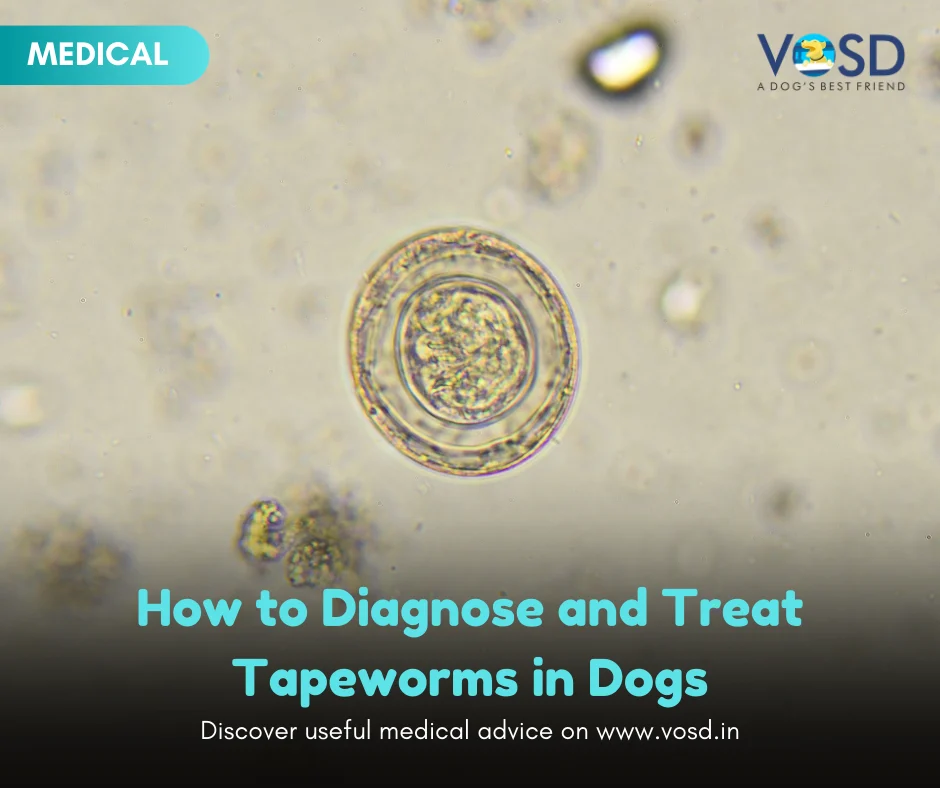
However, tapeworm eggs are not shed consistently in stool the way roundworm eggs are. Routine fecal flotation tests can miss tapeworms because they are designed to detect eggs, not proglottids. A targeted examination for segments, combined with your clinical observation at home, gives the vet a far more complete picture.
In cases where an Echinococcus infection is suspected, additional imaging may be needed to assess for cyst formation in internal organs.
Treatment That Actually Works for Tapeworms
Tapeworms respond reliably to praziquantel, an antiparasitic compound that causes the tapeworm to lose its ability to resist the digestive enzymes of the intestine. The worm is then digested and absorbed, which is why you will not typically see the dead worm passed in the stool after treatment.
Praziquantel is available in tablet form, injectable form, and as a component of combination deworming products. For most dogs, treatment is effective with a single dose, though your vet may recommend follow-up treatment depending on the severity of the infestation.
It is safe, well-tolerated, and considered the gold standard treatment for Dipylidium and Taenia tapeworms. Echinococcus infections may require a more extended treatment protocol and closer veterinary monitoring. For a broader guide to managing infections in dogs, the dog infections guide is a useful reference.
Why Flea Control Is Critical to Prevent Reinfection
This is where most tapeworm treatment plans fall short.
The medication eliminates the tapeworm in the intestine. But if the dog still has fleas, or lives in an environment contaminated with flea eggs and larvae, the cycle simply restarts. Within weeks of successful deworming, a dog that continues to groom off infected fleas can be reinfected.
Comprehensive flea control means treating your dog with a vet-recommended flea prevention product consistently. It also means treating the home environment, including bedding, carpets, and furniture, where flea eggs accumulate in large numbers. Without this step, deworming for tapeworms is a temporary fix rather than a resolution.
What to Expect After Treatment
Most dogs respond to praziquantel treatment quickly and without complications.
Because the tapeworm is digested rather than expelled whole, there is nothing visible to observe in the stool post-treatment. The absence of visible worm segments in the days following medication is itself a positive sign.
Scooting and anal irritation typically resolve within a few days as the source of irritation is eliminated. Appetite and energy levels usually improve noticeably within the first week. Weight loss recovery takes longer, depending on how extensive the infection was before treatment.
A follow-up fecal check two to four weeks after treatment confirms that the infection has been fully cleared.
Related Products
Tapeworms vs Other Worms, Key Differences
Understanding how tapeworms differ from other intestinal parasites helps dog parents know what they are dealing with.
Roundworms are the most common intestinal parasite overall and tend to cause more obvious gastrointestinal symptoms, including vomiting, diarrhea, and a pot-bellied appearance in puppies. They are transmitted through contaminated soil and fecal contact rather than through fleas.
Hookworms cause blood loss through intestinal attachment and can cause anemia, particularly in puppies. Their symptoms tend to be more acute than those of tapeworms.
Tapeworms are distinctive because of their visible segments, their flea-dependent transmission route, and their relatively mild clinical presentation. They also respond to a specific medication rather than the broad-spectrum dewormers commonly used for roundworms and hookworms, which is why knowing what type of worm is present matters for effective treatment.
When You Should Visit a Vet Immediately
Most tapeworm cases are not emergencies, but some situations warrant prompt veterinary attention.
If your dog is vomiting repeatedly and you can see worm segments in the vomit, this indicates a heavier infestation requiring immediate assessment. Significant and rapid weight loss combined with visible segments signals that the infection has been present long enough to cause a meaningful nutritional impact. Any signs of intestinal distress, such as severe abdominal pain, bloating, or complete loss of appetite alongside other symptoms, should be evaluated urgently.
Do not wait for symptoms to escalate if you have already seen the segments. The visible evidence is enough to act on immediately.