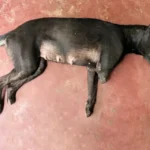

A soft swelling near the anus is easy to dismiss. It is not always painful in the early stages. The dog may still be eating, still moving, still appearing relatively normal. And so it gets monitored rather than assessed.
That delay is often when the situation becomes dangerous.
A perineal hernia occurs when the muscles of the pelvic floor weaken or fail, allowing the organs they were holding in position to push through into the soft tissue beside the anus. What looks like a harmless swelling on the outside is, internally, a structural failure that can progress to life-threatening organ entrapment without warning.
This is not a condition to observe from a distance.
What Is a Perineal Hernia in Dogs?
The pelvic diaphragm is a group of muscles forming the floor of the pelvis, responsible for keeping the abdominal and pelvic organs in their correct anatomical positions. When these muscles weaken, atrophy, or sustain structural damage, they can no longer contain the organs above and behind them.
A perineal hernia forms when pelvic contents push through this weakened muscular floor into the perineum, the soft tissue region between the anus and the external genitalia. The hernia typically appears as a unilateral or bilateral swelling alongside the anus, soft and reducible in early stages, firmer and more complex as the condition progresses.
The rectum deviating into the hernia sac is the most common finding. The bladder retroflexing into the hernia is the most dangerous, because a displaced bladder can become obstructed, trapping urine and creating a urological emergency within hours.
Why This Condition Is Serious
In the early stages, when only fat and a deviated rectum are present, the dog is uncomfortable but not immediately in danger. As the hernia progresses, the clinical stakes rise significantly.
Bladder involvement produces an inability to urinate, rapidly progressive kidney damage from urinary retention, and the potential for bladder rupture. Intestinal involvement creates an obstruction risk. Organ entrapment, where the blood supply to a herniated organ is cut off, produces rapid tissue death and systemic collapse.
The window between an inconvenient condition and a life-threatening emergency can be surprisingly short. A dog showing swelling near the anus alongside difficulty urinating must be treated as an emergency, not a scheduled appointment.
Symptoms of Perineal Hernia in Dogs
- Soft swelling beside the anus, on one or both sides
- Straining to defecate with visible effort and discomfort
- Constipation or passage of ribbon-shaped, narrow stools
- Difficulty urinating or complete inability to urinate
- Lethargy and signs of abdominal or pelvic pain
- Change in tail carriage or posture at the tail base
- Vomiting combined with straining, indicating possible organ involvement
The most important clinical signal to recognise is the combination of straining and inability to urinate. This combination indicates probable bladder displacement and requires immediate emergency veterinary care, not home observation.
Related Videos


Causes of Perineal Hernia in Dogs
The majority of perineal hernia cases occur in older, intact male dogs. This demographic pattern reflects the primary role that hormonal and prostatic factors play in the condition.
Testosterone influences the composition of connective tissue and the structural integrity of pelvic floor muscles in ways that make intact males significantly more vulnerable than neutered males or females. Prostate enlargement, which is itself driven by testosterone in intact males, places chronic mechanical pressure on the pelvic floor from above, progressively straining the muscles that form the pelvic diaphragm.
Chronic straining from constipation, colitis, or urinary disease sustains repeated elevated pressure on the pelvic floor and accelerates the process of muscle failure. Age-related muscle degeneration reduces the structural reserve available to withstand this pressure. Spinal disease affecting the nerve supply to the pelvic floor muscles, discussed further in our guide to narrowing of the vertebral canal in dogs, can impair the contractile capacity of these muscles and contribute to hernia development. Trauma to the pelvis is a less common but recognised cause.
How Veterinarians Diagnose Perineal Hernia in Dogs
The digital rectal examination is the most informative and most important diagnostic step. The veterinarian assesses the perineal swelling externally and then, through rectal palpation under sedation, directly confirms the absence or weakness of the levator ani and coccygeus muscles that form the lateral walls of the pelvic diaphragm.
The contents of the hernia sac, whether fat, a deviated rectum, or a displaced bladder, can often be identified through this examination. Blood tests assess kidney function and urinary status, which are immediately relevant if bladder involvement is suspected. Abdominal and perineal ultrasound confirms the identity of herniated organs, and radiography allows assessment of organ position and the degree of structural displacement.
| Stage | Clinical Picture | Required Action |
|---|---|---|
| Early | Mild perineal swelling, occasional straining | Veterinary examination and surgical planning |
| Moderate | Consistent constipation, visible discomfort | Imaging to assess hernia contents, medical stabilisation |
| Severe | Bladder displacement, inability to urinate | Urgent hospitalisation, emergency decompression |
| Critical | Urinary obstruction, vomiting, collapse | Immediate surgery, intensive care support |
Treatment for Perineal Hernia in Dogs
Medical Management (Stabilisation)
Medical management is a bridge, not a solution. Stool softeners and laxatives reduce straining and help facilitate defecation through a deviated rectum. A high-fibre diet improves stool consistency. Manual bladder decompression by the veterinarian provides emergency relief if urinary obstruction is present. These measures stabilise the dog for surgery but do not address the underlying muscle failure.
Surgical Treatment (Definitive)
Surgery is the primary and definitive treatment for a perineal hernia. The procedure involves repositioning the herniated organs back into the abdominal cavity, reconstructing the pelvic diaphragm using the dog’s own muscle tissue or surgical mesh, and restoring the structural integrity of the pelvic floor.
Concurrent neutering is performed at the time of hernia repair in intact males. Castration removes the hormonal contribution to muscle weakness, reduces or eliminates concurrent prostate enlargement, and significantly reduces recurrence rates. It is considered a standard and essential component of surgical management rather than an optional addition.
In complex or recurrent cases, the internal obturator muscle transposition technique is used to reinforce the pelvic floor reconstruction where the available muscle tissue is insufficient for straightforward repair.
Post-operative management includes stool softeners, dietary management to prevent straining during healing, restricted activity during recovery, and regular follow-up examination to monitor for recurrence.
Related Products


Prognosis
The prognosis is good when surgery is performed before significant organ involvement or entrapment has occurred. Most dogs achieve satisfactory restoration of defecation and urination function following successful repair combined with neutering.
Recurrence is a recognised limitation, occurring in a meaningful proportion of cases, particularly in dogs that were not neutered at the time of repair, dogs with bilateral hernias, and dogs in which the available muscle tissue was severely atrophied at the time of surgery. Regular post-operative monitoring allows early identification of recurrence before it reaches the severity of the original presentation.
Bladder retroflexion cases that are managed promptly carry a reasonable prognosis once the obstruction is relieved and repair is completed. Cases presenting with urinary obstruction of long duration or systemic compromise carry a more guarded outlook.
When to See a Veterinarian
Contact your veterinarian immediately if your dog shows any of the following:
- A soft swelling beside the anus that is new or enlarging
- Consistent straining to defecate with little or no result
- Any difficulty urinating alongside perianal swelling
- Complete inability to urinate, which is a same-day emergency without exception
- Vomiting combined with straining or abdominal distension
- Sudden lethargy, pain, or signs of systemic illness alongside perianal swelling
Do not apply a watch-and-wait approach to perianal swelling in a dog that is also having difficulty urinating. The combination of these two signs indicates probable bladder displacement and requires emergency assessment.
Prevention and Risk Reduction
Neutering is the single most impactful preventive measure available for perineal hernia in male dogs. Removing the hormonal driver of pelvic floor muscle weakness and eliminating the risk of prostatic enlargement addresses the two most significant contributing factors in the majority of cases. Neutering before middle age provides the greatest preventive benefit.
Early identification and treatment of prostate disease reduces the chronic pelvic floor strain that accelerates muscle failure in intact older males. Managing chronic constipation through dietary fibre, appropriate hydration, and treatment of any underlying gastrointestinal condition prevents the sustained straining pressure that contributes to pelvic diaphragm weakening over time.
Regular veterinary health examinations in older male dogs allow early identification of pelvic floor weakness, prostate enlargement, and early-stage hernia formation before the condition has progressed to the point of organ displacement. For a broader overview of the medical conditions that can affect dogs across all body systems, including those that intersect with pelvic and neurological health, the VOSD dog medical conditions library provides a comprehensive reference.