
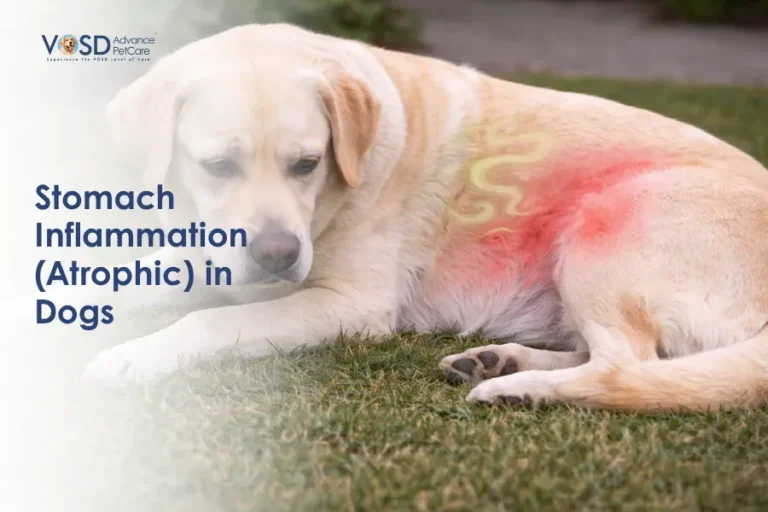
When inflammation continues unchecked, the stomach lining does not just stay inflamed. It deteriorates.
Atrophic gastritis is what happens at the end of that process. The gastric glands that produce the acid, enzymes, and mucus essential for digestion are progressively destroyed. The stomach lining thins. Digestive function declines. And because the damage accumulates gradually over months or years, the signs are often subtle enough to be repeatedly attributed to other, less serious causes until the condition is significantly advanced.
This is not a mild stomach complaint. It is a chronic, structural disease that impairs the stomach’s core function, and it requires a very different approach from the acute gastritis that resolves with a few days of bland diet.
What Is Atrophic Gastritis in Dogs?
Atrophic gastritis is characterized by chronic inflammation of the stomach lining, leading to progressive thinning of the gastric mucosa and loss of the specialized glands embedded within it. These glands, including parietal cells that produce hydrochloric acid and chief cells that produce digestive enzymes, are essential for normal gastric function.
As inflammation destroys these glandular structures over time, the stomach loses its capacity to produce adequate acid and digestive enzymes. The consequences extend beyond the stomach itself: insufficient acid production impairs protein digestion, alters the pH environment that prevents bacterial overgrowth, and disrupts the signalling cascade that coordinates normal gastrointestinal motility.
Unlike ordinary gastritis, which is reversible with appropriate treatment, the structural changes of atrophic gastritis represent a degree of damage that may not be fully reversible, particularly when the condition has been present for an extended period.
Symptoms of Atrophic Gastritis in Dogs
The symptoms of atrophic gastritis are characteristically chronic and recurring rather than acute and dramatic. This is part of what makes the condition easy to underestimate.
Chronic Vomiting
Persistent or recurring vomiting for weeks to months is the most consistent clinical sign. The vomiting may occur at variable intervals rather than daily, which can give a misleading impression of intermittent improvement. In many affected dogs, a pattern of recurring episodes separated by periods of relative normalcy has been present for a considerable time before the diagnosis is pursued.
Loss of Appetite
Chronic gastric discomfort reliably suppresses appetite. Dogs with atrophic gastritis often show a persistent reduction in food enthusiasm, a pattern of eating less than normal, or intermittent complete refusal of meals, particularly if the condition is associated with pain or nausea around feeding time.
Weight Loss
Impaired digestive function means that even food that is consumed is not being fully digested and absorbed. Progressive weight loss in a dog without a clear dietary explanation is one of the more clinically significant signs that the gastrointestinal system is failing to perform its absorptive function.
Lethargy and Weakness
Chronic nutritional deficiency, persistent low-grade discomfort, and the systemic consequences of impaired digestion all contribute to reduced energy, decreased activity, and a general decline in the dog’s overall vitality that develops gradually and may initially be attributed to aging.
Diarrhoea and Dehydration
When gastric dysfunction affects normal digestive processing, the downstream intestinal environment is also disrupted. Altered gastric pH, bacterial imbalance, and impaired enzyme activity can all produce intermittent diarrhea alongside the primary vomiting. Recurrent fluid loss through both routes contributes to chronic low-grade dehydration.
Intermittent Symptom Pattern
One of the features that distinguishes atrophic gastritis from acute gastritis is the recurring, waxing and waning nature of the symptoms over an extended timeframe. A dog that has had multiple episodes of vomiting and reduced appetite over six months or more, with periods in between where it seemed relatively normal, should be investigated for chronic gastric disease rather than repeatedly managed as isolated acute episodes.
Causes of Atrophic Gastritis in Dogs
Atrophic gastritis is almost always a secondary or end-stage condition rather than a primary disease arising de novo. Understanding what has driven the chronic inflammation is essential for treatment planning.
Chronic Gastritis Progression
The most common pathway to atrophic gastritis is longstanding, inadequately managed chronic gastritis in dogs. Repeated cycles of gastric inflammation that have not been fully resolved or whose underlying cause has not been identified allow cumulative glandular damage to accumulate over time. This is the progression that atrophic gastritis represents: the structural endpoint of inflammation that was not stopped.
Immune-Mediated Disease
In some dogs, the immune system specifically targets and destroys the gastric glandular cells in an autoimmune process. This form of atrophic gastritis is not secondary to another inflammatory trigger but is itself driven by abnormal immune activity directed against the stomach’s own cells. These cases tend to be more severe in their progression and less responsive to simple dietary management.
Infections (Including Helicobacter)
Helicobacter species are spiral-shaped bacteria that colonize the gastric mucosa and have been identified in the stomachs of a significant proportion of dogs, including both symptomatic and apparently healthy individuals. Their role in canine gastric disease remains an area of ongoing study, but chronic Helicobacter colonization is associated with persistent gastric inflammation that, over time, may contribute to glandular atrophy in susceptible dogs.
Tumours and Neoplasia
Gastric tumours, both benign and malignant, can produce chronic localized inflammation and mucosal destruction that contributes to or mimics atrophic gastritis. This is one of the reasons why endoscopy and biopsy are essential in any dog with chronic gastric symptoms: ruling out neoplasia must be part of the diagnostic process.
Dietary, Allergic, and Parasitic Triggers
Chronic dietary intolerance, food allergy-driven gastric inflammation, and persistent intestinal parasite burden can all sustain low-level gastric inflammation over extended periods. These contributing causes are worth identifying specifically because they represent modifiable triggers where intervention can meaningfully alter the disease course.
Drug or Toxin Exposure
Longstanding use of non-steroidal anti-inflammatory drugs (NSAIDs), corticosteroids, or repeated toxic substance exposure can cause chronic mucosal damage. In dogs on long-term medication, the possibility of drug-induced gastric injury should always be considered as a contributing factor to chronic gastric disease.
Related Videos



How Atrophic Gastritis Develops
The mechanism follows a progressive sequence. Chronic inflammation, from whatever cause, damages the gastric mucosal cells over time. As parietal and chief cells are destroyed, they are not replaced with functional glandular tissue but with fibrous or non-secretory tissue. Gastric acid production declines. Digestive enzyme output falls.
The reduced acid environment allows bacteria to colonize a part of the gastrointestinal tract that is normally kept sterile by its low pH. Bacterial overgrowth further damages the mucosal lining, produces toxins, and disrupts normal digestive chemistry. Gastric motility may also be affected as the glandular infrastructure that supports normal contractile signalling deteriorates.
The result is a stomach that has progressively lost its capacity to perform the functions it was designed for, and that cannot recover those functions through simple treatment of the immediate symptoms.
How Veterinarians Diagnose Atrophic Gastritis in Dogs
Diagnosis requires more than symptom observation. Clinical suspicion based on the chronic, recurring pattern of vomiting and weight loss must be confirmed through investigation.
Blood Tests
A complete blood count and biochemistry panel assess organ function, nutritional markers, and systemic indicators of chronic disease. These results identify concurrent conditions and help direct further investigation toward the most likely underlying cause.
Imaging
Abdominal ultrasound assesses gastric wall thickness, layering, and motility. Atrophic gastritis may produce characteristically thin gastric walls visible on ultrasound. Imaging also identifies concurrent abnormalities in adjacent organs and rules out structural causes of gastric dysfunction.
Endoscopy and Biopsy (Definitive Diagnosis)
Endoscopic examination allows direct visualization of the gastric mucosa, assessment of mucosal texture, colour, and architecture, and targeted biopsy of affected areas. Histopathological analysis of gastric biopsy samples is the only way to definitively confirm atrophic gastritis, characterize the severity of glandular loss, identify the inflammatory cell type, and exclude neoplasia and other serious pathologies.
This step cannot be bypassed. Treating what appears to be atrophic gastritis without biopsy confirmation risks missing a gastric tumour or another condition that requires entirely different management.
Treatment for Atrophic Gastritis in Dogs
Treatment focuses on controlling ongoing inflammation, supporting remaining digestive function, and managing the underlying cause. In most cases, this is long-term management rather than resolution.
Dietary Management
A highly digestible, low-fat diet reduces the digestive demand on a functionally compromised stomach. Hypoallergenic or novel protein diets are used when dietary allergy or intolerance is identified as a contributing factor. Small, frequent meals reduce gastric load and the discomfort associated with the reduced buffering capacity of a stomach producing less acid than normal.
Dietary management alone is insufficient in most cases, but it is a consistent and important component of the overall protocol.
Anti-Inflammatory Medication
Reducing ongoing mucosal inflammation is central to slowing the progression of glandular damage. Corticosteroids are the most commonly used anti-inflammatory agents in immune-mediated and idiopathic cases, titrated to the lowest effective dose to minimize side effects during long-term use.
Acid Regulation
This requires careful clinical judgement. Atrophic gastritis typically results in reduced acid production, not excess. Standard antacid therapy may not be appropriate and could worsen the already-reduced acid environment. However, acid-regulating medications may be indicated in specific contexts where concurrent acid-related mucosal damage is identified. Treatment should be guided by the individual clinical picture rather than applied as a standard protocol.
Immune Suppression (Severe Cases)
In dogs with confirmed immune-mediated atrophic gastritis, more aggressive immunosuppressive therapy beyond standard corticosteroid use may be required to halt the autoimmune destruction of gastric glandular cells. This is managed at the specialist level with careful monitoring.
Treating Underlying Causes
Identifying and addressing the specific driver of the chronic inflammation is the most important element of long-term management. Eliminating a dietary trigger, eradicating Helicobacter where it is identified as a contributing factor, discontinuing a causative drug, and resolving parasitic infection all represent opportunities to reduce the inflammatory stimulus and slow or halt further glandular damage.
Related Products

Prognosis
The prognosis for atrophic gastritis is variable and depends primarily on whether an identifiable and treatable underlying cause can be found and eliminated.
Cases where a specific cause such as dietary allergy, chronic infection, or drug exposure, is identified and removed often show meaningful clinical improvement, though the structural glandular damage already sustained may not fully reverse.
Immune-mediated cases and those without an identifiable cause require lifelong management and carry a more guarded long-term prognosis. Progression to significant digestive failure is possible if the condition is not adequately controlled.
Early identification through investigation of chronic vomiting and weight loss, before advanced glandular destruction has occurred, consistently produces better outcomes than diagnosis after the condition is well established.
When to See a Veterinarian
Contact your veterinarian promptly if your dog shows any of the following:
- Vomiting that has been recurring over more than two to three weeks, regardless of apparent severity
- Progressive weight loss without a dietary explanation
- Persistent reduced appetite over an extended period
- Any pattern of symptoms that improves briefly then recurs, suggesting a chronic underlying process
- Lethargy and general decline accompanying digestive signs
Chronic, recurring vomiting should never be managed indefinitely with symptomatic treatment at home without investigation. Each episode that passes without diagnosis is an opportunity for further glandular damage.
Preventing Atrophic Gastritis in Dogs
True prevention of atrophic gastritis is not always possible, particularly in immune-mediated cases. However, the most consistent preventive principle is early treatment of gastritis before it becomes chronic.
Early Treatment of Gastritis
Acute gastritis, if investigated and treated appropriately, does not progress to chronic disease. Dogs with recurring gastric episodes that are repeatedly managed symptomatically without investigation of the underlying cause are the dogs most at risk of progressing to atrophic gastritis over time.
Avoid Chronic Mucosal Irritation
Minimize long-term NSAID use where alternatives exist. Avoid exposure to chronic dietary triggers once identified. Maintain consistent parasite control. These measures reduce the cumulative inflammatory burden on the gastric mucosa.
Regular Monitoring in Chronic Cases
Dogs diagnosed with any form of chronic gastritis benefit from regular monitoring including periodic blood work and assessment of body weight and condition. Early identification of progression allows treatment adjustment before significant structural deterioration has occurred.