You found a swelling on your dog.
Not unusual. Dogs get bumps. You make a mental note to have it checked at the next vet visit.
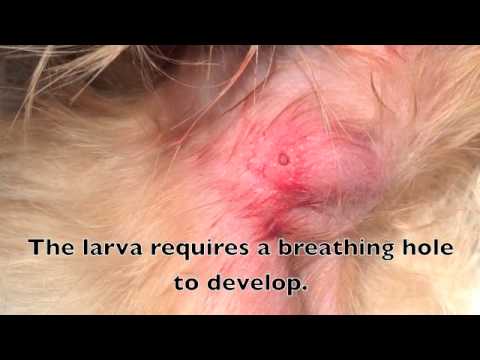
Then you look more closely. There is a small hole in the centre of the lump. And if you watch carefully, it appears to move slightly, as if it is breathing.
It is not a cyst. It is not an abscess. There is a living parasite inside that lump, a botfly larva that has burrowed under your dog’s skin and is growing there.
This is cuterebriasis, and it is one of the most visually shocking and most commonly misdiagnosed parasitic conditions in dogs. Understanding what it is, how it happens, and critically, what you must never do when you find it, is what this guide covers.
What Is Cuterebra in Dogs?
Cuterebra is a genus of botfly whose larvae parasitize small mammals. Dogs are not the natural or intended host. They are accidental hosts, meaning the larvae entered the wrong animal.
The natural hosts for Cuterebra species are small rodents and rabbits. Dogs encounter the eggs in the same outdoor environments these animals inhabit and become infected incidentally. Once inside a dog, the larvae behave differently than they would in their natural host, sometimes migrating to atypical locations, including the respiratory tract and, in rare but serious cases, the brain.
The resulting infestation is called cuterebriasis or warbles, named for the characteristic swelling the larva creates under the skin.
Signs You May Notice, And Why They’re Often Misdiagnosed
The physical signs of cuterebriasis are distinctive once you know what to look for, but easy to mistake for something more common when you do not.
The primary sign is a firm, rounded swelling beneath the skin, most commonly on the head, neck, or trunk. The swelling has a small central opening, called a breathing pore, through which the larva breathes and through which a thin serosanguinous discharge may occasionally be visible.
The swelling is typically not severely painful to the touch and does not always cause significant itching. This relatively mild discomfort is one reason the condition gets attributed to a cyst or an abscess and treated incorrectly in the first instance. Some dogs scratch at the area or show mild discomfort, but many carry the larva without appearing distressed at all.
The breathing pore is the distinguishing clinical sign. If a lump has a visible central opening that looks like a small hole, Cuterebra must be the first consideration until ruled out.
Why This Condition Often Goes Unnoticed Early
In its earliest stage, a Cuterebra infestation is invisible.
The larva enters the dog’s body as a tiny first-stage organism that migrates under the skin before settling in a specific location. During migration, there is no visible swelling and no external sign. The larva is simply moving through subcutaneous tissue unseen.
The visible swelling develops only once the larva has settled, begun growing, and constructed the breathing pore that connects its location to the outside air. By the time a dog parent notices the lump, the larva has already been present for one to two weeks and is in a more advanced developmental stage.
This delayed visibility means the condition is never caught before it is established. Recognition depends entirely on knowing what to look for when the swelling appears.
Related Videos


How Dogs Get Botflies, The Real Cause
The lifecycle of the Cuterebra botfly begins with eggs deposited on grass, soil, or vegetation in areas frequented by rabbits and rodents.
The eggs do not hatch spontaneously. They respond to heat from a passing warm-blooded animal. When a dog runs through infested vegetation, the body heat triggers hatching, and the newly emerged larvae attach immediately to the dog’s skin or fur.
From there, the larvae enter the body through any available opening. This includes the mouth, nostrils, eyes, or any existing wound or skin break. Once inside, they migrate through subcutaneous tissue to a suitable location where they settle, create a breathing pore, and begin growing through their larval stages.
Dogs that spend time in rural areas, gardens, parks, or anywhere near rabbit and rodent habitats are most commonly affected. The risk is highest during late summer and autumn when botfly populations peak.
From Egg to Warble, What Happens Inside the Body
The warble, the distinctive skin lump associated with Cuterebra, is not simply a lump of tissue. It is a constructed structure.
After the larva settles in the subcutaneous tissue, it creates a fibrous capsule around itself from the surrounding tissue response. It then creates the breathing pore, a channel through the skin that connects its location to the outside air, allowing it to breathe while remaining embedded.
The larva grows through three instar stages inside this warble. During this time, it is feeding on tissue fluids and continuing to expand in size. The swelling grows correspondingly as the larva develops, sometimes reaching the size of a marble or larger by the time it is ready to exit.
After completing its larval development, which takes approximately three to five weeks in the host, the larva exits through the breathing pore, drops to the ground, pupates in the soil, and eventually emerges as an adult fly. The wound left behind closes and heals, usually with appropriate veterinary care.
Where on the Body Botflies Usually Appear
In dogs, Cuterebra larvae most commonly settle in the skin of the head, neck, and trunk.
The head and facial area, including around the nose, eyes, and lips, are frequent locations because these are the entry points through which larvae often gain access. Neck and shoulder regions are also commonly affected, as are the sides of the trunk.
In atypical migrations, which occur when the larvae enter an accidental host like a dog, the larva may travel further than it would in a natural host. This can result in larvae settling in the nasal passages, the throat, or, in extremely serious cases, migrating into the brain tissue. These atypical locations are associated with significantly more severe clinical presentations.
How the Condition Progresses Over Time
Understanding the progression helps explain why timely veterinary intervention matters.
In the first one to two weeks after entry, the larva is migrating, and the infection is invisible. There are no external signs.
As the larva settles and begins creating its warble, a small firm swelling appears. This is the stage at which most cases are first noticed. The swelling is present, the breathing pore may or may not be visible yet, and the dog may show mild discomfort.
Over the following two to three weeks, the swelling grows as the larva develops through its instars. The breathing pore becomes more evident. Discharge from the pore may increase slightly.
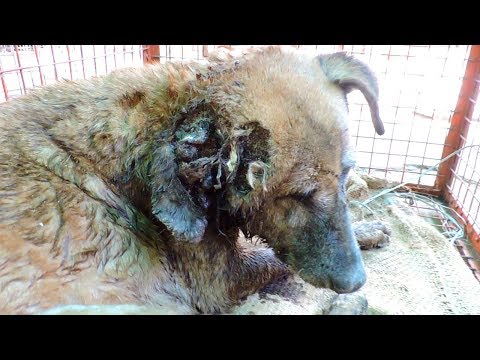
Without intervention, the larva eventually exits naturally, leaving an open wound that carries a high risk of secondary bacterial infection requiring antibiotic treatment. With proper veterinary removal, the process is controlled, and the wound heals more cleanly.
Different Forms of Cuterebra Infection
Most cases of cuterebriasis in dogs present as straightforward skin warbles and resolve completely with proper removal and wound care.
However, atypical migration in dogs can lead to three more serious presentations.
Respiratory cuterebriasis occurs when larvae migrate into the nasal passages or throat, causing sneezing, nasal discharge, respiratory distress, and sometimes visible larvae in nasal secretions. This requires prompt veterinary assessment.
Ophthalmic cuterebriasis involves larvae migrating to the eye or surrounding tissue, causing severe inflammation, discharge, and potential vision compromise. This is a veterinary emergency.
Neurological cuterebriasis is the rarest and most serious form. Larvae that migrate into brain tissue cause a condition that presents with seizures, disorientation, circling, and acute neurological deterioration. This form carries a significantly worse prognosis. It is also the reason why any dog showing neurological signs alongside a skin swelling or recent outdoor exposure should receive urgent veterinary assessment. Understanding the care journey of dogs recovering from serious neurological conditions is illustrated compellingly in the VOSD rescue story of an abandoned Labrador who found his way to recovery.
How Vets Diagnose Botfly Infestation
In straightforward skin cases, diagnosis is clinical and often immediately apparent.
A veterinarian examining a swelling with a central breathing pore can typically diagnose cuterebriasis on presentation. If the larva is visible through the pore or if tissue fluid reveals larval material, diagnosis is confirmed without further testing.
In atypical cases involving respiratory or neurological signs without an obvious skin lesion, diagnosis is more complex. Endoscopy may be used to visualize larvae in the nasal passages. Imaging, including CT or MRI, may be needed if neurological involvement is suspected.
In all cases, informing your vet about your dog’s recent outdoor exposure and any areas of known wildlife activity helps guide clinical assessment in the right direction quickly.
Treatment That Actually Works, And What NOT to Do
This section contains information that every dog parent must know before attempting anything at home.
Do not squeeze the lump. This is not a precaution. It is a clinical imperative.
If the Cuterebra larva is ruptured during an attempt to manually express or squeeze it, the larval contents are released into the surrounding tissue. This triggers a severe inflammatory and potentially anaphylactic reaction. The consequences of a ruptured larva are significantly more dangerous than the intact infestation. Dogs have died from anaphylaxis following improper larval removal. Do not attempt this at home under any circumstances.
The correct treatment is veterinary removal under controlled conditions. Your vet will enlarge the breathing pore carefully to allow safe extraction of the intact larva using surgical instruments. The larva is removed whole without rupturing. The wound is cleaned and assessed for secondary infection. Antibiotics are typically prescribed to address the bacterial contamination that is almost always present in the wound.
This procedure is straightforward in experienced veterinary hands, and recovery is generally uncomplicated when the infection is caught in the skin stage.
Why Improper Removal Can Make Things Worse
The risk of improper removal is not theoretical. It has documented fatal outcomes.
When a Cuterebra larva is ruptured, the foreign proteins from the larval body contents enter the dog’s immune system simultaneously. The resulting hypersensitivity reaction can escalate to systemic anaphylaxis within minutes. Severe swelling, cardiovascular collapse, and respiratory failure can follow.
Even when rupture does not trigger anaphylaxis, the larval contents seeding into the wound tissue cause intense local inflammation, abscess formation, and significantly more complex wound management than proper removal would have required.
The message is unambiguous. A warble on your dog is a veterinary situation. It is not something to manage at home.
What Happens After the Larva Leaves
Whether the larva exists naturally or is removed by a vet, the wound it leaves behind requires attention.
The opening left in the skin provides direct access for environmental bacteria. Secondary bacterial infection of the warble site is extremely common and is the primary reason antibiotic treatment is routinely prescribed after removal. Without antibiotics, the wound can develop into a painful abscess requiring more extensive treatment.
After appropriate care, most uncomplicated skin warbles heal completely within two to three weeks. There is typically no lasting damage to the skin or underlying tissue if the case is handled promptly and correctly.
Botflies vs Abscess vs Tumour, How to Tell the Difference
When you find a lump on your dog, three possibilities are most likely, and distinguishing between them determines the correct response.
A Cuterebra warble presents as a firm, rounded swelling with a visible central breathing pore. There may be thin discharge from the pore. The lump is typically not severely painful. Movement within the swelling may occasionally be detected.
An abscess is an accumulation of pus beneath the skin caused by bacterial infection. It is typically softer and more fluctuant than a warble, often warm to the touch, and usually more painful. There is no central breathing pore. Abscesses may rupture and drain thick, purulent material.
A tumour is a solid mass of abnormal tissue. It has no breathing pore, no discharge, and no movement. It does not change size rapidly over days, the way a developing warble does.
The breathing pore is the definitive distinguishing feature. If a lump has one, it is almost certainly a warble until proven otherwise.
When Botfly Infection Becomes Dangerous
Skin warbles, while alarming in appearance, are manageable conditions with excellent outcomes when treated correctly.
The danger escalates significantly with atypical migration. Larvae reaching the respiratory tract cause breathing difficulty and severe distress. Larvae reaching the eyes cause vision-threatening inflammation. Larvae migrating to the brain cause neurological signs that can be irreversible.
These rare but severe presentations represent genuine emergencies. Any dog showing neurological signs, severe respiratory distress, or unusual eye changes in combination with known outdoor exposure or a concurrent skin swelling should be seen by a vet immediately without waiting.