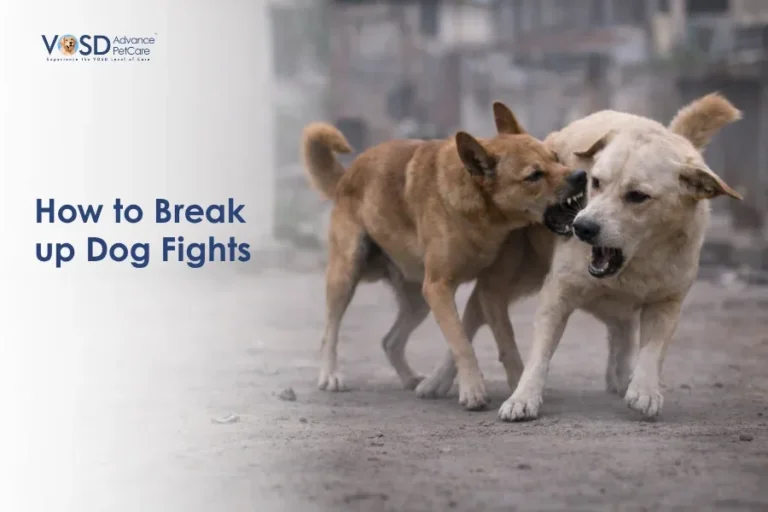
The instinct when you see two dogs fighting is to reach in and pull them apart. That instinct will get you bitten.
Dog fights are chaotic, fast, and loud. In the middle of a fight, a dog does not distinguish between the animal it is fighting and the hand that grabs it. Redirected bites, where a dog bites the nearest thing to it without intent to attack a person, are the most common way people are injured trying to break up dog fights. The bite is not malicious. It is a physiological response from an animal in a state of extreme arousal that cannot process anything beyond the immediate threat.
This guide is about breaking up dog fights in a way that is effective and does not put you in the bite zone.
Why Dog Fights Are Extremely Dangerous
Dog bites sustained during fight intervention are among the most serious bite injuries seen in emergency medicine. The force of a bite is not modulated by whether the target is another dog or a human hand. Deep punctures, tendon damage, and infections from dog bite wounds are documented outcomes of owners intervening physically without a strategy.
The danger is compounded by the unpredictability of a fight in progress. A dog that has never bitten a human, that is otherwise gentle and reliable, will bite during a fight because it is not processing its environment with normal discrimination. Both dogs in a fight present this risk, not only the dog perceived as the aggressor.
Understanding this is not meant to paralyse you. It is meant to ensure that the method you use to intervene keeps your hands and face away from the mouths of both dogs throughout the process.
Why Dogs Fight
Most dog fights are not expressions of innate aggression. They are responses to specific triggering situations that have escalated beyond the threshold where normal social communication between dogs can resolve the tension.
Resource guarding, where one or both dogs feel their food, toy, sleeping space, or person is being threatened, is the most common domestic trigger. Fear-based aggression occurs when a dog feels it cannot escape a situation and responds defensively. Frustration aggression builds when a dog on a leash cannot reach something it is highly aroused about and redirects onto the nearest available target. Pain-related aggression triggers when one dog investigates another that is injured or uncomfortable.
In multi-dog households, fights often have a history of escalating tension signals that were not recognised or addressed before the physical altercation occurred. Recognising what preceded the fight matters for preventing the next one.
Warning Signs Before a Dog Fight Starts
Recognising the pre-fight signals allows intervention before physical contact, which is always safer and more effective than breaking up an active fight.
Signs that a dog is escalating toward aggression include a stiff, frozen body posture with weight slightly forward, a hard, unblinking stare directed at the other dog, raised hackles along the back of the neck and spine, a low growl or silence that is deliberately tense, whale eye where the whites of the eyes become visible, and a tail held high and rigid rather than in a natural position.
Play looks physically different from aggression. Play involves loose, bouncy body movement, play bows with the front end lowered, exaggerated movements with repeated changes in direction, and reciprocal role reversal where both dogs take turns chasing. A dog in play is not tense or focused. A dog escalating toward a fight is both.
Related Videos



What NOT to Do During a Dog Fight
Do not grab the collar of either dog. This places your hand directly at mouth level and in the zone of maximum bite risk. It is also frequently ineffective because the dog maintains its bite grip on the other dog regardless.
Do not put your hands near the heads, necks, or mouths of either dog for any reason during an active fight. This is the single most important safety rule and the one most commonly violated in the panic of the moment.
Do not scream or yell in high-pitched tones. High-pitched sounds increase arousal in both dogs, escalating the intensity of the fight rather than interrupting it.
Do not hit the dogs. Striking a dog mid-fight increases pain-related arousal, produces a defensive bite response, and does not reliably interrupt the behaviour.
Do not attempt to separate dogs by grabbing the fighting dog’s body from the front. Approaching from the front places you directly in the path of the bite.
How to Break Up a Dog Fight Safely: Step-by-Step
Step 1: Stay Calm and Assess
The two to three seconds spent assessing the situation before acting determines whether your intervention is effective or dangerous. Pause. Take a breath. Identify the positions of both dogs, determine whether this is a fight with grip contact or a mutual combat without a sustained bite hold, and identify what is within arm’s reach that can be used as a tool.
Step 2: Use Distraction First (Safest Method)
Non-contact distraction is always the first choice. A sudden, unexpected loud noise from a short distance, such as clapping sharply, a car horn, a compressed air canister, or an air horn, can interrupt the focus of both dogs without physical contact. A sudden spray of water directed at the faces of both dogs from a hose or bucket is highly effective and carries zero bite risk.
These methods work best in early-stage fights before a sustained grip has been established. They become less reliable as arousal intensity increases.
Step 3: Create a Barrier
Use any available flat, rigid object as a visual and physical barrier inserted between the two dogs. A piece of board, a chair, a recycling bin lid, or a rolled-up jacket placed firmly between the dogs interrupts the visual line and physical contact without requiring you to place any part of your body within bite range. Push the barrier against one dog to create separation rather than reaching over or between the dogs.
Step 4: The Wheelbarrow Method (Two People Required)
When distraction and barrier methods have not been effective, and two people are available, the wheelbarrow method is the safest physical separation technique.
Each person approaches one dog simultaneously from behind, moving toward the dog’s hindquarters. Both people grasp the dog’s hind legs at the top of the thighs simultaneously and lift the rear end off the ground, pulling backward and away from the other dog in a circular arc rather than straight back. The circular movement prevents the dog from pivoting to bite the handler.
Both dogs must be moved simultaneously. Moving only one dog while the other remains free allows the free dog to continue attacking.
Once separated, each handler must walk their dog backward while maintaining the grip, putting distance between the dogs before releasing. Do not release until there is sufficient distance and a barrier or controlled restraint is available.
Step 5: Last Resort Single-Person Physical Separation
When only one person is present, and physical separation is necessary, the same rear-leg lift is used on the dog that is the active biter, accepting that the other dog is loose. After lifting and moving the active dog backward in a circular arc, it must be immediately secured behind a door, into a vehicle, or with a leash looped over an anchor point to allow the handler to attend to the other dog.
This method carries significant bite risk and should only be used when all other methods have failed, and the situation is escalating toward severe injury.
Special Situations
| Situation | Risk Level | Specific Guidance |
|---|---|---|
| Large dog attacking small dog | Critical | Barrier insertion takes priority, then rear-leg lift on a large dog. A small dog injury can be fatal within seconds |
| Locked jaw or sustained bite hold | Severe | A break stick inserted behind the molars at the side of the mouth can release a grip but carries extreme bite risk and requires experience |
| Single person, two similar-sized dogs | High | Distraction and barrier first. If physical separation is needed, prioritise the dog with the active bite hold |
| Fight in a confined space | High | Throw a blanket or jacket over both dogs to reduce visual stimulus and temporarily interrupt the fight |
What to Do Immediately After a Dog Fight
Separate both dogs completely and place them in separate rooms, vehicles, or spaces where they cannot see or access each other. Do not reunite them immediately. The arousal state following a fight can persist for thirty minutes or longer, and reintroduction during this window frequently restarts the altercation.
Examine both dogs carefully for wounds. Dog bite punctures are deceptive: the external wound is often small relative to the depth and damage of the underlying tissue. Puncture wounds from dog bites require veterinary assessment regardless of apparent size, as deep tissue infection and compartment injury are common complications. Wounds to the chest, abdomen, or neck require emergency veterinary assessment immediately.
Check yourself for bites. Dog bites to humans require medical cleaning and assessment for infection risk, regardless of apparent severity.
Following the immediate crisis, identify the trigger that initiated the fight. A fight that occurs without trigger identification and behavioural intervention will recur.
Prevention: The Only Real Solution
A dog fight prevented is always a better outcome than a dog fight stopped. The intervention techniques above are emergency management, not a substitute for the environmental and behavioural management that prevents fights from occurring.
Separate dogs during feeding, particularly in multi-dog households where resource guarding around food is a known risk. Do not allow unsupervised access to high-value items such as bones, toys, or sleeping areas between dogs with a history of tension. Manage social introductions carefully and on neutral ground. Recognise and respond to early tension signals before they escalate.
Dogs with a history of fighting require professional behavioural assessment. Identifying the specific triggers, the precise contexts, and the individual thresholds of each dog in a multi-dog environment is the foundation of sustainable prevention.