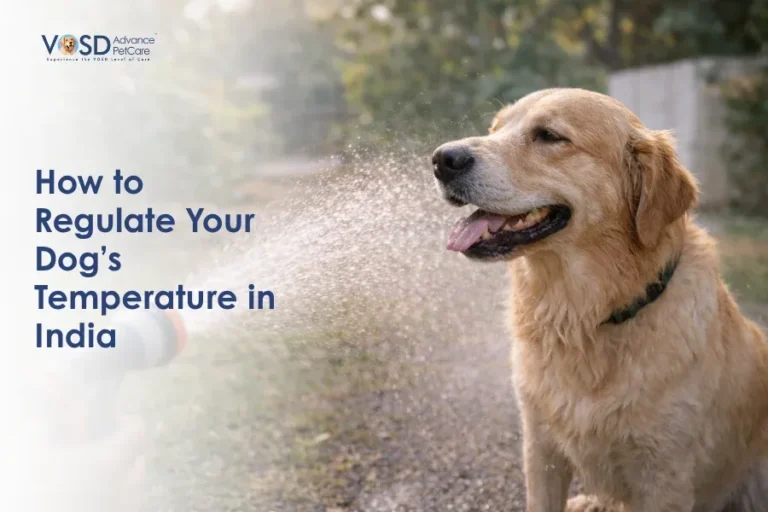
Imagine a dog tied in a courtyard during a May afternoon in Chennai, or a wet dog left on a tiled floor after a monsoon bath. In both situations, the dog’s body is working hard to manage a temperature it was not designed to handle without help. We often see dogs brought in after heatstroke that developed in exactly these circumstances, situations that could have been avoided with some basic awareness. Learning how to regulate your dog’s temperature at home is one of the most practically valuable things an Indian pet parent can do.
Why Temperature Regulation Matters for Dogs
Dogs cool themselves almost entirely through panting, with a small amount of heat release through their paw pads. They cannot sweat the way humans do. This means that in high heat or humidity, their ability to offload excess body heat is limited compared to ours, and they can overheat surprisingly quickly.
At the other extreme, dogs that are wet, elderly, very young, or unwell can lose body heat more rapidly than they can generate it, leading to hypothermia. In India, hypothermia is less common than heatstroke, but it is still a real risk for dogs during unseasonal cold spells, in high-altitude areas, and during overnight exposure to rain on tile or concrete surfaces.
Both extremes affect organ function. Extreme heat damages the kidneys, liver, brain, and coagulation system. Severe cold slows the heart, reduces circulation, and impairs neurological function. Neither is reversible past a certain point, which is why preventing them is far better than treating them.
What is a Normal Temperature for Dogs?
The normal body temperature for a healthy dog is 38.3 to 39.2 degrees Celsius (101 to 102.5 degrees Fahrenheit). This is higher than normal human temperature, which is why a dog that feels warm to touch is not automatically feverish, they simply run warmer than we do.
Age, breed, and activity level all influence where within this range a dog typically sits. Puppies and small breeds may run slightly warmer. Large breeds, particularly heavy-coated ones, are more susceptible to overheating at lower ambient temperatures. Brachycephalic breeds – Pugs, French Bulldogs, Shih Tzus – are the most vulnerable to heat because their compressed airways make panting less efficient.
Signs of Overheating in Dogs
Recognising overheating early allows you to intervene before the situation becomes dangerous. The signs progress from mild to severe:
Early Signs
- Heavy, rapid panting even without exertion
- Excessive drooling, sometimes thicker or more viscous than usual
- Seeking shade, cool surfaces, or water actively
- Restlessness or reluctance to continue walking
Moderate to Severe Signs
- Bright red gums and tongue
- Vomiting or attempting to vomit
- Weakness, stumbling, or uncoordinated movement
- Glassy, unfocused eyes
- Collapse or inability to stand
- Seizures in the most severe cases
A dog that is panting heavily and has red gums after heat exposure should be cooled immediately and assessed by a vet the same day. A dog that has collapsed is an emergency.
Related Videos



Signs of Hypothermia in Dogs
Cold stress in dogs is less immediately obvious but equally important to recognise. Watch for:
- Shivering or trembling that does not stop when moved to a warmer environment
- Muscle stiffness and reluctance to move
- Slow, shallow breathing
- Pale or bluish gums
- A glassy, distant expression and reduced responsiveness
- Extreme lethargy or loss of consciousness in severe cases
Wet dogs in cool conditions, puppies, elderly dogs, and dogs with thin coats are at highest risk. In India, hypothermia risk increases during the winter months in northern states, at higher altitudes, and on cold, wet monsoon nights.
Common Causes of Temperature Imbalance in Dogs in India
Understanding what drives temperature problems helps prevent them:
- Outdoor exposure during peak heat: Walking or exercising during the hottest part of the day, between eleven in the morning and four in the afternoon, is the most common cause of heatstroke in Indian pet dogs
- Confined spaces: Dogs left on open terraces, balconies, or in vehicles even for short periods in summer can overheat rapidly
- Inadequate water access: Dehydration reduces a dog’s ability to pant effectively and makes overheating more likely
- Wet fur in cool conditions: A dog bathed in the evening and left in a cool draught or on cold tiles can develop hypothermia, particularly if young, elderly, or unwell
- Underlying illness: Fever, heart disease, and respiratory conditions all impair the dog’s ability to manage temperature fluctuations and increase vulnerability to both extremes
How to Cool Down an Overheated Dog: Immediate Steps
If you believe your dog is overheating, act immediately. Every minute matters in genuine heatstroke.
Step 1: Move the dog out of the heat. Get them into shade or an air-conditioned or fan-cooled indoor space immediately. Do not delay this step for anything else.
Step 2: Offer cool water to drink. Do not force them to drink, but offer fresh, cool water and allow them to drink at their own pace. Do not offer ice water, as extreme cold can cause the blood vessels in the stomach to constrict.
Step 3: Apply cool water to the body. Use cool, not cold or icy, water and apply it to the inner thighs, belly, paw pads, and armpits, where blood vessels are close to the skin. A damp cloth or gentle pouring works well. Do not submerge the dog in cold water.
Step 4: Use a fan alongside the cool water. The evaporation of cool water from the skin is the most effective cooling mechanism. Directing a fan at the wet dog accelerates this significantly.
Step 5: Contact your vet. Even if the dog appears to recover after cooling, internal organ damage from heatstroke is not always visible. A dog that has had a genuine heat emergency should be assessed by a vet on the same day.
What to Avoid When Cooling an Overheated Dog
- Do not use ice or ice water, as this can cause dangerous peripheral vasoconstriction
- Do not wrap the dog in wet towels and leave them on, as these trap heat once they warm up
- Do not give human medications including aspirin or paracetamol in an attempt to reduce fever or heat stress
- Do not delay getting to the vet if the dog has collapsed, had a seizure, or has grey or blue gums
Long-Term Cooling Practices for Indian Summers
Preventing heatstroke is far easier than treating it. Consistently applying these practices helps regulate your dog’s temperature through the hottest months:
- Walk your dog only during the cooler parts of the day, early morning before eight and in the evening after six or seven, depending on when the sun drops
- Always carry water for your dog on any walk lasting more than fifteen minutes
- Check the pavement temperature before walking. If it is too hot for your palm held there for five seconds, it is too hot for your dog’s paw pads
- Ensure your dog always has access to shade and fresh water when outdoors
- In apartments, ensure rooms are ventilated and not enclosed without airflow, particularly in homes where air conditioning is not used during the day
- Brachycephalic breeds should be kept indoors in air-conditioned or well-ventilated spaces during peak summer months and should not be walked in the heat at all
How to Warm a Cold Dog Safely
For a dog that is shivering, wet, or showing signs of hypothermia, warming must be gradual and gentle. Sudden intense heat can be harmful.
- Move the dog to a warm, draught-free indoor space immediately
- Dry them thoroughly with towels, particularly the undercoat if the dog has a double coat
- Wrap loosely in a dry blanket or towel, allowing body heat to accumulate gradually
- Place a warm (not hot) water bottle wrapped in a towel near the dog rather than directly against the skin
- Offer warm (not hot) water to drink if the dog is conscious and able to swallow
- Do not place the dog directly on a heating pad or in front of an electric heater without buffering, as burns can occur on skin that is not detecting sensation normally due to cold
A dog that is not improving within fifteen to twenty minutes of warming measures, or that is showing severe signs of hypothermia, requires emergency veterinary care. IV fluids warmed to body temperature are the most effective treatment for genuine hypothermia.
Preventing Cold Stress in Indian Dogs
Even in India’s relatively warm climate, cold stress is a real consideration in certain situations:
- Ensure dogs have a raised, insulated sleeping area that is not directly on cold tile or concrete during cooler months
- Dry dogs thoroughly after bathing, particularly in the evening or in cooler weather
- Provide a blanket or mat for elderly, thin-coated, or unwell dogs even in mild cool weather
- Dogs recovering from illness, surgery, or anaesthesia are particularly vulnerable to temperature drops and should be kept warm and monitored
Diagnosis and Treatment at the Vet
When a dog presents with heat or cold stress at the vet, the approach involves:
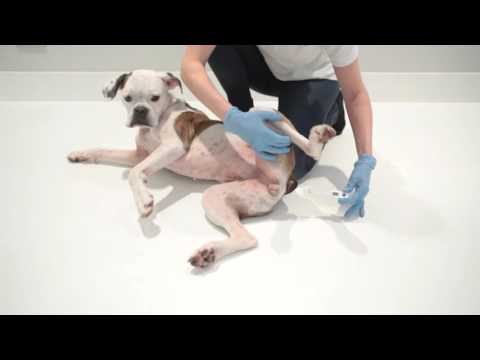
- Rectal temperature measurement to confirm the degree of imbalance
- Assessment of hydration status and mucous membrane colour
- Blood work to assess kidney function, clotting, and organ involvement in significant heatstroke cases
- IV fluids to address dehydration and support organ perfusion
- Controlled cooling or warming under monitoring to avoid overcorrection
Practical Tips for Indian Pet Parents
- Keep a digital thermometer in your dog’s first aid kit so you can measure their temperature if you are concerned
- Avoid leaving your dog in any vehicle, even for a few minutes, on a warm day. Car interiors heat to dangerous temperatures within minutes even with windows partially open.
- Dogs travelling long distances by road in India should have regular breaks in the shade with water access
- During monsoon, dry your dog thoroughly after walks, particularly between the paw pads and in skin folds where moisture sits and invites infection