

Liver failure is not a disease you catch. It is what happens when a disease has been winning for too long.
By the time a dog reaches liver failure, the organ has already lost the ability to perform the functions that sustain life. Detoxification has stopped. Protein production has collapsed. The brain is being poisoned by the waste products the liver can no longer clear. And what looks from the outside like a dog that has suddenly become very sick is, in reality, the final stage of a process that may have been unfolding for weeks or months.
This is what makes liver failure in dogs one of the most challenging conditions any dog owner will ever face. Not because it is always fatal, though it can be. But by the time the signs are unmistakable, the margin for intervention has already narrowed significantly.
Understanding this condition before you are in the middle of it is what gives you the best chance of acting in time.
What Liver Failure Actually Means Inside the Body
Liver failure is not the same as liver disease. It is not the early stage of something. It is the endpoint of liver damage so severe that the organ can no longer sustain its critical functions.
Clinically, liver failure is defined as the loss of more than 70 to 75 per cent of functional liver tissue. At that threshold, the remaining cells cannot compensate. The consequences are immediate and systemic.
What breaks down includes:
- Detoxification: Toxins, ammonia, and metabolic waste products accumulate in the blood and travel to the brain, causing neurological dysfunction
- Protein synthesis: Albumin production falls, causing fluid to leak from blood vessels into the abdomen. Clotting factors are no longer produced, leading to bleeding disorders
- Metabolic regulation: Blood glucose becomes unstable. Fat and protein metabolism is disrupted
- Bile production: Digestion is impaired, and bilirubin accumulates, causing the yellow discolouration known as jaundice
- Immune clearance: Bacteria and immune complexes that would normally be filtered from the portal blood now pass directly into systemic circulation
Every organ in the body depends on the liver performing these functions continuously. When it stops, the consequences are not confined to the liver. They are felt everywhere.
Early Changes That Often Go Unnoticed
The early signs of approaching liver failure are the same reason so many dogs arrive at this stage without their owners realising how serious things have become. The signs are quiet, non-specific, and easy to rationalise as something minor.
Early changes to watch for include:
- Gradual loss of appetite, a dog that used to eat eagerly becomes indifferent to food
- Unexplained weight loss over weeks, visible when the dog is handled or weighed
- Increased thirst and urination as the kidneys try to compensate for what the liver can no longer do
- Mild, recurrent vomiting that does not seem alarming in isolation
- General lethargy, slightly less energy, less enthusiasm, sleeping more than usual
- Occasional loose stools or changes in stool colour, reflecting impaired bile production
None of these signs is specific to liver failure. Each one, viewed in isolation, could be explained in a dozen other ways. It is the pattern across multiple weeks, a dog that is consistently and gradually less itself, that should prompt urgent investigation.
Advanced Signs That Indicate the Liver Is Failing
Once the liver crosses the threshold into failure, the signs shift from subtle to serious very quickly.
Advanced signs that demand immediate attention include:
- Jaundice: A yellow discolouration visible in the gums, the whites of the eyes, and the skin, caused by the accumulation of bilirubin that the liver can no longer process
- Abdominal distension: The belly becomes visibly swollen as fluid accumulates in the abdominal cavity, a condition known as ascites, caused by falling albumin levels
- Hepatic encephalopathy: Ammonia and other neurotoxins that the liver can no longer clear begin affecting the brain. Signs include confusion, disorientation, circling, head pressing, and seizures
- Bleeding disorders: The gums bleed easily. Bruising appears without injury. Nosebleeds occur. Blood appears in the stool or urine
- Complete anorexia: The dog stops eating entirely and shows no response to food
- Extreme weakness: The dog struggles to stand, walk, or maintain normal posture
These signs are not subtle. They are the body’s announcement that the liver has lost the capacity to sustain life, and that intervention is urgently needed.
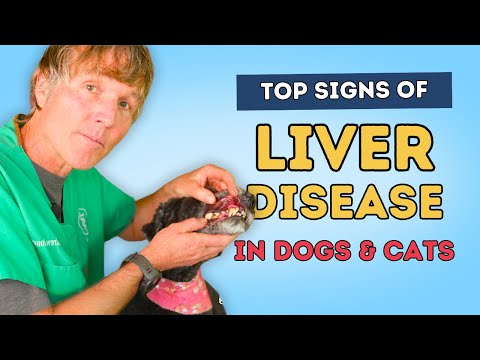
Related Videos


Why Liver Failure Happens, The Underlying Triggers
Liver failure does not arise spontaneously. It is always the result of an underlying condition, whether that condition developed rapidly or built over the years.
The most common triggers are:
Toxic causes:
- Xylitol, found in sugar-free gum, certain peanut butters, and processed foods
- Aflatoxins from mouldy or improperly stored food
- Blue-green algae from contaminated water sources
- Toxic mushrooms, particularly Amanita species
- Overdose or prolonged use of NSAIDs, anticonvulsants, or certain antibiotics
Infectious causes:
- Leptospirosis, one of the most common infectious causes of liver failure in Indian dogs, spreads through contaminated water and rodent contact
- Canine Adenovirus Type 1, the virus behind Infectious Canine Hepatitis
- Severe systemic bacterial infections with secondary liver involvement
Metabolic and genetic causes:
- Copper storage disease in predisposed breeds, including Labrador Retrievers, Dobermanns, and Bedlington Terriers
- Portosystemic shunts that allow toxins to bypass the liver entirely
Progressive disease:
- Chronic hepatitis that reaches the point of decompensation
- Liver cancer, whether primary or metastatic
- Long-standing biliary disease that has progressively damaged liver tissue
In many cases of liver failure in dogs seen in clinical practice, the trigger is a combination of a pre-existing vulnerability and an acute precipitating event. Identifying the specific cause is essential because it directly shapes the treatment approach.
Inside the Body: How Liver Failure Develops Step by Step
The mechanism of liver failure follows a consistent and predictable sequence, regardless of the initial trigger.
-
Step 1: Cell death begins. Hepatocytes, the primary functional cells of the liver, are destroyed by the triggering insult. Liver enzymes flood into the bloodstream.
-
Step 2: Regeneration is overwhelmed. The liver attempts to replace lost cells. In early disease, this compensation is adequate. In liver failure, cell death outpaces regeneration.
-
Step 3: Detoxification collapses. The remaining cells cannot filter the blood adequately. Ammonia and metabolic waste products accumulate.
-
Step 4: Brain dysfunction begins. Ammonia crosses the blood-brain barrier. Neurological signs appear: confusion, circling, seizures, and coma in severe cases.
-
Step 5: Clotting failure develops. Clotting factor production falls below the threshold needed for normal haemostasis. Bleeding becomes difficult to control.
-
Step 6: Fluid balance fails. Albumin levels fall. Fluid escapes from blood vessels into body cavities. Blood pressure drops. Kidney perfusion is compromised.
-
Step 7: Multi-organ failure. The kidneys, cardiovascular system, and other organs are damaged by reduced blood flow, toxic accumulation, and metabolic instability. The dog enters a critical spiral that is difficult to reverse.
Different Pathways to Liver Failure, Acute vs Chronic
Not all liver failure arrives the same way. Two distinct pathways lead to the same endpoint.
Acute liver failure:
This is sudden, dramatic, and immediately life-threatening. A dog with no prior liver history deteriorates within hours to days following a toxic exposure, infection, or severe systemic event. There is no compensatory phase. The liver goes from functioning to failing rapidly, and the window for intervention is narrow. For a detailed discussion of this presentation, see acute liver failure in dogs.
Chronic liver failure:
This is the end stage of long-standing liver disease in dogs that has progressed beyond the point of compensation. The signs have often been present for weeks or months in a mild form, gradually intensifying as more liver tissue is lost. When the liver finally crosses the failure threshold, the presentation may look sudden to the owner, but the underlying damage has been building for a long time.
Understanding which pathway applies to your dog shapes the urgency and the nature of the response.
How Veterinarians Confirm Liver Failure
Diagnosis of liver failure combines clinical assessment with targeted laboratory and imaging investigations.
Key diagnostic steps include:
-
Blood chemistry panel: ALT, AST, and ALP confirm liver cell damage and cholestatic disease. Bilirubin confirms jaundice. Albumin and total protein reveal synthetic failure. Blood glucose may be critically low. BUN is often abnormally low in liver failure, reflecting the failure of the urea cycle.
-
Clotting profile: Prothrombin time and partial thromboplastin time are prolonged in dogs with coagulopathy secondary to liver failure.
-
Ammonia level: Elevated blood ammonia directly confirms hepatic encephalopathy and quantifies the degree of detoxification failure.
-
Bile acids test: Pre- and post-feeding bile acid levels provide one of the most sensitive assessments of overall liver function.
-
Abdominal ultrasound: Evaluates liver size, texture, blood flow, and the presence of fluid, masses, or biliary obstruction. Guides biopsy planning.
-
Liver biopsy: Provides the definitive histological diagnosis of the underlying disease type, including distinguishing chronic hepatitis from copper storage disease from neoplasia, each of which requires a different treatment path.
Treatment Focus: Stabilising the Dog and Supporting the Liver
There is no single cure for liver failure. Treatment is intensive, individualised supportive care aimed at maintaining the dog’s survival while the liver either regenerates or while the underlying cause is addressed.
Core treatment components include:
- Intravenous fluid therapy: Corrects dehydration, stabilises blood pressure, supports kidney perfusion, and delivers glucose directly
- Dextrose supplementation: Prevents the hypoglycaemia that can cause seizures and brain damage independently of encephalopathy
- Lactulose: Reduces gut ammonia production and absorption, directly addressing the neurological consequences of liver failure
- Antibiotics: Target infectious causes and reduce ammonia-generating gut bacteria
- Plasma or blood transfusions: Replace clotting factors and albumin in dogs with severe coagulopathy or hypoalbuminaemia
- Hepatoprotective agents: SAMe, milk thistle extract, and Vitamin E support surviving liver cell function and regeneration
- Anti-nausea and gastroprotective medications: Control vomiting and reduce gastrointestinal bleeding risk
- Nutritional support: Via feeding tube when the dog will not eat voluntarily, because caloric intake is essential for liver cell regeneration
- Seizure management: Anticonvulsant medications for dogs with active neurological signs
- Continuous monitoring: Blood glucose, electrolytes, neurological status, urine output, and coagulation assessed multiple times daily
The dog cannot leave the hospital until the crisis is stabilised. This is not a condition that can be managed at home until the dog is significantly improved.
Can Dogs Survive Liver Failure?
Yes. But the answer is qualified, and the qualifications matter.
The liver is one of the only organs in the body capable of meaningful regeneration. A liver that has been damaged acutely by a toxin or infection can, in the right circumstances, rebuild enough functional tissue to restore adequate function, provided the damage has not crossed a point of no return.
Factors that improve the prognosis include:
- Early presentation before severe encephalopathy or coagulopathy develops
- An identifiable and removable underlying cause
- Preserved albumin and clotting function at the time of diagnosis
- Positive response to supportive care within the first 48 hours
- No evidence of massive irreversible structural damage on imaging or biopsy
Factors that worsen the prognosis include:
- Severe jaundice at presentation
- Uncontrolled seizures
- Complete clotting failure
- Evidence of extensive fibrosis on biopsy
- Continued deterioration despite aggressive care
When chronic liver failure has produced permanent structural changes in the liver, the condition transitions into cirrhosis and fibrosis of the liver in dogs, where the management goal shifts from cure to quality-of-life preservation.
Liver Disease vs Liver Failure vs Cirrhosis, What Is the Difference?
| Feature | Liver Disease | Liver Failure | Cirrhosis |
|---|---|---|---|
| Definition | Damage with reduced function | Loss of function beyond the survival threshold | Permanent scarring replacing functional tissue |
| Reversibility | Often reversible if caught early | Possible in acute cases, limited in chronic | Largely irreversible |
| Speed of onset | Gradual in most cases | Rapid (acute) or progressive (chronic) | Develops over months to years |
| Key signs | Mild GI signs, enzyme elevation | Jaundice, encephalopathy, bleeding disorders | Ascites, weight loss, chronic illness |
| Treatment goal | Treat cause, support regeneration | Prevent death, support remaining function | Slow progression, manage quality of life |
These three conditions exist on a continuum. Liver disease, if unaddressed, becomes liver failure. Liver failure, if it does not resolve, leads to cirrhosis. Knowing where on this spectrum a dog sits determines everything about what is done next.
When This Becomes a Medical Emergency
Seek emergency veterinary care without delay if your dog shows any of the following:
- Jaundice appearing suddenly in the gums, eyes, or skin
- Seizures or neurological signs including circling, head pressing, or sudden disorientation
- Uncontrolled bleeding from the mouth, nose, or visible under the skin
- Severe abdominal swelling developing over hours
- Complete refusal to eat combined with profound weakness
- Vomiting blood or passing dark, tarry stools
- Collapse or inability to stand
These are not signs to monitor at home. They are signs to act on immediately, without waiting for a scheduled appointment.