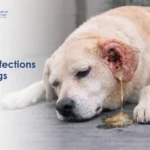

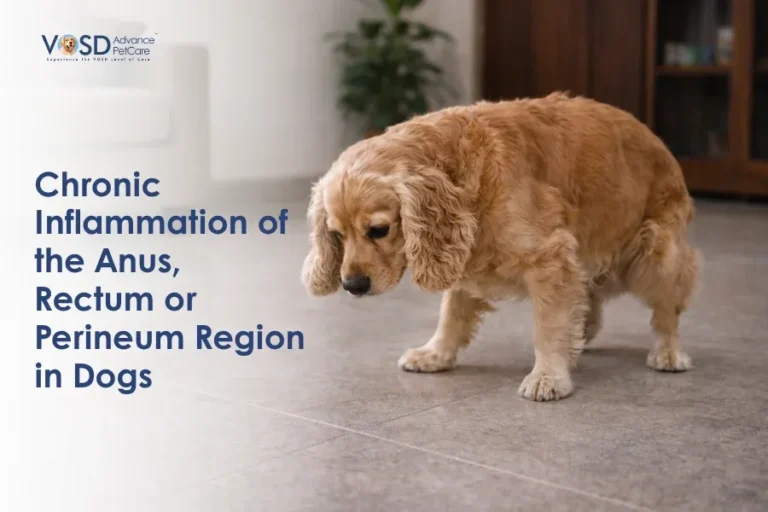
A dog that is constantly scooting, licking, or straining is not being difficult. It is in pain.
Chronic inflammation of the anus, rectum, and perineum is a group of conditions that cause persistent, progressive discomfort in one of the most sensitive regions of a dog’s body. Because the signs are often attributed to worms, itching, or a passing digestive upset, many affected dogs live with significant discomfort for weeks or months before the underlying disease is properly assessed and treated.
This is not a minor hygiene issue. It is a medical condition that causes real, ongoing pain and can progress to open wounds, systemic infection, and severe structural damage if left without veterinary care.
What Is Chronic Inflammation of the Anus, Rectum or Perineum in Dogs?
Chronic inflammation in this region refers to persistent or recurring inflammatory disease affecting the anus, the rectal canal, or the surrounding perineal tissue. It is not a single diagnosis but an umbrella term covering several distinct but related conditions that share a common clinical picture of pain, altered defecation, and localised tissue damage.
The anus is the external opening of the digestive tract. The rectum is the terminal segment of the large intestine immediately above it. The perineum is the soft tissue area between the anus and the genitalia. Disease in any of these locations produces overlapping symptoms and requires systematic investigation to establish which specific condition or combination of conditions is responsible.
Types of Conditions Under This Category
Proctitis is inflammation of the rectal mucosa, producing pain, straining, and mucoid or bloody discharge during defecation. It can be acute or chronic, infectious or immune-mediated.
Perianal fistula is a serious condition characterised by deep, ulcerating tracts that penetrate the tissue around the anus. It is strongly associated with immune-mediated disease and is most commonly seen in German Shepherds. The wounds are intensely painful and often severely underestimated in their clinical impact.
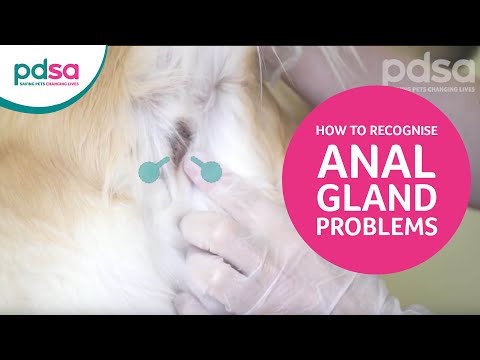
Anal sac disease, covered in depth in our guide to anal sac disorders in dogs, is the most common cause of perianal discomfort in dogs, ranging from simple impaction to abscess and rupture.
Rectal prolapse involves protrusion of the rectal mucosa or full rectal wall through the anal opening, typically associated with severe or chronic straining.
Rectoanal polyps, detailed in our guide to rectoanal polyps in dogs, are abnormal tissue growths that cause bleeding, obstruction, and pain during defecation.
Each of these conditions has distinct features, but they share the common thread of chronic regional inflammation and the need for professional diagnosis to distinguish between them.
Symptoms of Chronic Anal and Rectal Inflammation in Dogs
The signs are primarily behavioural and localised, though systemic signs emerge in more advanced or infected cases.
Core symptoms include persistent scooting or dragging the rear along the floor, constant licking or biting at the anus or perineal region, painful or difficult defecation with visible straining, blood or mucus in or coating the stool, visible swelling, redness, or open wounds around the anus, a foul smell from the perianal region, reluctance to sit or adopt the defecation posture, and behavioural changes including irritability, withdrawal, and reduced activity.
Many pet parents initially attribute these signs to worms or a passing irritation. The critical distinction is persistence. Signs that recur or do not resolve within a few days are not a passing digestive issue. They are a signal that chronic disease is present.
Related Videos



Causes of Chronic Anal and Rectal Inflammation in Dogs
Infectious Causes
Bacterial infection of the anal sacs, perianal skin, or rectal mucosa is among the most common infectious drivers. Parasitic infections, including tapeworms, whipworms, and Giardia, can cause rectal mucosal irritation and contribute to chronic straining and licking. Fungal infections, though less common, occur in immunocompromised dogs.
Mechanical and Structural Causes
Chronic constipation and straining produce sustained pressure and trauma to the rectal mucosa and perianal tissue. Foreign bodies or ingested material that causes rectal injury, difficult deliveries in female dogs, and previous rectal or perianal surgery can all produce localised inflammation that becomes chronic.
Immune-Mediated Disease
Perianal fistula is the most significant immune-mediated condition in this category. The body’s own immune response targets the perianal tissue, producing progressive, deeply ulcerating fistulous tracts that are painful, malodorous, and difficult to manage without specific immune-modulating treatment. Inflammatory bowel disease with rectal involvement is another immune-mediated driver of chronic proctitis.
Dietary Issues
Food allergies and dietary intolerances that produce chronic gastrointestinal inflammation can manifest with rectal involvement, including proctitis and anal sac dysfunction. Inadequate dietary fibre produces persistently soft stools that fail to provide the mechanical stimulus for anal sac emptying, perpetuating impaction and secondary inflammation.
Tumours and Polyps
Neoplastic disease, including rectal carcinoma, anal sac adenocarcinoma, and benign polyps, all produce chronic localised inflammation through tissue disruption, bleeding, and secondary infection. Any chronic perianal condition in an older dog warrants investigation for neoplasia as a contributing or primary cause.
How Veterinarians Diagnose Chronic Anal and Rectal Inflammation in Dogs
Accurate diagnosis requires a systematic approach. Symptoms overlap considerably between the conditions in this category, and treatment differs meaningfully depending on the specific diagnosis.
The diagnostic pathway proceeds in a consistent sequence:
Symptom assessment and history establish the duration, progression, and pattern of signs, identify any previous treatment attempted, and guide the urgency and direction of further investigation.
Physical and rectal examination follows, with the veterinarian assessing the external perianal region for wounds, swelling, fistulous openings, or prolapsed tissue, and performing digital rectal palpation to assess the rectal mucosa, detect masses, and evaluate the anal sacs. This examination is performed under sedation in painful cases.
Faecal testing identifies intestinal parasites, abnormal bacterial flora, and blood or mucus that indicate active mucosal disease.
Imaging through abdominal ultrasound or radiography evaluates the rectum, surrounding lymph nodes, and adjacent organs for structural abnormalities, masses, or signs of systemic involvement.
Blood tests assess for systemic infection, immune dysfunction, and the metabolic consequences of chronic disease, including protein loss from a chronically inflamed rectum.
Endoscopy and biopsy provide direct visualisation of the rectal mucosa and definitive histopathological diagnosis, particularly important for distinguishing inflammatory conditions from neoplasia and for characterising the type of inflammatory cell infiltrate driving immune-mediated disease.
Treatment for Chronic Anal and Rectal Inflammation in Dogs
Treatment is tiered and cause-dependent. There is no universal protocol.
Medical Management
Antibiotics are prescribed for confirmed bacterial infection of the anal sacs, perianal tissue, or rectal mucosa. The choice of antibiotic is guided by culture results, where possible. Anti-inflammatory medications reduce mucosal and tissue inflammation, provide analgesia, and in immune-mediated conditions, form the cornerstone of the management protocol.
For perianal fistula, immunosuppressive therapy including cyclosporine has produced significantly better outcomes than surgical management alone and has become the primary treatment approach in most cases. The response to treatment requires monitoring and dose adjustment over time.
Stool softeners and dietary fibre supplementation reduce straining, improve stool consistency, and facilitate natural anal sac emptying, addressing one of the most significant mechanical contributors to perianal inflammation.
Dietary Changes
A high-fibre diet improves stool bulk and reduces straining. Hypoallergenic or novel protein diets address dietary allergy as a contributing factor in dogs where food hypersensitivity is identified. Consistent, appropriate nutrition forms the foundation of managing any chronic gastrointestinal and perianal condition.
Hygiene Care
Regular gentle cleaning of the perianal region, keeping the hair in this area trimmed in long-coated breeds, and preventing faecal contamination of inflamed or wounded tissue all reduce the secondary bacterial load that perpetuates inflammation and slows healing.
Surgical Intervention
Surgery is reserved for cases where medical management has failed, where structural disease such as rectal prolapse or anal sac adenocarcinoma requires surgical correction, or where fistulous tracts are too extensive for medical resolution alone. Surgical approaches have improved significantly but remain more complex and recovery-intensive than medical management, making them a considered rather than first-line option in most inflammatory conditions.
Related Products

Prognosis
Prognosis varies considerably by condition and by the stage at which treatment begins.
Infectious anal sac disease treated at the impaction or early infection stage carries an excellent prognosis. Anal sac abscesses treated promptly resolve well, though recurrence is common in predisposed dogs.
Perianal fistula is a chronic, often relapsing condition. Immunosuppressive therapy achieves significant improvement or remission in many cases, but long-term management is required, and relapse on dose reduction is common. The condition is manageable in most affected dogs but rarely cured outright.
Inflammatory proctitis carries a prognosis dependent on the underlying cause. Dietary and parasitic causes treated effectively produce complete resolution. Immune-mediated causes require long-term management similar to IBD elsewhere in the gastrointestinal tract.
Neoplastic causes carry a prognosis determined by the tumour type, its extent, and whether surgical removal with adequate margins was achievable.
When to See a Veterinarian
Seek veterinary assessment promptly if your dog shows any of the following:
- Persistent scooting or perianal licking lasting more than a few days
- Visible swelling, redness, wounds, or any opening in the perianal skin
- Blood or mucus in or coating the stool
- Straining or obvious pain during defecation
- A foul smell from the perianal region that is new or worsening
- Refusal to eat, lethargy, or fever alongside perianal signs
- Any visible mass or protrusion from the anus
Do not manage these signs with grooming products or home remedies while postponing veterinary assessment. Every week of delay in chronic perianal disease allows further tissue damage and increases the complexity of what could have been a straightforward intervention.
Prevention and Management
Proper Diet
A nutritionally complete diet with adequate fibre maintains consistent stool quality and reduces the straining and soft stools that perpetuate anal sac dysfunction and perianal irritation. Dietary management is one of the most directly impactful and practical preventive measures available.
Regular Deworming
Intestinal parasites contributing to chronic rectal irritation and straining are preventable through regular parasite control. Maintaining a current deworming protocol as part of routine preventive care reduces this component of the causative load.
Anal Gland Care
Dogs with a documented history of recurring anal sac impaction benefit from regular professional expression at veterinarian-recommended intervals, dietary fibre optimisation, and weight management to reduce recurrence frequency.
Hygiene
Keeping the perianal area clean, particularly in long-coated breeds where faecal material can accumulate, reduces secondary bacterial contamination of skin already compromised by chronic inflammation.